Showing posts with label signs. Show all posts

26 April 2007

Paris: Rue de Belleville

Last Saturday, we spent the morning in the Belleville neighborhood in northeast Paris. The rue de Belleville is the border between the 19th and 20th arrondissements. We parked the car near the Belleville métro station about 8:45 and then walked up to the Pyrénées station and on to the Buttes-Chaumont station.

It turned out that parking was free on the boulevard de la Villette on Saturdays, so we were able to abandon the car for the morning.

It was just Walt and I, and we were looking for a restaurant he had read about on Clotilde's Chocolate and Zucchini blog. It's a Thai restaurant called Lao Siam, and we want to have lunch there. We were supposed to meet Tony and Chris at the Buttes-Chaumont station at 10:00.

We walked up the rue de Belleville, very quiet at that hour, looking for the street number (Lao Siam is at number 49). That's how I noticed this door with a plaque over it. It said, among other things, EDITH PIAF in all caps.

The singer Edith Piaf was born here,
at no. 72 on the rue de Belleville in Paris.


I crossed the street for a closer look. The sign says Piaf was actually born on the steps in front of this door (translation in the photo caption). Piaf's birth name was Édith Giovanna Gassion. After a tumultuous international career France's best-known singer, she died at the age of 48 in 1963. Tens if not hundreds of thousands of people flooded the streets of Paris to attend her funeral at Père Lachaise cemetery.

On the steps of this building
was born on the 19th of December 1915
in utter destitution
EDITH PIAF
whose voice, in later years,
would shake the world.

People all around the world know the sound of Piaf's voice and at least one of her famous songs: La Vie en Rose. She wrote it in 1945. A new movie with that title is out now and the reviews have been good. In France, the film is called La Môme (The Child), which was Piaf's stage name at the beginning of her career in Paris.

Walt and I found the restaurant, which looked like it might be open for lunch that day, and continued our walk up the rue de Belleville. When we got to the Pyrénées métro station, we went into a café to have breakfast. For Walt, that was a grand café noir (also called un double express). For me, it was the same thing plus a croissant.

A butcher shop on the rue de Belleville

Then we walked up the avenue Simon-Bolivar to meet Chris and Tony at the Buttes-Chaumont métro stop. We were going to take advantage of the fine weather by taking a stroll through the park and taking some pictures. It was full of joggers and people walking dogs. Other people were pushing strollers or walking their toddlers. The flower beds were in full bloom and the views of Montmartre were spectacular.

Sacré-Cœur and the Butte Montmartre
seen from the Parc des Buttes-Chaumont


After seeing the park we walked back over to the rue de Belleville. We walked up even further, since we had an hour or so to kill before it would be time for lunch. We went into a church and looked around, but mostly we just walked along the street looking into shop windows.

This is not a great picture, but it shows how steep
and shaded the rue de Belleville is. You can see
the Eiffel Tower off in the distance.


At noon we had a fine lunch at Lao Siam. I remember we had prawn spring rolls and also beef spring rolls as an appetizer. I had prawns with vermicelli noodles as my main course, and Chris had a stuffed crab, but that's all I remember. You can read some customer reviews (in French) of the Lao Siam restaurant here.

To the memory of the pupils of this school
deported from 1942 to 1944 because they were Jewish,
innocent victims of the Nazi barbarity
with the active complicity
of the Vichy government
they were exterminated in the death camps

After lunch we walked on down the rue de Belleville, looking at all there was to see, including the plaque pictured above, and continued on into other neighborhoods.

22 January 2007

Nice graphics from the shops

One of the nice things about shopping with the small merchants — boulangers, pâtissiers, charcutiers, and bouchers — in a place like Saint-Aignan is the beautiful packaging they use when they wrap up your purchases. Here's an example from a boulangerie in town.


I went there a couple of days ago to buy a galette des rois, the traditonal cake for the month of January in France. (See Walt's blog topic on La Fête des Rois.) The bag the cake came in had this graphic on it. It shows the ingredients you need — butter, sugar, eggs, almonds, etc. — and shows you what the finished galette looks like.

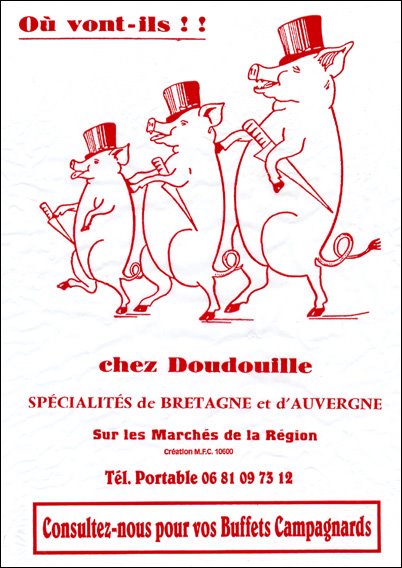
Here are packing examples from two charcutiers who sell their products at the Saturday market in Saint-Aignan, Doudouille and Hentry. I've posted these before.


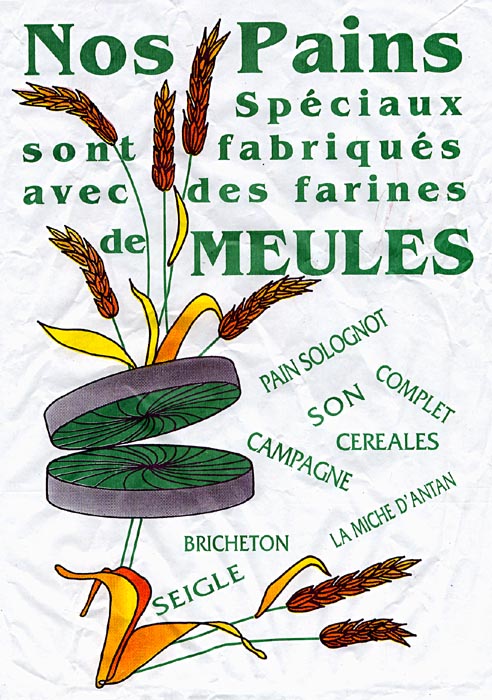
And here's another example of graphics on packages from a boulangerie just across the rivers in Noyers-sur-Char.


Of course the wrapping paper is just paper. It's what's inside that really counts.

12 January 2007

Remembering the Simca

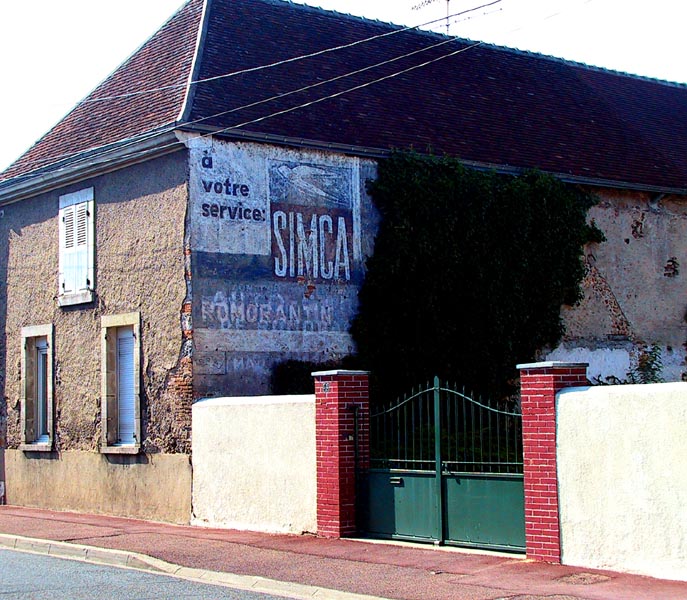
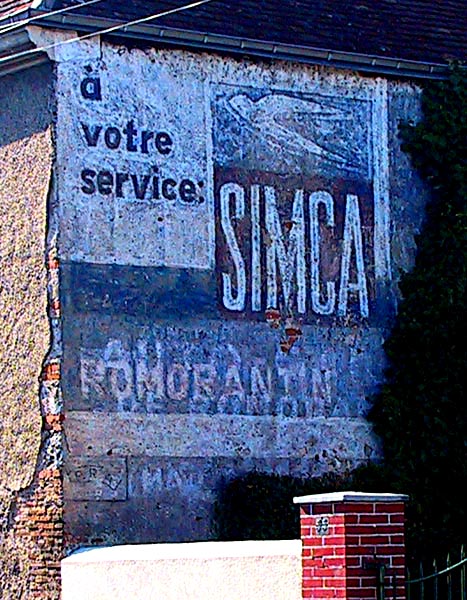
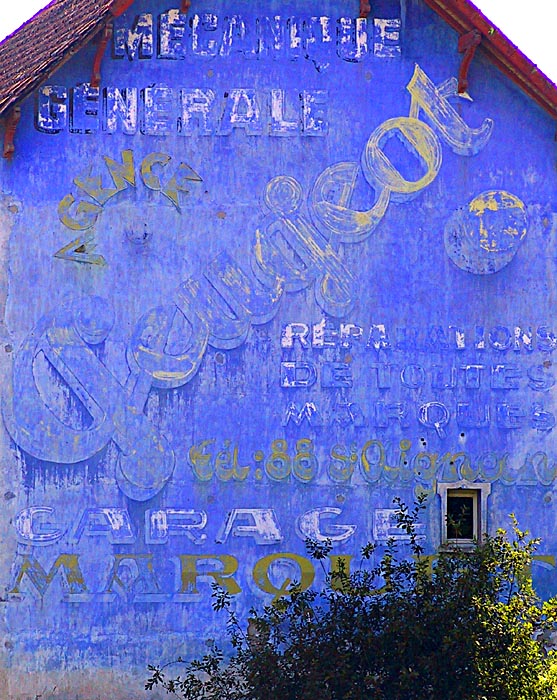
Another wall sign, this one in the town of Mennetou-sur-Cher, about 25 miles east of Saint-Aignan, on the river. It advertises Simca automobiles and a garage/dealer in the nearby town of Romorantin-Lanthenay. Simcas are no longer made, and the garage is surely just a local memory.

Wall-advertising in Mennetou-sur-Cher, along the Nationale 76

Personally, I have a long history with Simcas, even though I don't think I've ever driven one. I don't even know if I've ever been a passenger in one. Production of the cars ceased in late 1970s or early 1980s, so this Simca-fascination of mine goes back quite some time.

In 1972-73, I lived in the city of Rouen in Normandy and worked as an English-language teaching assistant in a high school there. The job was part-time and the pay was low, so I didn't have a car that year. I also didn't need a car because I lived in the middle of the old city and could walk to work and to nearby shopping areas.

It was just as well, because I couldn't have afforded a car. I had sold my 1966 Ford Fairlane (I shudder to think I drove such a thing — it was a college graduation present from my father). when I left the States that summer of 1972.

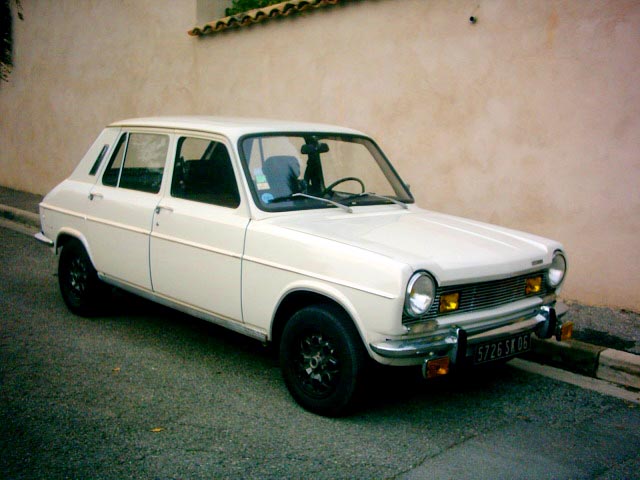
I really wanted my next car in America to be a Simca 1100 hatchback.

I was fascinated with French cars and European cars in general. They seemed so much more sensible to me than the big "boats" so many Americans drove around in at the time. The Citroën 2CV (la Deux-Chevaux) and the Renault 4L were two of the most distinctive small cars in France back then. There were plenty of other models, too, but those two were really the people's cars of the time. You still see quite a few of each on the roads out here in the countryside.

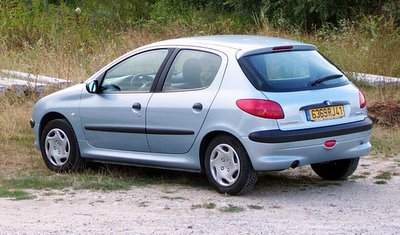
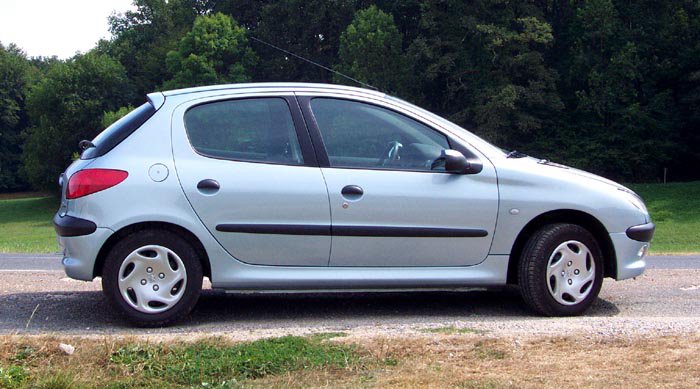
And there was also the Simca 1100. It was an innovative model because it was one of the first hatchback cars, unless I'm mistaken. The 2CV was a four-dour sedan, and the 4L was a tiny station wagon. The hatchback was a new concept in those days. Hatchback models are still very popular in Europe, though they are kind out of fashion in the U.S. My little Peugeot 206, which is a 2001 model, is a hatchback. It's very practical.

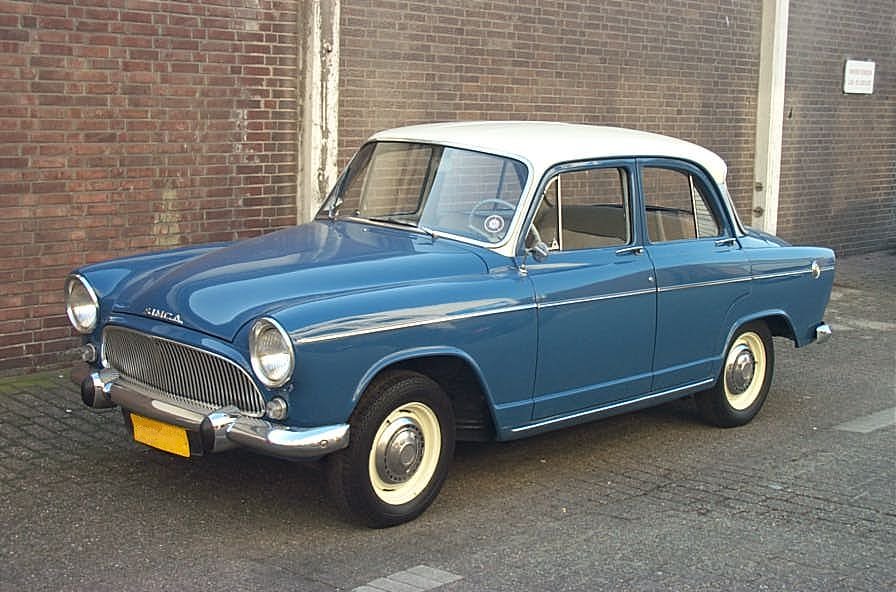
A 1961 Simca Aronde. The Aronde was introduced in the early 1950s.
This is the Simca model I remember seeing in North Carolina back then.
Thanks to Wikipedia for the photo.

Simca had some very successful cars in France in the 1950s, and I even remember that somebody in my home town in North Carolina had one in the late '50s or early '60s. At that time, there were still U.S. military bases in France, and I'm sure it was some of the returning military personnel who brought their European cars home with them. We learned to recognize Simcas and Renault Dauphines, as well as English Fords, Hillmans, and Vauxhalls, a few Fiats, and, of course, VW Beetles.

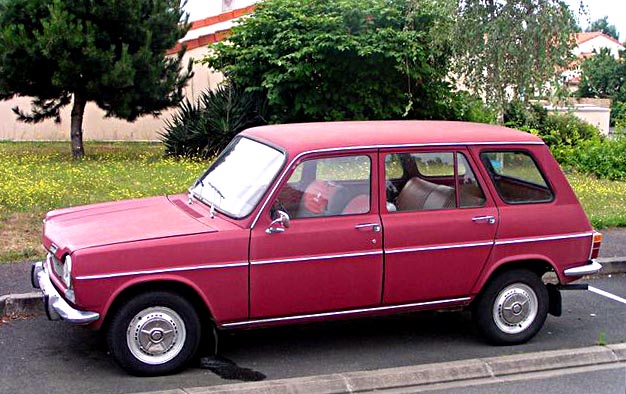
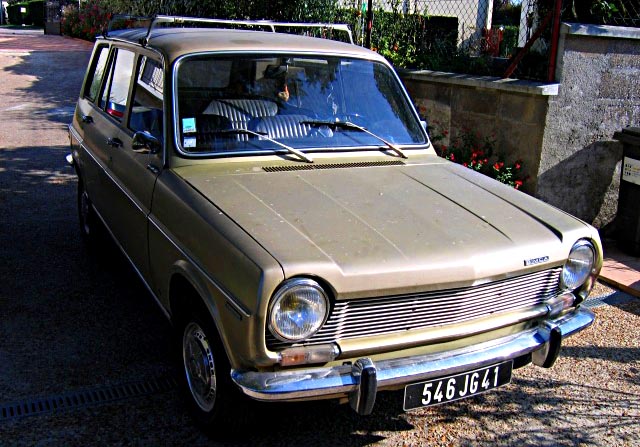
The Simca 1100 was a new model in 1967. It had front-wheel drive and independent suspension all-around. In addition to the hatchback, there was a station wagon. In all, about 2.2 million Simca 1100s were built.

A Simca 1100 station wagon that is currently for sale

Anyway, I really wanted a Simca. Chrysler had taken a controlling interest in the Simca company in the 1960s, and owned it outright by the early 1970s. Chrysler France kept the Simca brand name. I hoped that when I returned to the U.S. from Normandy in 1973 I would be able to buy myself a Simca 1100 from a Chrysler dealer. I was going to need a car in the U.S.

This one is a Simca 1100 utility vehicle. It's for sale too.

That wasn't to be, however. Chrysler didn't sell them in the U.S. I ended up buying a little German Opel 1900 from a Buick dealer in North Carolina. My father co-signed the loan for me, and the Buick dealer was where he bought his cars. He was scandalized that I would pay good money for such a little putt-putt car.

A close-up of the old Simca sign

The brand-new light-blue Opel 1900 (called an Opel Ascona in Europe), with an AM radio, a heater, and a manual transmission, cost about $3,300. Such a deal! It didn't have air conditioning, FM radio, electric windows, or even power steering or power brakes. But it had four doors and a big trunk. It got good gas mileage. It was the best I could do.

I know I have a picture of that old Opel somewhere. I drove it until 1979, when I sold it to return to France one more time. The Opel got me back and forth from North Carolina to Lakeland, Florida, and Champaign, Illinois, many times. I don't remember how many miles I put on it, but I bet it was a lot. I think I sold it for $600 in August 1979.

So no Simca for me... not back then. The only Simca 1100 I've noticed since I've been in France this time is an orange one that I spotted last year down in Châtillon-sur-Indre. I was surprised to see one that was still, apparently, road-worthy.

The Simca wall-advertising I started this posting with led me to start looking around on the Web to see if there were any available. It turns out that there are a lot of classic Simca 1100 pictures on this site, and more at this one. Wikipedia has a good history of the brand (in English or in French).

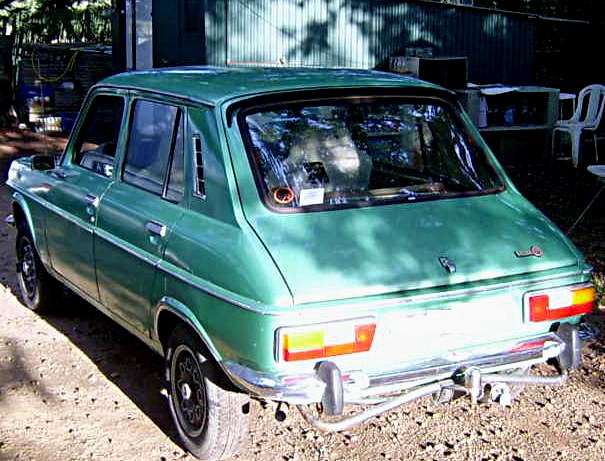
Another 1100 currently for sale (unless it's already been sold)

And if you want to buy a Simca 1100 today, there are plenty of ads here. All the pictures of 1100s in this posting are ones I got from these ads (can't imagine anybody minding some free advertising).

This is the Simca 1100 station wagon that a man in Blois is trying
to sell. Sometimes we think having a second car would come in handy,
especially a station wagon. The guy wants 1200 euros for this one.


But... but... now I've learned that one is for sale in Blois. What is the attraction of these old cars? I'm very tempted to call the man who's selling it. I'm old enough to know better. I wonder if the thing would even make the 25-mile trip from Blois to Saint-Aignan without incident.

If I knew anything about working on car motors, having a classic car would make more sense. To be continued...


10 January 2007

Café, restaurant signs

Here are two more signs in my series on wall advertising, les murs-réclames.

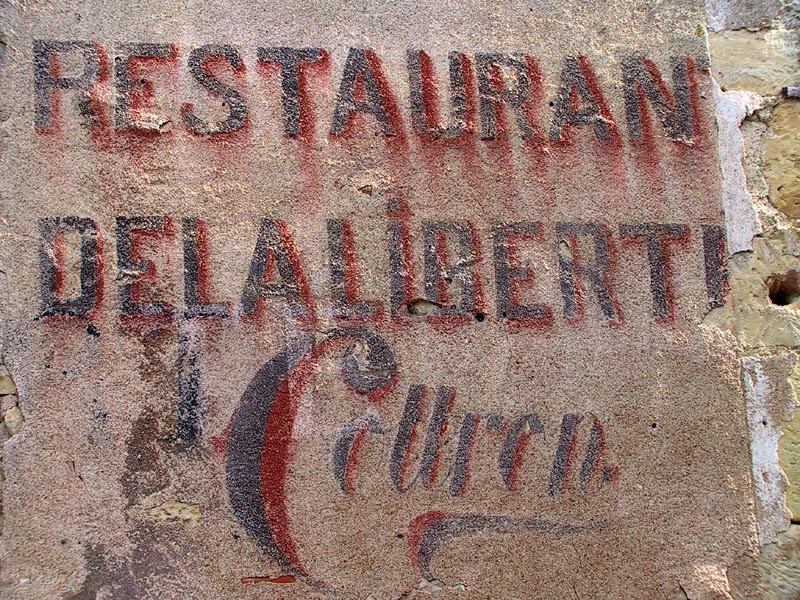
These are both in the village called Montrésor, which I've written about several times. This one is pretty recent. Montrésor has the distinction of being L'un des plus beaux villages de France — one of France's most beautiful villages.

These wall signs are a little different from the others I've posted, since they advertise an eating and drinking establishment that is just around the corner. The sign just above says Restaurant de la Liberté (the word is truncated). I can't read the last word, the one in script. Can you?

07 January 2007

Les bleus de travail

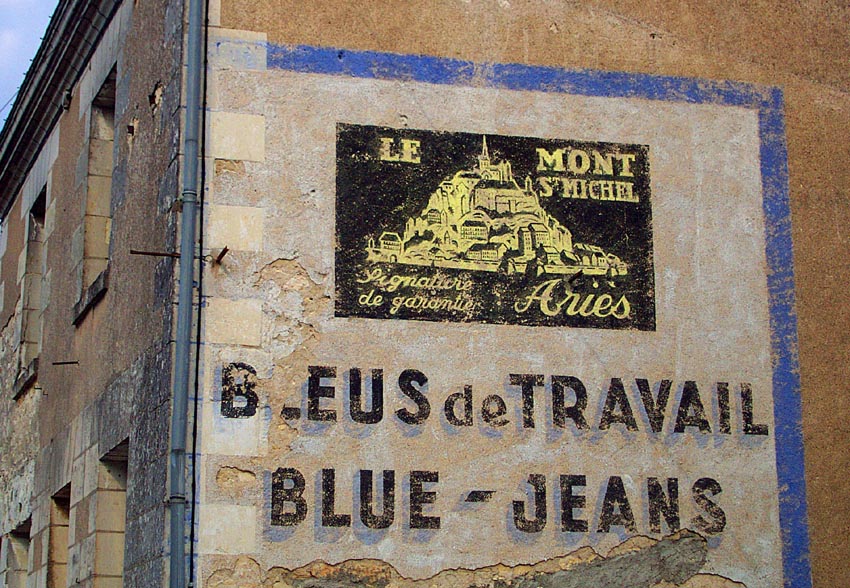
On the way from Saint-Aignan to the big shopping area south of the city of Tours, along little country roads, we pass through the village of Saint-Quentin-sur-Indrois (among a dozen or so others). At Saint-Quentin there is this nice sign advertising bleus de travail and blue-jeans.

The blue border around the wall painting definitely recalls
the color of the blue workclothes it advertises.


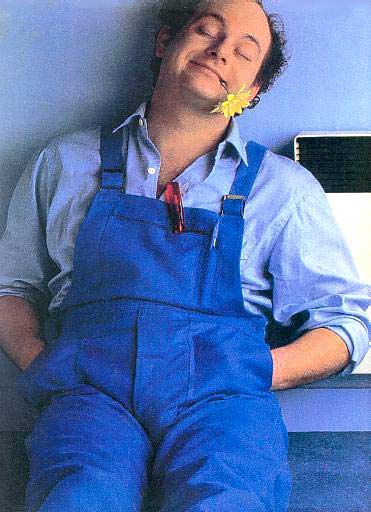
Bleus de travail are the bright blue work clothes you see men wearing all around the French countryside (and in Paris too, for that matter. They come in three styles:
  • trousers
  • overalls ("Loose-fitting trousers, usually of strong fabric, with a bib front and shoulder straps, often worn over regular clothing as protection from dirt," the dictionary says). A pair of overalls in French is called a salopette. Also called "bibs and braces" in English.
  • coveralls ("A loose-fitting one-piece work garment worn to protect clothes"), called a combinaison in French
And of course there's a site devoted exclusively to bleus de travail. That's where I got this picture:

A hard-working ouvrier in his blue salopette

Another site shows some more of these kinds of wall-advertising signs. It's pretty amazing, every day, to realize that so much information is on the web. Here's a site that says the Mont-Saint-Michel-Ariès clothing company was founded in 1913 and moved into a factory in the Breton city of Rennes in 1923.

I once bought myself a pair of blue overalls. I think I bought them at the Samaritaine store in Paris, or maybe it was the Bazar de l'Hôtel de Ville. It was in about 1982, and that was around the time when I quit smoking, just before moving back to the U.S. As you can imagine, I gained weight at that point, and was never able to wear the blue salopette I had bought. I don't know what ever happened to it (not that I would be able to wear it today!)

05 January 2007

Du Bo... Du Bon... Dubonnet

In a comment on an earlier post of mine featuring ghost signs, Claude reminded me of the signs you used to see in the subway tunnels of the Paris métro — DU BO... DU BON... DUBONNET. I remember those well from the 1970s. Look at this picture, and this one.

Here's one I found on the web. This is not wall advertising, however (que je sache).

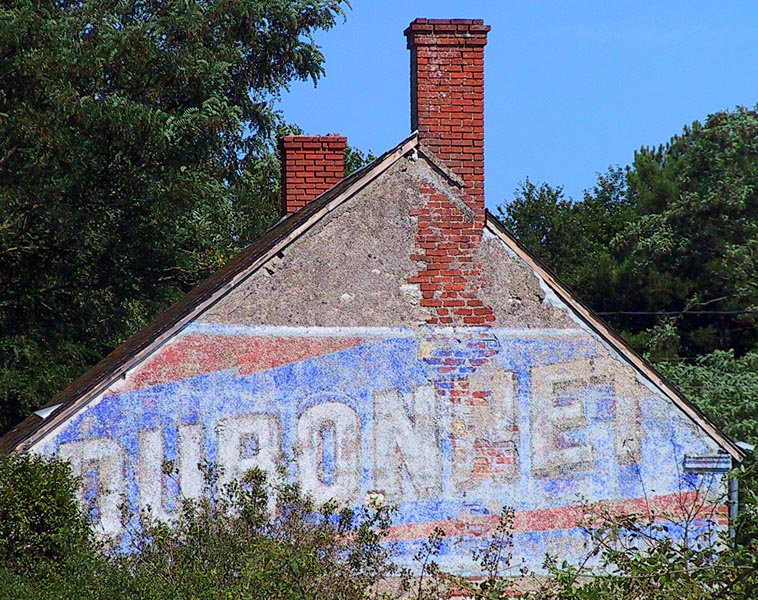
There are at least two Dubonnet signs around Saint-Aignan. This one is on the road to Selles-sur-Cher, on the N76, not far from the Suze sign I posted earlier. The sign is nearly hidden by bushes that are growing out of control near the old house.

As seen in July 2004 on the N76 between Saint-Aignan and Selles-sur-Cher
The article in the Loir & Cher Info publication that inspired me to post these pictures of old signs says that wall advertising was banned outside of built-up areas starting in 1936! So these signs must all be about 75 years old.

« Puis, en 1943, la surface de l'affiche est limitée à 16 m2 avec un message bref, sans illustration, au nom de la marque, » the article says. Well, the Dubonnet signs seem to respect at least some of those rules. Here's a close-up of the one pictured above.

Dubonnet, like Suze, is an apéritif wine, also called un vin cuit or
"cooked" wine. We would call it a fortified wine.

So what is Dubonnet? The tag lines on the ads say it is a Vin tonique au quinquina, or Vin de liqueur au quinquina. The French quinquina is related to the word quinine in English, and one dictionary says a vin au quinquina is a quinine tonic wine in English. Quinine or quinquina is a extract derived from the bark of the cinchona tree. I guess that's the derivation of the name of that other famous apéritif wine, Cinzano.

A tonic has medicinal qualities. It also stimulates the appetite. That's the point of drinking an apéritif before lunch or dinner. Such wines, including Dubonnet, Martini & Rossi, St-Raphaël, Campari, Suze, and Cinzano, are syrupy and bitter-sweet.

Here's another Dubonnet wall sign. This one is in the town of Selles-sur-Cher, about 10 miles upriver from Saint-Aignan. There's a big outdoor market in Selles on Thursday mornings.

Photo prise à Selles-sur-Cher en juin 2006

01 January 2007

Garage Danger, Charcuterie Hentry

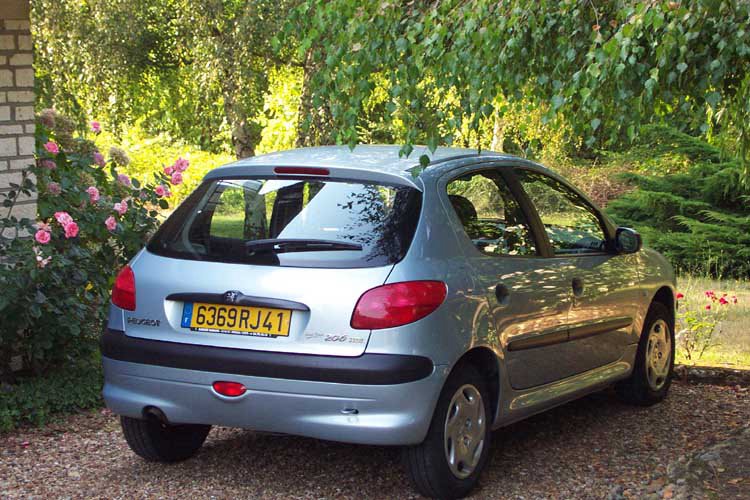
The other day I mentioned the Garage Danger, which is the Peugeot dealership in Saint-Aignan. I bought my car there in 2003. Here's the garage's and Peugeot's logos on the back hatch door of the car, a Peugeot 206 diesel.


I've discovered a new charcuterie in Saint-Aignan. I'm not going to stop buying products from Mme Doudouille, and this charcutier (pork butcher) also has a stand at the Saint-Aignan market on Saturday morning. In addition, he has a shop over in Noyers-sur-Cher, just three miles or so from our house and not much more than a mile from the Intermarché supermarket I like. So now I can think about buying charcuterie products on days other than Saturdays.


I started writing a description of our New Year's Eve dinner at our friends' house up in Mesland, but party lag caught up with me and I haven't finished it yet. Demain, peut-être.

30 December 2006

Suze

This post is for Mimi. And Jerry. Mimi will know why. I don't know if they read my blog these days, but I hope they do.

Happy New Year!

It's the last day of 2006. Let's hope for nothing but the best in 2007.

Ghost ad for the apéritif wine called Suze

On the main highway that leads east from the Saint-Aignan area over to Romorantin and Vierzon, there's this old wall ad for Suze. Suze is a before-dinner drink, an appetite stimulant supposedly, that is made from the gentian plant. Before-dinner drinks are called apéritifs.

About gentian, the American Heritage Dictionary says:
gen·tian n. 1. Any of numerous plants of the genus Gentiana, characteristically having showy, variously colored flowers. 2. The dried rhizome and roots of a yellow-flowered European gentian, G. lutea, sometimes used as a tonic.

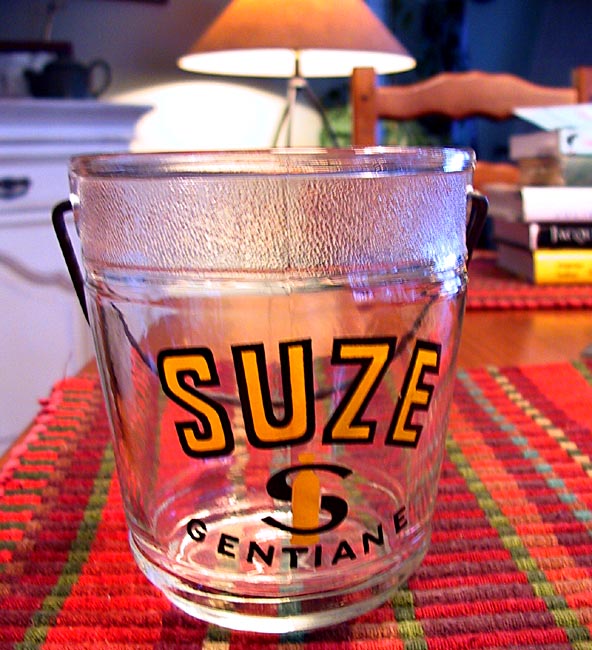
A Suze ice bucket that I bought in Laon in 1994

According to the official Suze web site, Suze-style gentiane drinks were made as early as 1795, but it was in 1889, the centennial of the French Revolution, when the name Suze was created. That same year, the Eiffel Tower opened to the public.

A close-up shot of the wall sign on the N76 highway near Saint-Aignan

* * * * *

Correction and addendum to yesterday's post about the house across from us at La Renaudière. It is not being sold. The son and daughter of Mme Simonnet are having it appraised for other reasons. I imagine they will inherit it 50/50 and they want to know the value in case one of them wants to buy the other's stake in the place.

28 December 2006

Ghosts of advertising past (1)

A few times a year we get a magazine called Loir & Cher Info in the mail. It's published by our local authorities; we live in the Loir-et-Cher département. The magazine contains articles about events and developments in our area, as well as some entertaining feature articles.

The December issue includes an article called "Les Murs-Réclames" — it's about old advertising panels that are painted onto the walls of buildings along the local roads. That reminded me that I've taken many pictures of such advertising. An American friend calls them ghost ads. A lot of them date back to the first half of the last century.

Here's an example that is located on the road leading into Saint-Aignan from the north. The Peugeot dealership/garage advertised here doesn't exist today, to my knowledge. The current Peugeot dealer in Saint-Aignan is the Garage Danger, which is owned and operated by Thierry Danger. He took it over when his father retired, I understand, so the Garage Danger has been in business for a few decades. (I bought my car there in 2003.)

Here's a close-up of the old ad.

Over the next few days, I'm going to publish pictures of some other ghost ads I've spotted as I've explored our area.

08 May 2006

Interdit

I took this picture of a metal sign and chains at a Loire Valley château in October 2000, nearly six years ago. If we hadn't decided at the last minute to come spend a week of our vacation that year in the Loire Valley, we wouldn't be living here now.

06 April 2006

Can you decipher these?

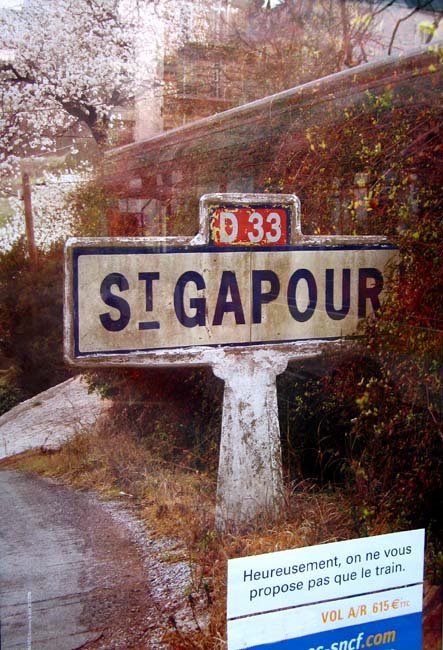
Last week in Paris I noticed an advertising campaign with posters touting the travel planning services of the SNCF, the French national railway. The SNCF's travel agency doesn't just offer train travel, the posters said, but also trips to overseas destinations.

On each poster below there is a phonetic transcription of the name of a major city that is not in Europe. It's a French spelling of the name as it is pronounced in French. You have to have a good grasp of the language to decipher the names, though they are obvious to French speakers.

Can you figure out what the advertised destinations are?


Recent "events" in Paris

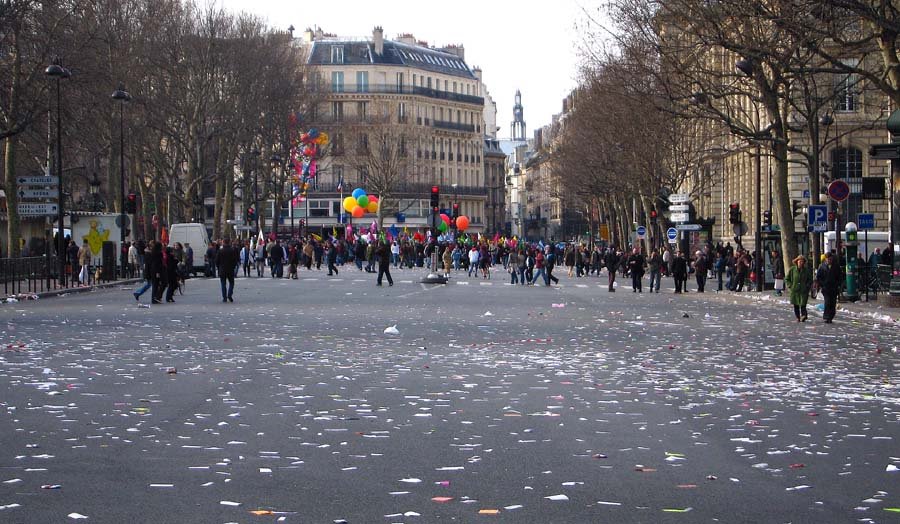
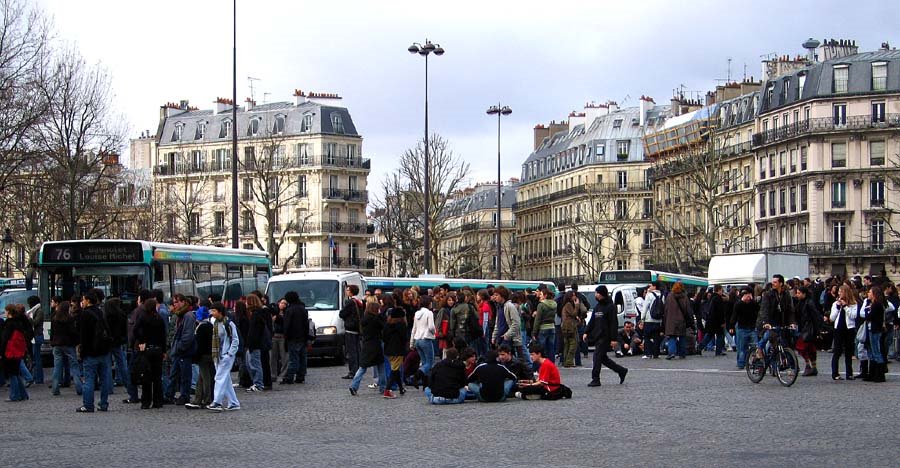
We went to Paris on Wednesday, March 29, for a week's stay. The day before we left Saint-Aignan to take the train to Paris, there was a grève générale, a general strike, called by the labor and students' unions, to protest the government's plan to institute a new First Job Contract for people under 26 years old. Under the proposed contract, young employees could be let go without cause during their first two years of employment.

The government saw such a contract as a way to encourage employers to hire more young people. Many young people saw it as discriminatory. Demonstrations followed. Reports said there were as many as three million demonstrators in the streets in cities around the country on March 28 and again on April 4, when a second general strike was called. Those were days that we spent in Paris.

Here are some of my pictures from that week. Click on the pictures to see full-size views.

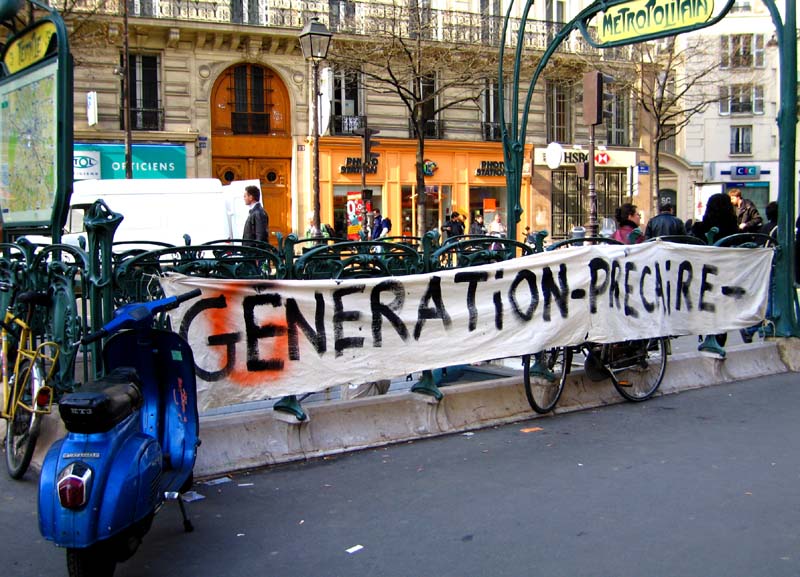
The current generation of students complains of précarité, which translates as job insecurity. The banner in the picture above was strung up at a métro station near the Place de la République in Paris on Tuesday April 4. The Place de la République is a big square in northeastern Paris where demonstrations are frequently held. The little apartment we rented for our Paris trip was just about 500 yards to the west of République.

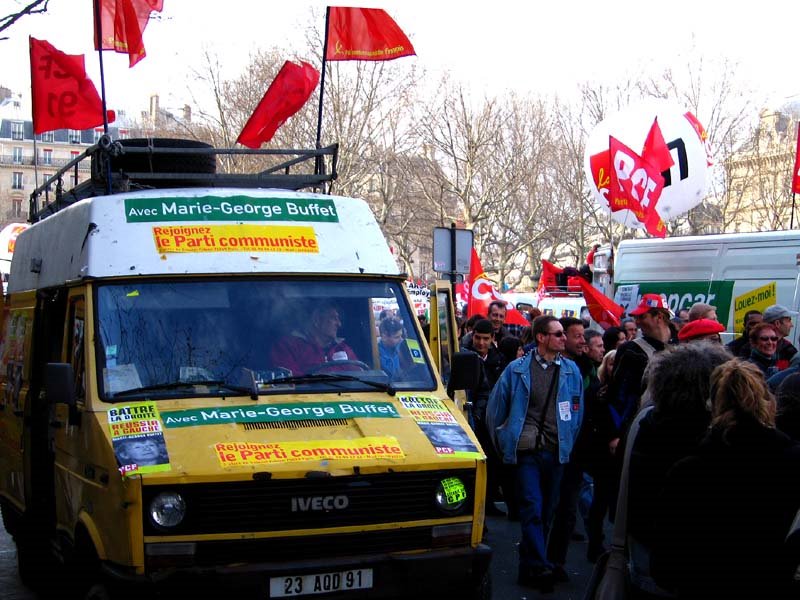
That same afternoon at République there was quite a crowdat about five o'clock. These people are marching under the banner of the PCF, the Parti communiste français. The green banners on the van carry the name of the PCF's leader, Marie-George Buffet.

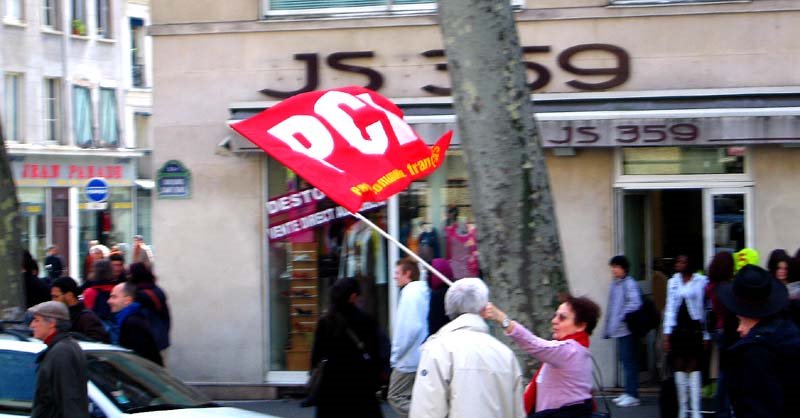
On the Grands Boulevards, near the Porte Saint-Martin, we saw a big group marching toward République. This woman is holding up the PCF's red flag.

This was the aftermath of the April 4 demonstration at République. The crowd had thinned out as the demonstrators marched to the Place d'Italie, in the southeastern quadrant of Paris.

At République, at typical scene on April 4. The CGT is the Confédération générale du travail, a labor union more or less allied with the PCF, the French communist party.

We were out for a walk around the city and just wanted to cross from one side of République to the other. At first we thought that might be impossible. But we found a break in the crowd and made it through. The atmosphere was relaxed and easy, despite what you might think.

The demonstrations on April 4 were big enough to convince the Chirac government that it had a big problem on its hands, but they weren't especially violent or even all that disruptive. Métro trains ran at just slightly reduced service levels, as did buses. Most people were able to go about their daily lives quite normally.

I took the picture above on Friday, March 31, at the Place de la Bastille. We were just walking through when we saw this sit-in. Students were blocking traffic and had backed up a few buses and trucks as well as a lot of cars at this busy intersection. The sit-in had not been announced ahead of time. The demonstrators looked like high school students. They stood and got out of the way when an ambulance came through with its siren blaring, but they wouldn't let cars and buses pass.

On April 4 we saw this march coming up the Boulevard de Strasbourg from the Place du Châtelet in central Paris, near the Pompidou Center.

If you click on the picture above to enlarge it, you'll see that the people who noticed me taking their picture were smiling and friendly. We all said bonjour to each other as they passed. The banner says "the law must be withdrawn, period!"

Meanwhile, it was common to see large fleets of police cars and vans around the city all week. Here's a convoy of police vans on the Boulevard Saint-Germain in the Latin Quarter. Isn't it funny how white the police vehicles are compared to the red flags and banners of the protesters?

The political situation is this: the prime minister, Dominique de Villepin, pushed the law creating the First Job Contract through parliament. Students and labor union members protested. The president, Jacques Chirac, then announced that he was signing the new law, but he asked employers not to hire anybody under the new contract until after it has been revised. He wanted to reduced the probationary period from two years to one, and he wanted employers to be required to explain their reasons to any employee who was let go during that year.

Some constitutional experts said it was unprecedented, even treasonous, for the president to ask people not to obey a law that he had signed. What if he asked people not to obey laws outlawing murder, for example? Other experts pointed out that the law, once revised according to the president's wishes, will be meaningless. It seems to be a muddled mess. Many are still calling for the law to be abolished.

14 November 2005

Car Talk

When I arrived in France in June 2003, I rented cars for the first couple of months. I had an Opel Zafira, a sort of minivan, which I picked up at Charles de Gaulle airport on arrival. Opel is a German brand and is owned by General Motors. I had an Opel back in the 1970s, which I lived in Champaign-Urbana. They were sold by Buick dealers in the U.S. back then.
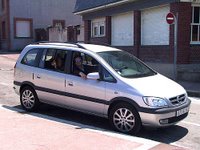
I needed a minivan when I arrived in France because there were two of us, and as you can imagine, we had quite a bit of luggage with us. We also had our dog Collette in her kennel. We couldn’t have fit all that into a smaller car. The Zafira was nice -- spacious, peppy, air-conditioned -- but it was fairly expensive. After we arrived in Saint-Aignan, I realized we didn’t need the van any more. I called Hertz in Paris and they said I could come to the city and turn the van in for a smaller, less expensive model. It was a good excuse to drive to Paris and back.

We ended up with an Opel Corsa. It’s a pretty small car, but it had a diesel engine. I liked that because diesel fuel is cheaper than gasoline, and a diesel gets much better mileage than a gasoline engine. So you win on two fronts.

When I turned the Open minivan in in Paris, the procedure was that I dropped it off in an underground parking lot and then walked about 10 minutes up to the rental office to turn in the papers. There the clerk gave me the paperwork and keys for the smaller car and I walked the 10 minutes back to the parking garage to get the car.

2003 was the summer of the great heatwave (la canicule, or dog days) in France. The temperature was in the 90s, and often the upper 90s, for weeks on end. It was already very hot that June day when I drove to Paris. So I asked the Hertz clerk, just to be sure, whether the Corsa were we getting was air-conditioned. After hesitating for a second, he said yes, it was. He lied.
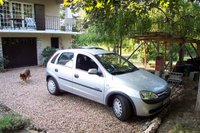
We walked back down the street to the parking garage, got in the car, and started driving out of the city. We pushed a lot of buttons on the dashboard to get the AC going. We were getting some cool air, we thought.

But by the time we were 10 miles out of the city, we realized there was no AC, just a fan. Should we turn around and go back to try to get a different car? No, I said, it never stays really hot in France for very long. And we don’t plan to do much driving anyway -- just trips to the stores as we settle in. And we planned to buy a car as soon as possible anyway.

Was I wrong or what? First, the weather never seemed to cool down. 90, 95, even 98 degrees became the norm through July. I went to a Citroën dealership near Saint-Aignan in July and asked about buying a new car. (I have wanted to own a Citroën for years, just because...) The salesman explained that he would have to order me a car from the factory. And because it was summer vacation, he couldn’t guarantee delivery before mid-October, at the earliest -- the factory shuts down for the month of August. That was discouraging. The rental car was costing about a thousand dollars a month.

A few days later, I was driving past Saint-Aignan’s Peugeot dealership, the Garage Danger. Yes, Danger -- Mr. Danger is the owner. There on the lot was a light-blue Peugeot 206, used but new-looking. I could probably buy it right off the lot. I thought it over and decided to go talk to Mr. Danger. He named his price. I said OK and returned home. The next day I called him and said I wanted the car but the price was too high. He knocked off a thousand euros ($1200 or so) and I said great, I’ll take it.

But first I had to get the money transferred from the U.S. That took a good week. And then Mr. Danger had to get the car ready, including getting it registered in my name with the proper authorities up in Blois, the capital city of our département. By the time all that took place, it was August 8, if I remember. And it was still as hot as blazes outside.
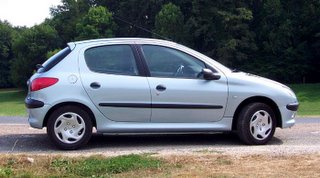
I’ll never forget the day we got the Peugeot. We had been suffering in the heat in our un-air-conditioned house. It would be 85º outside and inside when we got up in the morning, and 95º outside and close to 90º inside in the afternoon, and it was miserable. After eight years living in San Francisco, we had longed for some hot summer weather, but this was too much. The Peugot has AC!

That hot August day, I said that it was a good day to go for a ride. We put Collette in the car and headed out into the countryside with the AC on full blast, and spent the afternoon blissfully. The car’s thermometer said it was 40ºC outside that day -- it always reads a little hotter than the actual temperature when it’s sunny outside. 40ºc is 104ºF, by the way. We were in heaven in our air-conditioned Peugeot 206.

A couple of days later, we had another excuse to go to Paris: we had to turn the Opel Corsa in. I drove up in the Peugeot (with the AC on full blast again) and poor Walt drove up in the no-AC Corsa. Collette rode with me. But all three of us got to ride back in the cool Peugeot.

The Peugeot 206, a 2001 model, actually has what they call automatic AC. On the display, you just set the interior temperature you want and the AC does its job. Very nice. It also has automatic windshield wipers. There’s a rain sensor built into the middle of the windshield, so when it rains the wipers start working. They swipe across the glass intemittently as required by the amount of rain hitting the windshield, and they work great.
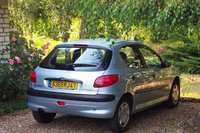
The 206 is a very small hatchback car with four doors. The back seat is small but OK, and the front seats are comfortable. It has a 5-speed manual transmission -- only a small percentage (somewhere I read 6%, I think) of the cars sold in France even now have automatic transmissions. Personally, I’ve always driven a stick shift.

And the 206 has a big engine for such a small car. How small is the car? It’s 23 inches shorter than a Toyota Corolla, and 35 inches shorter than a Honda Accord. The engine is a two-liter, 90-horsepower, four-cylinder, sixteen-valve, fuel-injected, turbo-powered diesel. It has plenty of pickup and develops a lot of torque for going up hills.

So two years later, what do I think about the Peugeot? What are French cars really like? Are they comfortable? Reliable? Fun to drive? Economical?
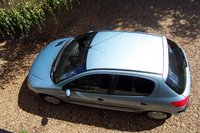
I say yes to all of the above. The 206 has 60,000 miles on it now. I recently had a breakdown when I was out on the road about 75 miles north of Saint-Aignan. It was something called the Damper pulley that failed. I limped into a Peugeot garage that afternoon. They replaced the Damper pulley because it had broken, and also the timing belt because it’s supposed to be replaced at 65,000 miles anyway. Peugeot picked up 40% of the cost of the Damper pulley repair when I called the company’s customer service line a few days later. They said the Damper pulley wasn’t scheduled for replacement until 100,000 miles.

I get between 40 and 50 miles to the gallon of diesel fuel. Diesel fuel costs about 1.05 euros a litre right now, at the best prices -- that’s about $4.75 a gallon in U.S. terms. The tank holds 50 liters, or about 13 U.S. gallons, so I can easily go 500 miles on a tank of gas or even 600 miles if I’m on the road and driving at no more than 60 mph.

The one thing the Peugeot doesn’t have that I would really like is cruise control (un régulateur de vitesse in French). I have a heavy foot, so I have to be careful. The car will cruise nicely at 80 mph or even 90 mph, but speed limits in France are strictly enforced now. On two-lane highways the limit is 55 mph, on four-lane roads it’s 65, and on the autoroute it’s 80 mph or so (130 kph).
Some of the other good features of the Peugeot are headline-aiming -- you can adjust the headlight beam up or down to adapt to the load you are carrying or to traffic conditions. It also has removable rear seat cushions, so the rear seat backs can fold down pretty flat and give you a lot of cargo or dog room when you have only two passengers.