Showing posts with label cars. Show all posts

26 April 2007

Paris: Rue de Belleville

Last Saturday, we spent the morning in the Belleville neighborhood in northeast Paris. The rue de Belleville is the border between the 19th and 20th arrondissements. We parked the car near the Belleville métro station about 8:45 and then walked up to the Pyrénées station and on to the Buttes-Chaumont station.

It turned out that parking was free on the boulevard de la Villette on Saturdays, so we were able to abandon the car for the morning.

It was just Walt and I, and we were looking for a restaurant he had read about on Clotilde's Chocolate and Zucchini blog. It's a Thai restaurant called Lao Siam, and we want to have lunch there. We were supposed to meet Tony and Chris at the Buttes-Chaumont station at 10:00.

We walked up the rue de Belleville, very quiet at that hour, looking for the street number (Lao Siam is at number 49). That's how I noticed this door with a plaque over it. It said, among other things, EDITH PIAF in all caps.

The singer Edith Piaf was born here,
at no. 72 on the rue de Belleville in Paris.


I crossed the street for a closer look. The sign says Piaf was actually born on the steps in front of this door (translation in the photo caption). Piaf's birth name was Édith Giovanna Gassion. After a tumultuous international career France's best-known singer, she died at the age of 48 in 1963. Tens if not hundreds of thousands of people flooded the streets of Paris to attend her funeral at Père Lachaise cemetery.

On the steps of this building
was born on the 19th of December 1915
in utter destitution
EDITH PIAF
whose voice, in later years,
would shake the world.

People all around the world know the sound of Piaf's voice and at least one of her famous songs: La Vie en Rose. She wrote it in 1945. A new movie with that title is out now and the reviews have been good. In France, the film is called La Môme (The Child), which was Piaf's stage name at the beginning of her career in Paris.

Walt and I found the restaurant, which looked like it might be open for lunch that day, and continued our walk up the rue de Belleville. When we got to the Pyrénées métro station, we went into a café to have breakfast. For Walt, that was a grand café noir (also called un double express). For me, it was the same thing plus a croissant.

A butcher shop on the rue de Belleville

Then we walked up the avenue Simon-Bolivar to meet Chris and Tony at the Buttes-Chaumont métro stop. We were going to take advantage of the fine weather by taking a stroll through the park and taking some pictures. It was full of joggers and people walking dogs. Other people were pushing strollers or walking their toddlers. The flower beds were in full bloom and the views of Montmartre were spectacular.

Sacré-Cœur and the Butte Montmartre
seen from the Parc des Buttes-Chaumont


After seeing the park we walked back over to the rue de Belleville. We walked up even further, since we had an hour or so to kill before it would be time for lunch. We went into a church and looked around, but mostly we just walked along the street looking into shop windows.

This is not a great picture, but it shows how steep
and shaded the rue de Belleville is. You can see
the Eiffel Tower off in the distance.


At noon we had a fine lunch at Lao Siam. I remember we had prawn spring rolls and also beef spring rolls as an appetizer. I had prawns with vermicelli noodles as my main course, and Chris had a stuffed crab, but that's all I remember. You can read some customer reviews (in French) of the Lao Siam restaurant here.

To the memory of the pupils of this school
deported from 1942 to 1944 because they were Jewish,
innocent victims of the Nazi barbarity
with the active complicity
of the Vichy government
they were exterminated in the death camps

After lunch we walked on down the rue de Belleville, looking at all there was to see, including the plaque pictured above, and continued on into other neighborhoods.

23 April 2007

Driving to and in Paris

We drove up to Paris under clear sunny skies last Friday morning. Our route took us from Saint-Aignan and through the forests of La Sologne toward Orléans. We circled south and east of Orléans on small roads and then made our way northeast toward Malesherbes and Milly-la-Forêt, passing just west of Fontainbleau on the A6 autoroute as we headed north toward Paris.

Our first stop was in the suburbs at Evry, where there's an Ikea store. We wanted to buy a light fixture we had seen on a trip to Ikea in Nantes about six weeks ago, and the Ikea web site showed that the Evry store had it in stock. It took us three hours to drive from Saint-Aignan to Evry, in the far south suburbs, and we arrived there at 11:00.

A Paris bureau de tabac that sells
"consumables"
like printer paper and ink cartridges.

After the Ikea stop, it only took us about 30 minutes to get into Paris. Traffic was very light, because, I think, the Paris schools were on holiday last week. A lot of people took their kids and got out of the city, I imagine, to take advantage of the fine weather we've been having since the first of April. So there were hardly any traffic jams and street parking was pretty easy. We like to drive to Paris and, when conditions allow, we drive around in Paris to go from neighborhood to neighborhood and do what we want to get done.

Instead of going to our hotel at noon, which we though might be too early for them to have our room ready, we decided to go have lunch somewhere. We drove into the city on the avenue de la Poterne des Peupliers (13th arrondissement), drove through the little circular place de l'Abbé G.-Hénocque looking for a likely café or brasserie for lunch, and then turned left on the rue de Tolbiac and headed toward Alésia in the 14th.

A quiet morning in Paris

We saw plenty of cafés and restaurants but were taking our time looking. We had two hours to kill before we were suposed to call our friends at their holiday apartment in the Marais.

Traffic was so light that we just kept going. We drove the length of the rue d'Alésia across the 14th and into the 15th arrondissement on the rue de Vouillé. These are old stomping grounds for me, and I told Walt we'd find a restaurant just a little farther down on the rue de la Convention, near its intersection with the rue de Vaugirard.

Paris has become a multi-ethnic city.

Walt noticed a Japanese restaurant along the way, so we started thinking about that as a lunch option. And then we thought about the Japanese restaurant that is very near a friend's apartment on the rue Lecourbe, near the Sèvre-Lecourbe métro station. Is that too far to go? No, not with such light traffic. So we drove up there on the rue de Vaugirard and found a place to park pretty fast, on the rue Blomet near the rue des Volontaires. We walked the equivalent of four or five blocks to the restaurant and got a table immediately.

You might be surprised that we would want to eat Japanese instead of French food in Paris, but when you live in the French countryside you eat French food every day of the week. We wanted something exotic.

Walt had a rice bowl (vinegared sushi rice) with salmon sashimi. I had a plate (a board, actually) with four pieces of sushi (rice with four different fishes — tuna, salmon, a white fish, and a large prawn) along with six California rolls (sushi rice with avocado and other vegetables). Both our meals came with miso soup and a shredded cabbage salad in a sweet vinegar dressing. We had a carafe of white wine. It was a delicious lunch. Most of the other people in the restaurant were eating meat or poultry grilled on skewers, but some like us were having raw fish.

Paris sidewalks

After lunch we drove down the rue Lecourbe out to the south edge of Paris and the inner ring road. Construction of a new light rail line has recently been completed along that road, called le boulevard des Maréchaux because long sections of it are named for different French military figures of the past. We wanted to see it. The number of lanes for car traffic were reduced when the rail line was built down the center of the boulevard on a grassy median strip.

We drove (again, with little or no traffic) alongside one of the trams on the new line, and we noticed that it moved at a brisk pace. We were just barely able to keep up with it. It stopped to load and unload passengers, and we stopped at traffic lights. The whole effect was very modern, open, airy, and efficient. The look and feel of the old boulevard has really been improved. The light-rail trains have the right of way at all intersections, so cars have to wait.

In San Francisco, Walt says, it would be just about impossible to get such a rail line built. When it comes to reducing the lanes available for automobile traffic, the car lobby is just too strong in California. There would be an outcry. It would take years. Everybody would be upset. And the city would just have to watch traffic get worse and worse.

A Paris fixer-upper in the 10th

In Paris, the new tram was planned, approved, and built in record time, and the result is fantastic. The trams were full of passengers. I'm sure there were Parisians who were upset to see the number of lanes for cars reduced. But what's the point of encouraging people to drive cars in the city — especially commuters? There's too much traffic already.

So why am I driving around in Paris? Well, because I can, I guess. Once in a while. Last year when we went to spend a week in Paris, we took the train and then walked, rode the métro and buses, and didn't feel the need for a car at all. It's all in the particular circumstances of your trip. What's nice is that driving is an option, not a necessity.

Coming up out of the métro

It seems right to me that the authorities should be encouraging people to use public transit, to walk, to ride bicycles, but not to drive. Paris has an amazing métro, an extensive bus network, an efficient regional rail system, and now light-rail lines around big parts of the city. It now has a lot of bike lanes, and that's something new. There are more an more pedestrian streets, and there's talk of levying a special tax on drivers who want to take their cars into the center of the city. London has already done that.

Driving in Paris is a once-in-a-while luxury, as far as I'm concerned. Usually traffic makes it slow, complicated, and frustrating. We were lucky to end up in Paris when so many people were on holiday outside the city. If I were going to be there for more than 24 hours, I'd leave the car at home.

09 March 2007

Walking ... er, climbing ... around on the Mont St-Michel

What did we do after lunch at the Mont Saint-Michel? I told Walt that my report would be: we walked around the ramparts leaning into the wind so that we wouldn't blow away. We climbed up and down the old narrow streets and staircases so many times that we nearly wore a path in the stone. We walked in the mud. Then we sat down at the Vieille Auberge to have a pre-dinner glass of wine and it started raining — so we sat there in the rain and enjoyed our apéritif.

In Normandy, you are supposed to experience the rain. You might as well enjoy it. The fine Normandy drizzle is good for your complexion, they say. So we sat out in the rain and enjoyed it.

A postcard I bought shows the Mont surrounded by mud.

If all that doesn't sound like fun to you, you can skip the Mont Saint-Michel on your next trip to France. At least it wasn't crowded.

Most of the time, the Mont Saint-Michel sits out in the middle of a gigantic mudflat. Only once in a while does the tide flood in and really turn the place into an island. Or a peninsula, strictly speaking, since the man-made causeway that links the Mont to the mainland doesn't get flooded. There is a plan to demolish that causeway (la digue, in French, which means "dike") and replace it with a bridge, turning the Mont back into the island it used to be.

Another postcard: the Mont is virtually an island at flood tide.

From up in the village and on the ramparts around the edge of the Mont, you are treated to wide views of the surrounding mud flats, with gulls and other water birds soaring over them. There are rivers of water flowing through the grayness of the mud.

Views over rooftops out to the mudflats

Walking the circle that includes the higher streets of the village and the ramparts on top of the old walls wouldn't take very long except for the many stairs there are to climb. We must have walked around three or four times as we waited to see evidence that the tide really was going to rise and water was going to surround us. After the third or fourth time, I suggested that we take a walk out on the causeway to see the views from there. My legs were aching.

We had already had a causeway "incident" earlier. When we first arrived, we were told to park in one of the lower lots — a lot that was supposed to be flooded at high tide later in the day. "Walk up to your hotel," the parking attendant said, "check in, and get your key. With the key you will get a 'badge' that will open the gate to the parking lot reserved for hotel guests. Park your car there. That lot doesn't flood."

Up an down stairs with views of the flats.
That's Walt on the lower right.


We followed those instructions. But we couldn't get the "badge" we were given at the hotel to open the gate to the hotel parking lot, which is up on the causeway. I sat there in the car in front of the gate, motor running, for what seemed like an eternity while Walt tried everything, waving the so-called badge in front of every part of the gate and surrounding posts that looked like it might be the badge reader. Nothing doing. Electronics! Phooey!

Up the steps and then back down: sore calves

Finally, we drove back out to the parking attendant's booth and asked the person to explain once more how it was supposed to work. She did. We drove back up, and there was a man about my age there doing the same thing Walt had been doing — waving the badge around in front of every opening, slit, or box that looked like it might contain the badge-reader. Walt talked to the man and then tried again and voilà, the gate opened!

Mont Saint-Michel rooftops

The man thanked us profusely. He said he had been there for five minutes trying to get it to work and feeling like a fool. We had done our good deed for the day, and we managed then to park our car out of reach of the impending waves. We were fed, we had the key to our room, and the car was safe. Now we could enjoy the afternoon.

07 March 2007

Le Mont Saint-Michel: getting there

We had an easy drive most of the way up to the Mont Saint-Michel. We left the house at 8:00 a.m. under clear skies. I expected the trip to take us about four hours, but it ended up taking five hours. For the first couple of hours, we were averaging about 75 km (45 miles) per hour. In other words, after the first two hours on the road, we were about 150 km from home.

Arriving at the Mont, we were greeted by signs like this one.
Some parking areas were under water at high tide.

When you are driving on small roads (routes départementales or even routes nationales) in France, you can't go much faster than that. The speed limit is 90 kph (about 55 mph), but there are many areas where the limit is 70 kph, and in the towns and villages the speed limit is 50 kph (30 mph). You always end up driving through a lot of villages and towns on the D and N roads. It's picturesque if you're in the mood, but it is slow.

Even out in the countryside, there are quite a few big trucks on the road. In fact, trucks are a real scourge in France now, I think. It's hard to find a straight stretch where you can see around them, much less actually pass them.

Oops! This car backed up a little too far.
It had to be towed out of the muck by a truck.

And then there's the farm equipment. Several times over the course of a half-day drive, you will find yourself behind a tractor on a narrow, curvy road. So you just toodle along in a line of cars behind the slow-moving vehicle. It can be frustrating. You have to keep a positive attitude. We were lucky that we didn't have any significant rain along the way on this trip, because that too can slow you down significantly.

Finally, the worst thing that can happen is a detour. We had been on the road for 3½ hours and had just driven through the town of Vitré, on the edge of Brittany. There's a great-looking château there, by the way, but we didn't have time to stop. We'll have to go back.

A collection box for the lifesaving service at the Mont

As we left Vitré, I said to Walt that I thought we'd be at the Mont by 12:30 or so. It would be perfect timing for the lunch we were planning to have there. Our planned route would take us along a little route départementale toward the west, farther into Britanny, and then turn straight north toward our destination. And then there it was: the dreaded yellow ROUTE BARRÉE — 5 KM sign.

The dilemma then was: what do we do? Keep going and hope for the best, or turn back and try to find an alternate route? Well, I'm a charge-ahead kind of guy when I'm at the wheel of a car, and I didn't want to turn back. There was bound to be a way through the construction or whatever else it was blocking the road. Often the route turns out not to be barrée at all because the work crew has gone off to have lunch in a local café.

In this case, the road was actually closed but there was a way through, of course. We ended up driving on unmarked, winding, narrow roads for 45 minutes or so.

These were roads that we couldn't find on our map. Just when we were about to give up hope, you came upon another yellow Déviation sign pointing the way. Then we realized they really were sending us way around our elbow to get us to our thumb, so we took matters in your own hands and struck off into uncharted territory on the faith that the little back road that went toward this or that village wouldn't turn into a gravel track a couple of miles out or end at a washed-out bridge.

Walking up into the village at the Mont Saint-Michel

As I said, we did end up spending only 45 minutes lost out in the wilds of rural Brittany. We turned off the marked detour at Saint-Christophe-des-Bois and made it to Mecé without incident. The little Peugeot was just bouncing along on the rough pavement of the winding country lanes when, horror of horrors, just after the hamlet called La Sauqueretière a huge tractor, wider than the roadway itself, pulled out of a farmyard right in front of us.

Merde, I thought, now we are in for an interminably long crawl for who-knows-how-many kilometers. Kiss that Mont Saint-Michel lunch goodbye. And then a miracle: after less that one kilometer (felt like 10 minutes), the monster tractor turned off onto a dirt road and the way was clear in front of us.

A jumble of rooftops over the streets of the Mont Saint-Michel

A few miles farther on, we ended up turning onto a stretch of autoroute (freeway, actually). We hadn't planned to take the autoroute, because it was less direct than the little roads, but it suddenly seemed like a good idea. It was bound to be faster. The speed limit on it was 130 kph (80 mph). And faster it was too: we were on the Mont by 1:00 p.m., sitting in a restaurant ordering our lunch.

12 January 2007

Remembering the Simca

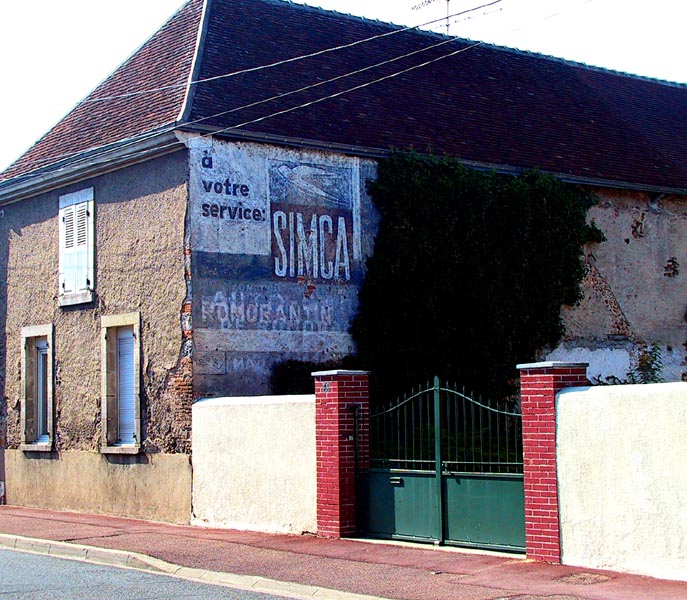
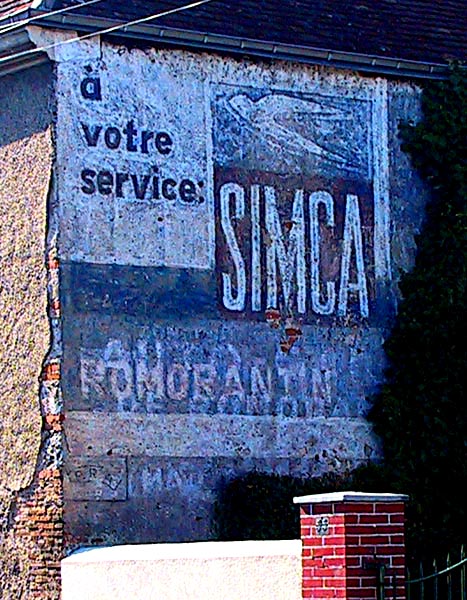
Another wall sign, this one in the town of Mennetou-sur-Cher, about 25 miles east of Saint-Aignan, on the river. It advertises Simca automobiles and a garage/dealer in the nearby town of Romorantin-Lanthenay. Simcas are no longer made, and the garage is surely just a local memory.

Wall-advertising in Mennetou-sur-Cher, along the Nationale 76

Personally, I have a long history with Simcas, even though I don't think I've ever driven one. I don't even know if I've ever been a passenger in one. Production of the cars ceased in late 1970s or early 1980s, so this Simca-fascination of mine goes back quite some time.

In 1972-73, I lived in the city of Rouen in Normandy and worked as an English-language teaching assistant in a high school there. The job was part-time and the pay was low, so I didn't have a car that year. I also didn't need a car because I lived in the middle of the old city and could walk to work and to nearby shopping areas.

It was just as well, because I couldn't have afforded a car. I had sold my 1966 Ford Fairlane (I shudder to think I drove such a thing — it was a college graduation present from my father). when I left the States that summer of 1972.

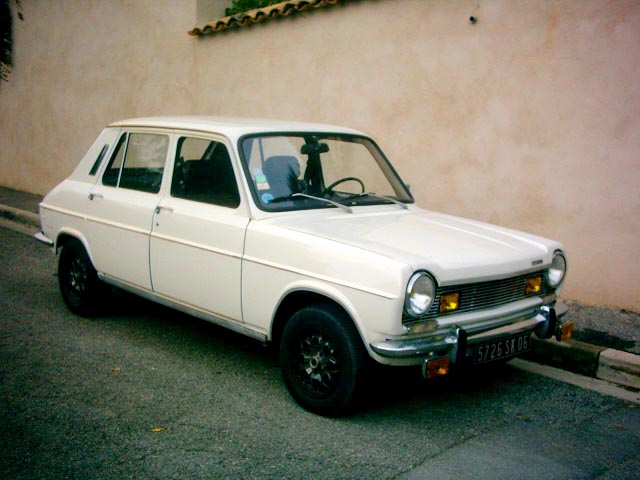
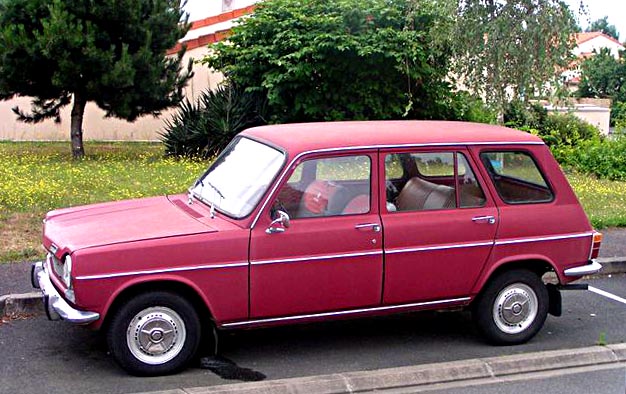
I really wanted my next car in America to be a Simca 1100 hatchback.

I was fascinated with French cars and European cars in general. They seemed so much more sensible to me than the big "boats" so many Americans drove around in at the time. The Citroën 2CV (la Deux-Chevaux) and the Renault 4L were two of the most distinctive small cars in France back then. There were plenty of other models, too, but those two were really the people's cars of the time. You still see quite a few of each on the roads out here in the countryside.

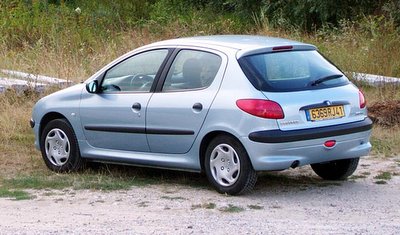
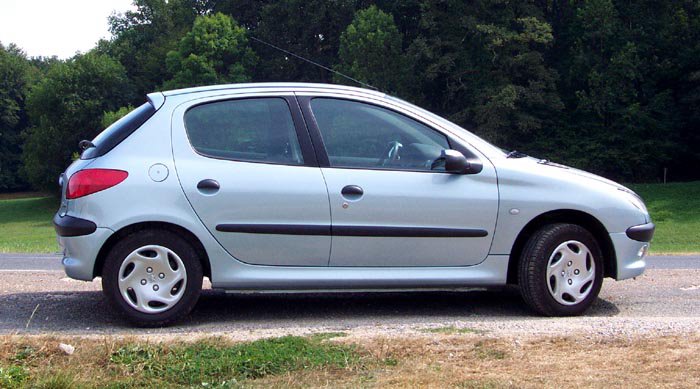
And there was also the Simca 1100. It was an innovative model because it was one of the first hatchback cars, unless I'm mistaken. The 2CV was a four-dour sedan, and the 4L was a tiny station wagon. The hatchback was a new concept in those days. Hatchback models are still very popular in Europe, though they are kind out of fashion in the U.S. My little Peugeot 206, which is a 2001 model, is a hatchback. It's very practical.

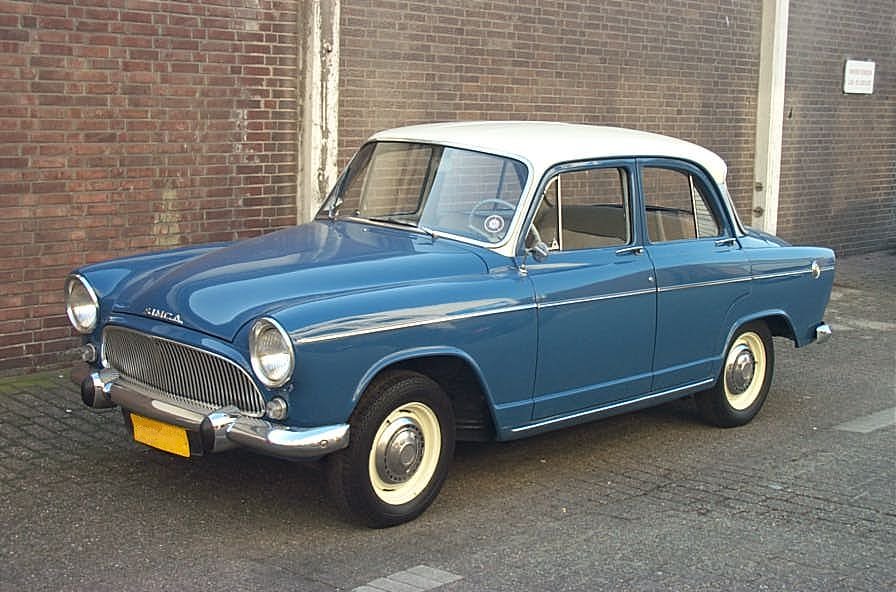
A 1961 Simca Aronde. The Aronde was introduced in the early 1950s.
This is the Simca model I remember seeing in North Carolina back then.
Thanks to Wikipedia for the photo.

Simca had some very successful cars in France in the 1950s, and I even remember that somebody in my home town in North Carolina had one in the late '50s or early '60s. At that time, there were still U.S. military bases in France, and I'm sure it was some of the returning military personnel who brought their European cars home with them. We learned to recognize Simcas and Renault Dauphines, as well as English Fords, Hillmans, and Vauxhalls, a few Fiats, and, of course, VW Beetles.

The Simca 1100 was a new model in 1967. It had front-wheel drive and independent suspension all-around. In addition to the hatchback, there was a station wagon. In all, about 2.2 million Simca 1100s were built.

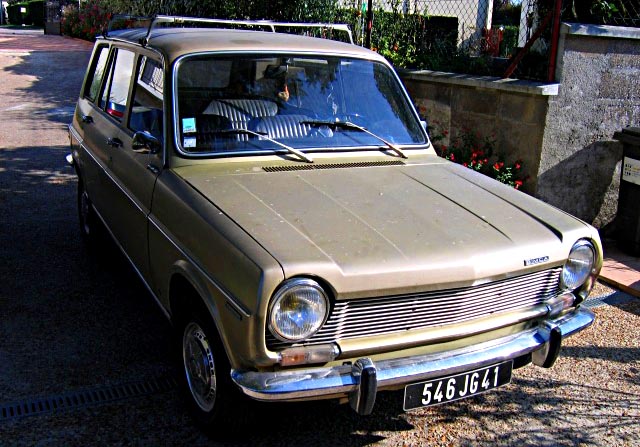
A Simca 1100 station wagon that is currently for sale

Anyway, I really wanted a Simca. Chrysler had taken a controlling interest in the Simca company in the 1960s, and owned it outright by the early 1970s. Chrysler France kept the Simca brand name. I hoped that when I returned to the U.S. from Normandy in 1973 I would be able to buy myself a Simca 1100 from a Chrysler dealer. I was going to need a car in the U.S.

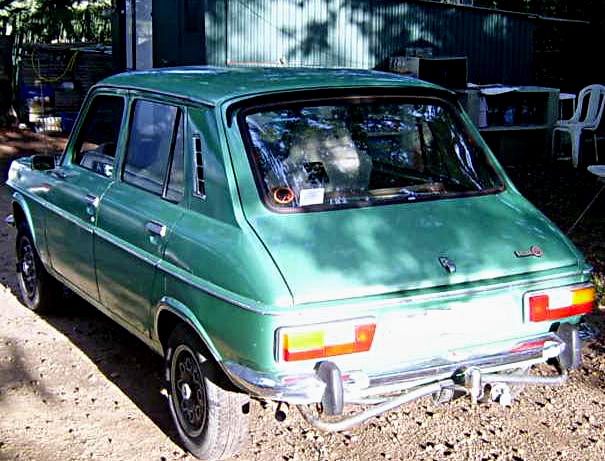
This one is a Simca 1100 utility vehicle. It's for sale too.

That wasn't to be, however. Chrysler didn't sell them in the U.S. I ended up buying a little German Opel 1900 from a Buick dealer in North Carolina. My father co-signed the loan for me, and the Buick dealer was where he bought his cars. He was scandalized that I would pay good money for such a little putt-putt car.

A close-up of the old Simca sign

The brand-new light-blue Opel 1900 (called an Opel Ascona in Europe), with an AM radio, a heater, and a manual transmission, cost about $3,300. Such a deal! It didn't have air conditioning, FM radio, electric windows, or even power steering or power brakes. But it had four doors and a big trunk. It got good gas mileage. It was the best I could do.

I know I have a picture of that old Opel somewhere. I drove it until 1979, when I sold it to return to France one more time. The Opel got me back and forth from North Carolina to Lakeland, Florida, and Champaign, Illinois, many times. I don't remember how many miles I put on it, but I bet it was a lot. I think I sold it for $600 in August 1979.

So no Simca for me... not back then. The only Simca 1100 I've noticed since I've been in France this time is an orange one that I spotted last year down in Châtillon-sur-Indre. I was surprised to see one that was still, apparently, road-worthy.

The Simca wall-advertising I started this posting with led me to start looking around on the Web to see if there were any available. It turns out that there are a lot of classic Simca 1100 pictures on this site, and more at this one. Wikipedia has a good history of the brand (in English or in French).

Another 1100 currently for sale (unless it's already been sold)

And if you want to buy a Simca 1100 today, there are plenty of ads here. All the pictures of 1100s in this posting are ones I got from these ads (can't imagine anybody minding some free advertising).

This is the Simca 1100 station wagon that a man in Blois is trying
to sell. Sometimes we think having a second car would come in handy,
especially a station wagon. The guy wants 1200 euros for this one.


But... but... now I've learned that one is for sale in Blois. What is the attraction of these old cars? I'm very tempted to call the man who's selling it. I'm old enough to know better. I wonder if the thing would even make the 25-mile trip from Blois to Saint-Aignan without incident.

If I knew anything about working on car motors, having a classic car would make more sense. To be continued...


01 January 2007

Garage Danger, Charcuterie Hentry

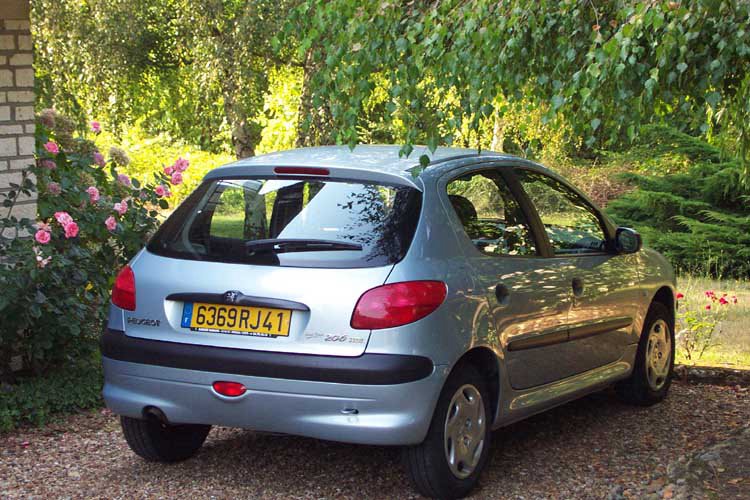
The other day I mentioned the Garage Danger, which is the Peugeot dealership in Saint-Aignan. I bought my car there in 2003. Here's the garage's and Peugeot's logos on the back hatch door of the car, a Peugeot 206 diesel.


I've discovered a new charcuterie in Saint-Aignan. I'm not going to stop buying products from Mme Doudouille, and this charcutier (pork butcher) also has a stand at the Saint-Aignan market on Saturday morning. In addition, he has a shop over in Noyers-sur-Cher, just three miles or so from our house and not much more than a mile from the Intermarché supermarket I like. So now I can think about buying charcuterie products on days other than Saturdays.


I started writing a description of our New Year's Eve dinner at our friends' house up in Mesland, but party lag caught up with me and I haven't finished it yet. Demain, peut-être.

19 December 2006

Contrôle technique — passed!

I took the car in this morning. The man in charge at the inspection station checked the lights and then looked under the hood (at I don't know what).

Then he drove the car into the garage so that the two front wheels were stopped on two rubber pads in the floor. Sitting at the wheel, he used a remote control to activate the pads, which vibrated and bounced violently, fast at first, and then more and more slowly.

Then he drove the car forward until the back wheels were on the pads and did the same thing. The car shook and bounced but not too much, I guess.

In between vibrating the front end and the back end, he drove the front wheels down into a little recess in the floor that had rollers in it. He started the car, which is a front-wheel-drive model, and gunned the motor. The wheels spun and the rollers rolled. After vibrating the rear, he drove the rear wheels into the roller-equipped recess and turned on the roller so that the back wheels spun really fast.

After all that, he drove the car over one of those underground pits that make the old pneumatic racks obsolete. I don't know what he did underneath the car, but five minutes later he came and told me everything checked out fine.

« Tout est impeccable là-dessus », he said. Everything is impeccable. I paid my 60 euros and drove on home. He never said a word about the brakes or the tires.

14 December 2006

Inspecting the Peugeot

It's time for the Peugeot's dreaded contrôle technique — again. It's been two years already. The contrôle technique is a thorough inspection designed to make sure your car is road-worthy. The checklist on the web lists about 125 things that need to be inspected and OKed.

Last summer I decided to stop having service on the car done by the dealer where I bought it. I thought the garage in the village might be less expensive.

Fact is, the mechanic at the dealer's had rubbed me the wrong way back in the spring. He treated me like an idiot, I thought, because I hadn't had the air conditioning serviced since the summer of 2003. In my opinion, servicing the A/C when it needed servicing was his responsibility, because I took the car to him faithfully every six months. Doesn't he have a manufacturer's service schedule he adheres to? Why yell at me?

Besides, if I took the car to the village garage, I realized, I could walk back home instead of sitting there waiting for the service or repairs to be done. Then I could walk back down and get the car later in the day, or even the next day.

However, now I have the impression that the village mechanic charges as much or more for things like oil changes as the Peugeot dealer in town does. The bread lady told me he has the reputation of charging premium prices for the work he does.

When I had the village mechanic do an oil change and a permutation des roues (tire rotation) back in August, he said I would need to have my brake disks replaced in December before my next contrôle technique. That sounds like a job costing big euros to me. The car's brakes work just fine, by the way, so how do I know he's not just trying to make some extra fric (moolah)?

Last week I got a letter from the dealer saying it was time for the next contrôle technique and he would be glad to take care of it for me. So I thought maybe I'd go back to see him. Maybe he wouldn't want to do the brake work and I'd save some argent. With the U.S. dollar being basically worthless these days (merci, W.), that would make me happy.

Then I got a letter from a contrôle technique station over by Intermarché, on the other side of the river, saying I should call them for a rendez-vous (that sounds more exciting than it really is — it's just an appointment). I didn't even know you could take your own car to the inspection station without working through a dealer or a repair shop. I've learned something.

So now I think I'll take the car directly to the contrôle technique station. Why not eliminate the middle man? Maybe the car will sail right through the inspection (comme une lettre à la poste, I think you'd say in French).

My other worry about the car inspection is the tires. I bought four new ones about 18 months ago, but they weren't exactly the tires I was supposed to put on this particular car model. My Peugeot officially requires tires rated H, which means they are guaranteed to be safe at speeds up to 130.5 mph (210 kph).

Needless to say, and despite some opinions to the contrary, I don't drive at such speeds. Not to mention the fact that the only tires the shop had in stock the day I went in were rated T, or safe up to 118 mph (190 kph). Since the highest speed limit in France is 78 mph (120kph), I figured the T tires should do nicely. We'll see if the inspectors agree with me.

Tomorrow I have to call and see how long the inspection takes. I'll have to sit around and wait for them to do it, since I don't have transportation home. There is no local bus service out here in the country, and it's too far to walk. More next week, after the inspection.

14 November 2005

Car Talk

When I arrived in France in June 2003, I rented cars for the first couple of months. I had an Opel Zafira, a sort of minivan, which I picked up at Charles de Gaulle airport on arrival. Opel is a German brand and is owned by General Motors. I had an Opel back in the 1970s, which I lived in Champaign-Urbana. They were sold by Buick dealers in the U.S. back then.
I needed a minivan when I arrived in France because there were two of us, and as you can imagine, we had quite a bit of luggage with us. We also had our dog Collette in her kennel. We couldn’t have fit all that into a smaller car. The Zafira was nice -- spacious, peppy, air-conditioned -- but it was fairly expensive. After we arrived in Saint-Aignan, I realized we didn’t need the van any more. I called Hertz in Paris and they said I could come to the city and turn the van in for a smaller, less expensive model. It was a good excuse to drive to Paris and back.

We ended up with an Opel Corsa. It’s a pretty small car, but it had a diesel engine. I liked that because diesel fuel is cheaper than gasoline, and a diesel gets much better mileage than a gasoline engine. So you win on two fronts.

When I turned the Open minivan in in Paris, the procedure was that I dropped it off in an underground parking lot and then walked about 10 minutes up to the rental office to turn in the papers. There the clerk gave me the paperwork and keys for the smaller car and I walked the 10 minutes back to the parking garage to get the car.

2003 was the summer of the great heatwave (la canicule, or dog days) in France. The temperature was in the 90s, and often the upper 90s, for weeks on end. It was already very hot that June day when I drove to Paris. So I asked the Hertz clerk, just to be sure, whether the Corsa were we getting was air-conditioned. After hesitating for a second, he said yes, it was. He lied.
We walked back down the street to the parking garage, got in the car, and started driving out of the city. We pushed a lot of buttons on the dashboard to get the AC going. We were getting some cool air, we thought.

But by the time we were 10 miles out of the city, we realized there was no AC, just a fan. Should we turn around and go back to try to get a different car? No, I said, it never stays really hot in France for very long. And we don’t plan to do much driving anyway -- just trips to the stores as we settle in. And we planned to buy a car as soon as possible anyway.

Was I wrong or what? First, the weather never seemed to cool down. 90, 95, even 98 degrees became the norm through July. I went to a Citroën dealership near Saint-Aignan in July and asked about buying a new car. (I have wanted to own a Citroën for years, just because...) The salesman explained that he would have to order me a car from the factory. And because it was summer vacation, he couldn’t guarantee delivery before mid-October, at the earliest -- the factory shuts down for the month of August. That was discouraging. The rental car was costing about a thousand dollars a month.

A few days later, I was driving past Saint-Aignan’s Peugeot dealership, the Garage Danger. Yes, Danger -- Mr. Danger is the owner. There on the lot was a light-blue Peugeot 206, used but new-looking. I could probably buy it right off the lot. I thought it over and decided to go talk to Mr. Danger. He named his price. I said OK and returned home. The next day I called him and said I wanted the car but the price was too high. He knocked off a thousand euros ($1200 or so) and I said great, I’ll take it.

But first I had to get the money transferred from the U.S. That took a good week. And then Mr. Danger had to get the car ready, including getting it registered in my name with the proper authorities up in Blois, the capital city of our département. By the time all that took place, it was August 8, if I remember. And it was still as hot as blazes outside.
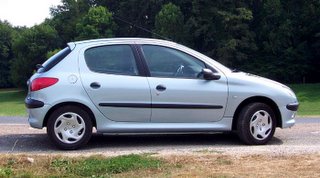
I’ll never forget the day we got the Peugeot. We had been suffering in the heat in our un-air-conditioned house. It would be 85º outside and inside when we got up in the morning, and 95º outside and close to 90º inside in the afternoon, and it was miserable. After eight years living in San Francisco, we had longed for some hot summer weather, but this was too much. The Peugot has AC!

That hot August day, I said that it was a good day to go for a ride. We put Collette in the car and headed out into the countryside with the AC on full blast, and spent the afternoon blissfully. The car’s thermometer said it was 40ºC outside that day -- it always reads a little hotter than the actual temperature when it’s sunny outside. 40ºc is 104ºF, by the way. We were in heaven in our air-conditioned Peugeot 206.

A couple of days later, we had another excuse to go to Paris: we had to turn the Opel Corsa in. I drove up in the Peugeot (with the AC on full blast again) and poor Walt drove up in the no-AC Corsa. Collette rode with me. But all three of us got to ride back in the cool Peugeot.

The Peugeot 206, a 2001 model, actually has what they call automatic AC. On the display, you just set the interior temperature you want and the AC does its job. Very nice. It also has automatic windshield wipers. There’s a rain sensor built into the middle of the windshield, so when it rains the wipers start working. They swipe across the glass intemittently as required by the amount of rain hitting the windshield, and they work great.
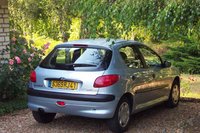
The 206 is a very small hatchback car with four doors. The back seat is small but OK, and the front seats are comfortable. It has a 5-speed manual transmission -- only a small percentage (somewhere I read 6%, I think) of the cars sold in France even now have automatic transmissions. Personally, I’ve always driven a stick shift.

And the 206 has a big engine for such a small car. How small is the car? It’s 23 inches shorter than a Toyota Corolla, and 35 inches shorter than a Honda Accord. The engine is a two-liter, 90-horsepower, four-cylinder, sixteen-valve, fuel-injected, turbo-powered diesel. It has plenty of pickup and develops a lot of torque for going up hills.

So two years later, what do I think about the Peugeot? What are French cars really like? Are they comfortable? Reliable? Fun to drive? Economical?
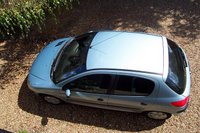
I say yes to all of the above. The 206 has 60,000 miles on it now. I recently had a breakdown when I was out on the road about 75 miles north of Saint-Aignan. It was something called the Damper pulley that failed. I limped into a Peugeot garage that afternoon. They replaced the Damper pulley because it had broken, and also the timing belt because it’s supposed to be replaced at 65,000 miles anyway. Peugeot picked up 40% of the cost of the Damper pulley repair when I called the company’s customer service line a few days later. They said the Damper pulley wasn’t scheduled for replacement until 100,000 miles.

I get between 40 and 50 miles to the gallon of diesel fuel. Diesel fuel costs about 1.05 euros a litre right now, at the best prices -- that’s about $4.75 a gallon in U.S. terms. The tank holds 50 liters, or about 13 U.S. gallons, so I can easily go 500 miles on a tank of gas or even 600 miles if I’m on the road and driving at no more than 60 mph.

The one thing the Peugeot doesn’t have that I would really like is cruise control (un régulateur de vitesse in French). I have a heavy foot, so I have to be careful. The car will cruise nicely at 80 mph or even 90 mph, but speed limits in France are strictly enforced now. On two-lane highways the limit is 55 mph, on four-lane roads it’s 65, and on the autoroute it’s 80 mph or so (130 kph).

Some of the other good features of the Peugeot are headline-aiming -- you can adjust the headlight beam up or down to adapt to the load you are carrying or to traffic conditions. It also has removable rear seat cushions, so the rear seat backs can fold down pretty flat and give you a lot of cargo or dog room when you have only two passengers.