Showing posts sorted by relevance for query "beurre blanc". Sort by date Show all posts

28 May 2010

White Butter, or « Beurre blanc »

We usually think of butter as being yellow. “White butter” —
« beurre blanc » in French — isn't just butter though. It's a sauce. Butter is the main ingredient, but the recipe includes shallots, wine, and vinegar as well. It's a sauce you serve with poached fish.

Beurre blanc was invented in Nantes, they say, a city located near the mouth of the Loire River, in an area that some consider to be southern Brittany. The white butter sauce is often served with fresh-water fish, especially the European pike called a brochet. But the sauce is good with any poached white fish — ocean or river fish.

Instead of shallots, you could make the beurre blanc with onions, but the taste would be slightly different. You could also use lemon juice instead of vinegar, but the classic version is made with vinegar. The Larousse Gastronomique gives at least five recipes for beurre blanc, some of which contain no wine at all, but only high-quality white wine vinegar.

In Je Sais Cuisiner, the classic home cookery book by Ginette Mathiot, the recipe for beurre blanc calls for white wine — a dry muscadet from the Nantes area — but no vinegar at all.

Most recipes, however, call for dry white wine with vinegar added to it. That's the version I made yesterday. Since there is just a small amount of vinegar to "pep up" the wine, you can use either white wine vinegar or distilled vinegar (vinaigre d'alcool). In fact, I've only recently been able to find white wine vinegar in our local supermarkets, and what I've found is imported from Portugal.

Cod, potatoes, and asparagus with a beurre blanc sauce.
I didn't strain out the cooked shallot,
which had a nice pink color.


Here's the recipe. It's easy to make, as long as you don't turn the heat up too high under the butter, which should emulsify into a foamy, white sauce as you whisk it into the reduction of shallots, wine, and vinegar.
Beurre blanc

3 Tbsp. finely chopped shallot
¼ cup dry white wine
2 Tbsp. water
1 Tbsp. vinegar (white wine or distilled)
salt and pepper
1 stick (120 grams) butter


Put the chopped shallot in a saucepan and pour in the white wine, water, and vinegar. Set the pan on medium heat and let it simmer until the liquid is reduced by half. Don't let all the liquid evaporate, but keep it simmering until the shallot is completely cooked. Add a little water as necessary. Season with salt and pepper to taste.

Cut the cold butter into half-inch cubes. Small pieces of butter will melt more evenly into the liquid.

When you have a good reduction with about three tablespoons of liquid left in the sauce pan, turn the heat down and gradually add the butter, whisking it in so that it emulsifies (blends smoothly) with the liquid and shallots to make a foamy white sauce. Let it simmer for a minute or two, but don't let it boil hard or the butter sauce will separate.

If you prefer, you can pour the beurre blanc through a strainer to remove the chopped shallot before you
serve it.
Beurre blanc sauce is really good on fish, but it's also good on steamed potatoes or green vegetables. For more flavor, poach the fish in what is called a court-bouillon — water with a little vinegar or wine, a bay leaf, some onion or garlic, and herbs, simmered until nicely flavored before the fish is added.

We had the beurre blanc sauce with codfish fillets rolled up, fastened with a wooden skewer, and poached in a court-bouillon to which we added some lemongrass. And we ate it with steamed potatoes and asparagus spears, plus some good bread to mop up the sauce with. And a glass of chilled Touraine Sauvignon Blanc wine.

14 March 2023

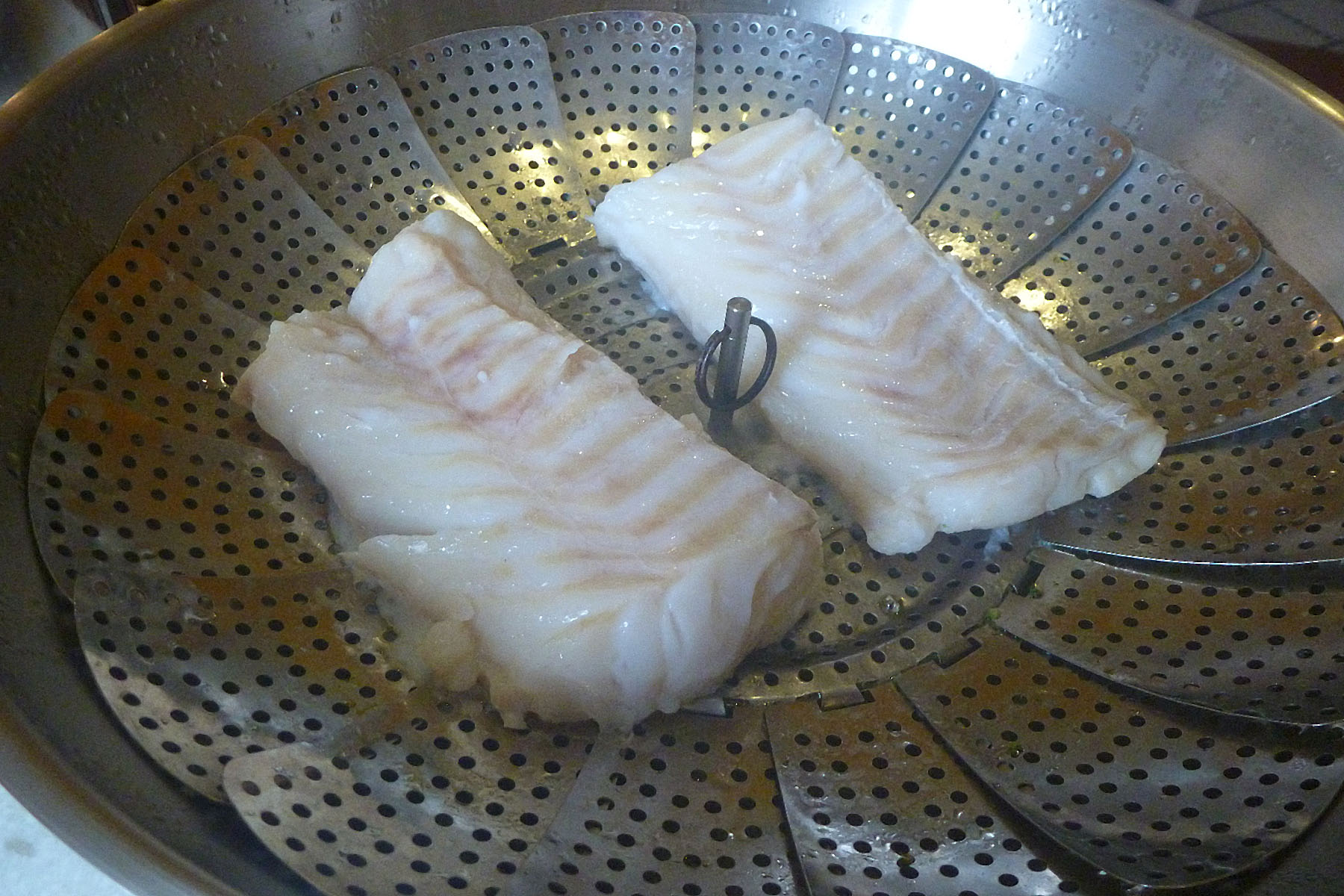
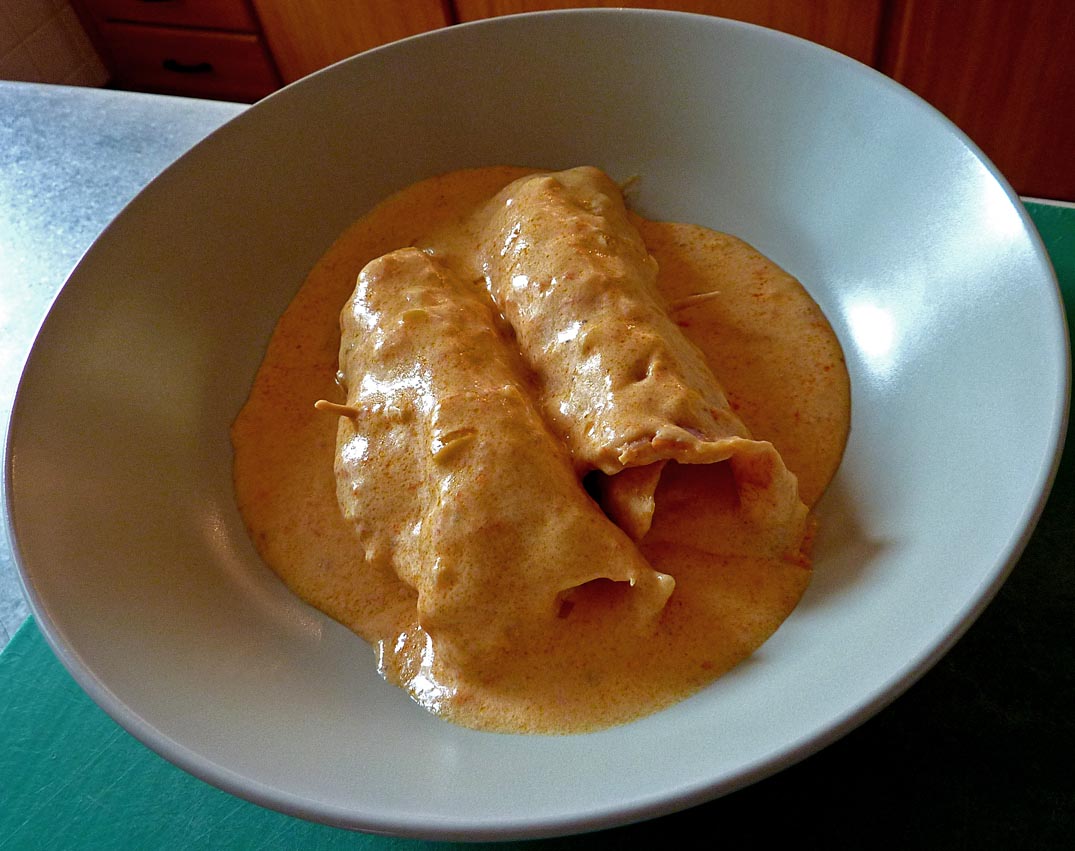
« Dos » de cabillaud au beurre blanc

Cabillaud [kah-bee-yoh] is French for cod or codfish. Dos [doh] is "the back" as in "dorsal" — but what is the dorsal part of the codfish called in English? Some translations I've seen just call it the fillet or filet. Others call it the "cod loin" or cod loin filet. It's a thick slab of white fish flesh that is boneless and easy to cook. It's not necessarily easy to get the cod filet out of the pan that you've cooked it in, however. It tends to fall apart when it's cooked.

In one of Jacques Pépin's books, Happy Cooking! (1994), there's a recipe for "codfish flakes" — Jacques writes that he likes scrod, haddock, and pollock but his favorite member of this family of fishes is cod, especially when it is presented in thick, heavy white fillets. "Cod fillets tend to separate into beautiful flakes as they cook," he adds.

I decided to cook the dos de cabillaud in a steamer. First I steamed some little potatoes and some broccoli florets. I kept them in a warm oven while the fish steamed.

To flavor the fish and vegetables, I made what is called un beurre blanc — a butter sauce made with white wine, either vinegar or lemon juice, butter, and fresh herbs (parsley or tarragon). I added capers this time. There's a recipe for beurre blanc in this post of mine from a few years ago.

19 July 2013

Déjeuner de poissons au Relais d'Artémis

Last Saturday, we went back to the restaurant named Au Relais d'Artémis for lunch. We had enjoyed a delicious lunch there with CHM on June 1. This time we were accompanied by our friends Tom and Harriett from Illinois.

The Relais d'Artémis is located in the town of Bracieux, just outside and south of the park that surrounds the Château de Chambord. Here's the web site. Last Saturday (July 13, so Bastille Day weekend in France) the restaurant was crowded and busy. The weather was so nice that we were able to have lunch outside on the patio.

Here are photos of the lunch that Harriett and Tom ordered. They both had a starter of smoked salmon and a main course of the European fish called sandre in French or 'zander' in English, with risotto and a beurre blanc sauce. Sandre is also known as "pike-perch" and it's not well-known in North America.

Carpaccio de saumon, tartare de légumes au parmesan

Filet de sandre, beurre blanc

For dessert, Harriett had the upside-down apple pie called Tarte Tatin. Tom chose the strawberry nougat with vanilla-flavored marshmallow.

Tarte Tatin et sa crème glacée vanille, caramel  à la fleur de sel

Nougat de fraises, guimauve à la vanille

The menu we selected from was priced at just under 25 euros per person (approximately $32 U.S.). Wine and coffee were optional (can you believe I wrote that?) and cost extra, of course. We had a nice bottle of local rosé.

Tomorrow, what Walt and I ordered and enjoyed.

13 December 2016

Chicken fricassee with carrots (2)

In yesterday's post, I described the first part of the process of making a fricassée de poulet à la berrichonne, which is chicken and carrots in a cream sauce. This is a recipe I found in the Larousse Gastronomique food and cooking encyclopedia last week and decided to make.

I left you yesterday at the point when the chicken and carrots are cooked, but the sauce is not yet complete. Back to the recipe...


The next step is to take the chicken and carrots (above) out of the broth it has cooked in. Remember, long and slow cooking is best, to make sure that the chicken is well cooked and not dry, and the carrots are tender. Set the chicken and carrots in a warm oven while you finish the sauce.


Then pour the cooking broth into a pot and reduce it on fairly high heat until a third or even a half of it has boiled away. At that point, pour one-half to three-quarters cup of heavy cream (crème fraîche) and again let it boil gently until the sauce has reduced by a third to a half. 

If you want, you can thicken the sauce using egg yolks (a perilous operation), a roux (flour cooked in melted butter), or beurre manié (a tablespoon of flour worked into a tablespoon of soft butter). Just think of the sauce as a white gravy. Add a teaspoon or two of good white wine vinegar or fresh lemon juice at the last minute, just to perk the sauce up a little and give it some acidity (you do the same with blanquette de veau, which is a kind of fricassee of veal in a cream sauce).


Pour some or all of the sauce over the cooked chicken and carrots in a serving bowl. The most refined way to serve the dish is to just coat the chicken and carrots with some sauce and then take the rest of the sauce to the table in a bowl or gravy boat. I just poured all the sauce over the other ingredients back in the dish they had cooked in. We decided to have the fricasseed chicken and carrots accompanied by green garden peas cooked with mushrooms. Those are good with the cream sauce too.

****************************************

Here's the recipe for fricassée de poulet à la berrichonne that I got out of the Larousse Gastronomique and adapted slightly. « Berrichonne » is the adjective based on the name of the old Berry province of central France. It is centered more or less on the city of Bourges, and includes Sancerre on the east and the area around Selles-sur-Cher and Saint-Aignan on the west.

Fricassée de poulet aux carottes
« à la berrichonne »
 
1 poulet coupé en morceaux
300 g de carottes
400 ml d’eau bouillante ou de consomeé blanc
1 bouquet garni
sel et poivre
20 cl de crème
beurre
sucre
vinaigre

Faites revenir au beurre des carottes nouvelles, entières si elles sont petites, coupées en quartiers si elles sont grosses.

Dès que les carottes sont bien dorées, les enlever du sautoir et, dans le beurre où elles ont rissolé, mettre à revenir un poulet, détaillé par membres.

Quand les morceaux de poulet sont un peu dorés, mouillez de 400 ml d'eau bouillante ou de consommé blanc ; ajoutez les carottes et un bouquet garni. Assaisonnez et laissez cuire à couvert 45 minutes.

Retirez le poulet et les carottes du bouillon. Ajoutez la crème au bouillon ainsi que 2 jaunes d'oeufs et une faible pincée de sucre en poudre. Bien mélangez et versez sur le poulet. Ajoutez une cuillerée de vinaigre. Faites chauffer mais ne laissez pas bouillir.

17 October 2012

Jambon à la chablisienne

I've been to Chablis, in Burgundy, twice over the past three or four years. I was glad to get a chance to see the village, not only because it's pretty but because the Chablis area produces one of the best Chardonnay wines — one of the finest white wines — in France.

I even had a very nice meal at a restaurant in Chablis, and I blogged about it here. I also wrote a blog post about Chablis wines. Chardonnay wines as made in France are some of my favorites, which is too bad since the premier white wine grape here in the Loire and Cher valleys is Sauvignon Blanc. Luckily, one winery that I like (but only one) also sells locally grown and vinified Chardonnay.

Jambon à la chablisienne

That said, I'd never heard of this special ham dish made in and named for Chablis — jambon à la chablisienne — until just a few days ago. I found it on a food blog, of course. A Canadian blog, from Edmonton, Alberta, called Eating is the Hard Part. Maybe you know it. Thanks to The Celiac Husband for introducing it to me.

Here's a link to the YouTube video where I first saw Chablis-style ham. It's a segment the American food personality Tony Bourdain taped in Burgundy, featuring local specialties including Oeufs à la meurette, Jambon à la chablisienne, and very runny Epoisses and Chaource cheeses — as well as a French chef named Ludo Lefebvre and his grandmother.

I've made eggs in meurette sauce before and blogged about that too. Bourdain said on his show that he'd never eaten Eggs Meurette before, which surprised me. His family was French, even though he seems thoroughly American.

Yesterday I bought some thick slices of good "white" or "Paris" ham — called jambon blanc or jambon de Paris — from our mobile butcher and made the jambon chablisienne for lunch. If you can get good French ham, buy that rather than packaged sandwich ham. You want thick slices. Here's the recipe, which is pretty simple:

Jambon à la chablisienne
4 tranches de jambon blanc coupées assez épaisses
1 échalote
20 cl de chablis (ou d'un autre vin blanc sec)
1 feuille de laurier
50 cl de crème fraîche épaisse
1 c. à café de fécule de pommes de terre (ou de maïs)
1 petite boîte de concentré de tomates

Dans une poêle, chauffez tout doucement votre échalote émincée dans très peu d'huile ou de beurre.


Lorsque l'échalote est translucide, ajoutez le vin blanc. Faites réduire à feu moyen de moitié (ou même plus).


Ajoutez le concentré de tomates et mélangez bien. Ajoutez ensuite la crème fraîche et mélangez à nouveau jusqu'à ce que la sauce soit homogène. Salez un peu et poivrez.


Ajoutez les tranches de jambon roulées, recouvrez-les de sauce et laissez sur feu très doux 5 minutes avant de servir.
Walt and I both thought the ham was delicious prepared this way. You end up with a lot of cream sauce, so it's good to plan a side dish that is good with such sauce — steamed potatoes, rice, or pasta, with a green vegetable like broccoli — if you want to make a whole meal out of it. We had savory rice pudding and braised lettuce and radish leaves with our ham.

The cream sauce, thickened with just a small amount of potato starch, is gluten-free.

One extra ingredient I added to the sauce was a tablespoon of the North African hot pepper paste called harissa, because we both like our food a little spicy. The harissa gave the cream/tomato sauce a nice little boost.

23 January 2020

Standards and classics

I guess I just don't have a lot to write about today. I just have a few photos to share. Some are 20 years old, and some are just an hour old.


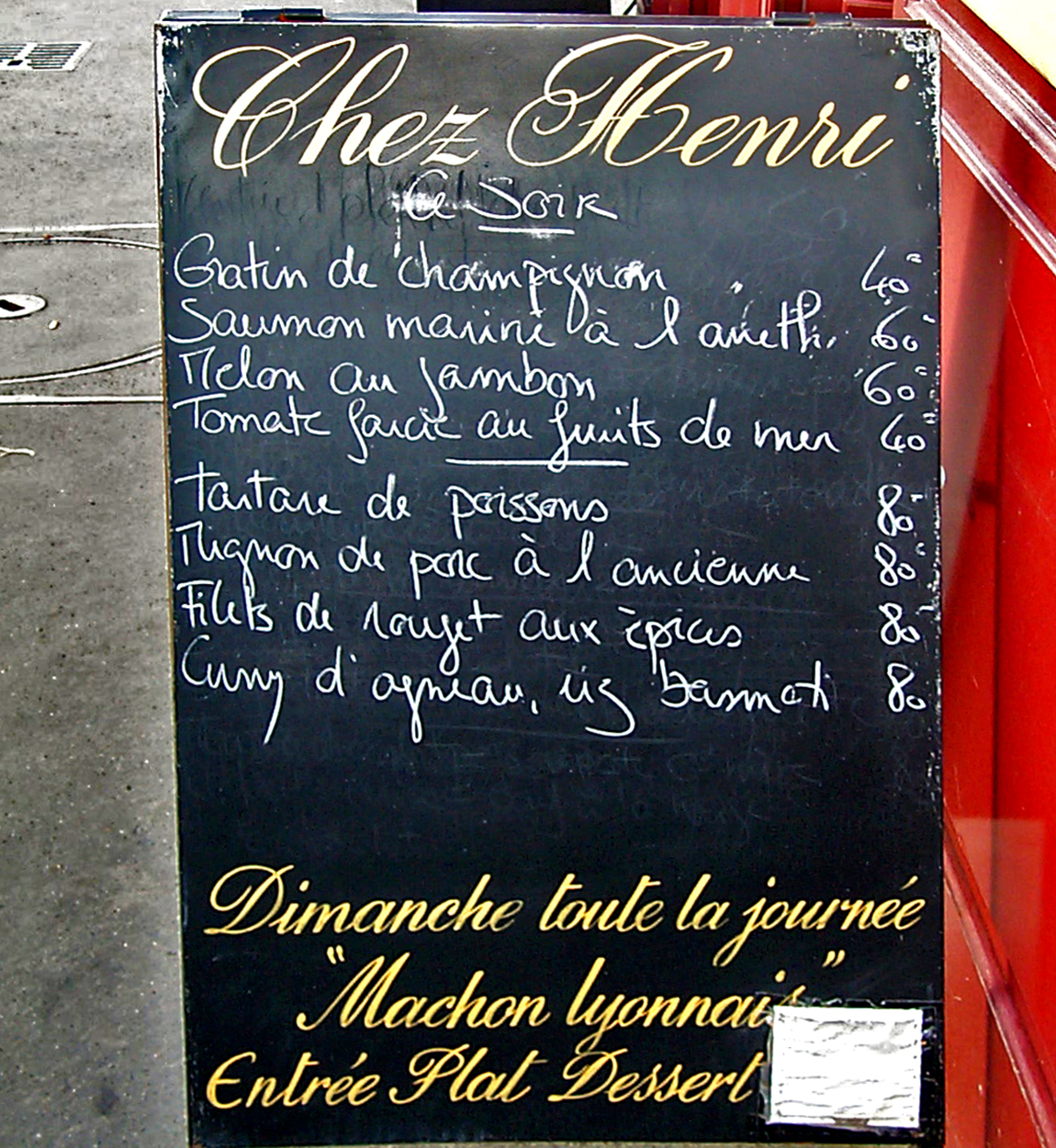
Here's a chalkboard menu (l'ardoise, meaning "slate") posted outside a restaurant in Paris 20 years ago. You might notice that the prices look pretty high, but that's because they are in French francs, not euros. Divide the prices by 6.5 to get them in today's money. The main courses were 80FF that day, which comes to about 12 euros. But the thing that's really interesting about the menu is that it's so hard to read if you don't immediately recognize the names of the dishes as classics. It's in handwriting, yes, and French handwriting is often so different from American handwriting that it's hard sometimes for us to decipher it. How many of the names of dishes can you read easily? (And why is that gratin made with just a single mushroom?)


Here's another menu from the same year. Is it easier to read? Some of the words you might not recognize are bourguignonne (and why is it in the feminine instead of the masculine?); andouillette and Troyes (why doesn't it start with a capital T on the menu?); brochette and beurre blanc; and finally, côte and Salers. Why is the veal so much less expensive than the beef? Would you prefer the blanquette or the andouillette? If you ask the waiter to explain what these different dishes and specialties are, there's a good chance he will look puzzled by the question. Everybody knows what these things are. You might just have to take a stab at it and take your chances.

Here's my version of blanquette de veau. We had it for lunch the other day. I leave the carrots in it because I enjoy eating them with the meat, pasta, mushrooms and cream sauce. But I won't call it a blanquette à l'ancienne, because you-know-who will scold me for being inauthentic. Blanquette is one of the easiest French food classics to make (recipe here) — if you can get good veal. You can make it with turkey or chicken, but it won't be as good. Try it with lamb...


Lately I've taken to buying a lot of croissants, another French classic. I turned the ones in this photo into my version of croissants aux amandes — recipe here. That means making a filling using sugar, powdered almonds, butter, and eggs. Slice the top off the croissants and spread the filling on the bottom. Put the top back on, brush it with sugar syrup, and sprinkle on some sliced almonds, which should stick. Bake it.
And finally, these are deux pains aux raisins I brought home yesterday. Raisin rolls, I guess we could call them. They're not really bread — they're pretty sweet. Raisin buns, maybe. I pretty much have to buy these pastries at the supermarket. Oh, I could go to a bakery, but if I want to have the pastries fresh for breakfast I have to go out in the car before about 7 a.m. and drive several kilometers to the nearest bakery and bake. It's not worth it except on very special occasions. It's easier to buy pastries at the supermarket, keep them in the fridge or freezer overnight (or longer), and then carefully heat them up in the oven when you want to eat them. Make sure they are labeled pur beurre when you buy them. Back when I lived in Paris, I could just run downstairs to the neighborhood bakery, buy a couple of pastries, run back upstairs, and then devour them with my coffee or tea. They're different realities, urban life and life out in the country.

06 June 2013

Au Relais d'Artémis

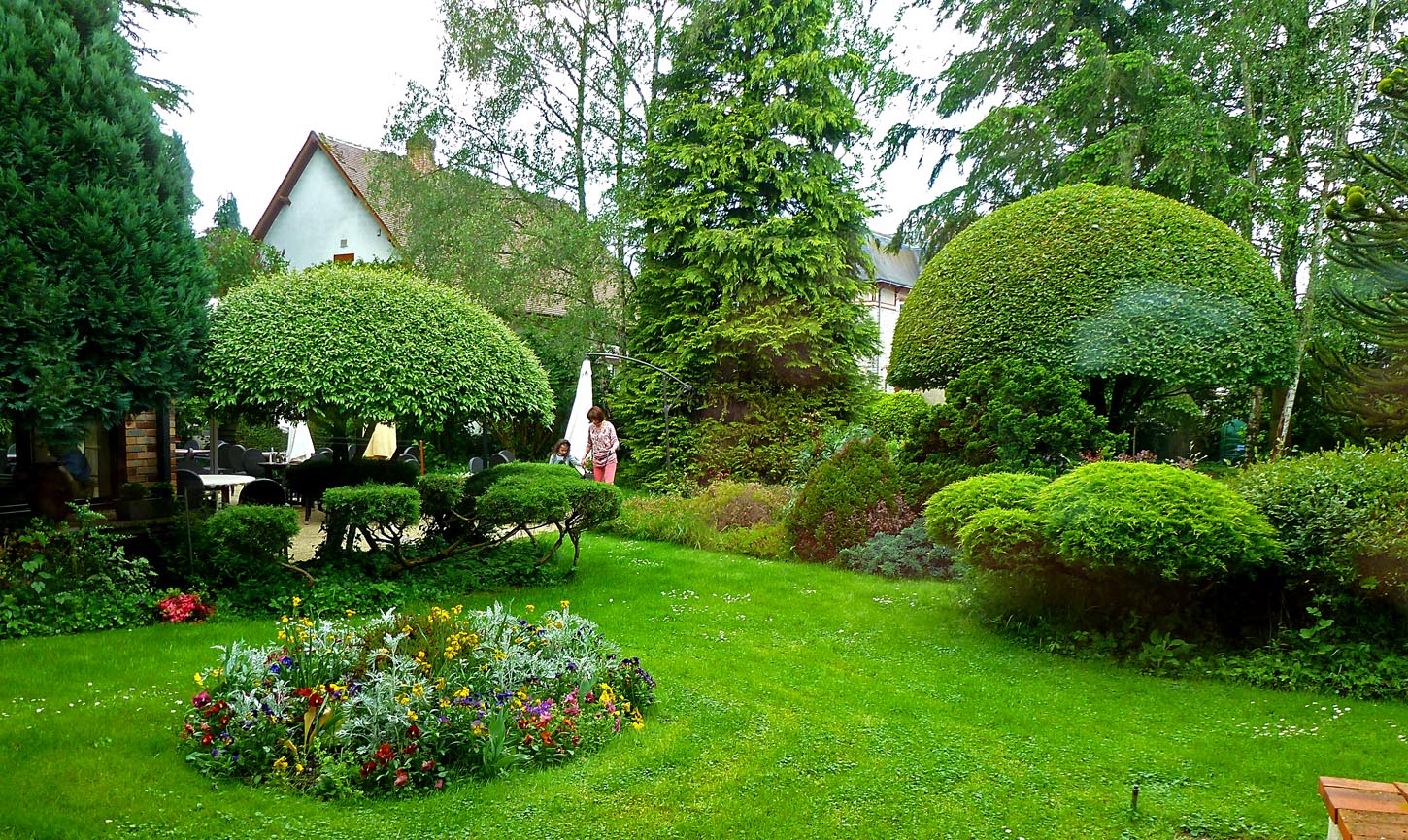
Here's a final post about the restaurant in Bracieux that we really enjoyed last Saturday, Au Relais d'Artémis. First, a view from the main dining room out into the garden: I really like the way the trees are pruned into umbrella (or is it mushroom?) shapes. And again, everything is very green.

The garden at the restaurant Au Relais d'Artémis in Bracieux, near Chambord

As for the food, here finally are a couple of photos of the main courses we ordered. I chose the veal, which was onglet de veau broutard. Evidently, a veau broutard is a calf that has begun to graze on grass — brouter means "to graze." The cut of meat that I had is called onglet, and it's categorized as offal (abats) even though it is red meat. I think it might be called "hanger" or "skirt" steak in English, and it's part of the animal's diaphragm. Whatever it is, it was tender and delicious cooked medium rare or rosé at the Relais d'Artémis.

Onglet de veau broutard

Walt and CHM both chose fish for their lunch. It was filet de sandre, beurre blanc — fillet of zander (pike-perch) with a butter sauce. Zander is a European river fish. The flesh is very white and tender, with few if any bones. Both W and CHM thought it was delicious. It was served with a risotto that CHM said was excellent — creamy and rich, flavored and colored with either saffron or turmeric (curcuma).

Fillet of zander with a golden risotto-style rice
Thanks to CHM for the photo

And I almost forgot the starter course. Since I started this series with desserts, I'll finish it with the entrée. We all three had the same one: Mille-feuille au saumon et asperges vertes. There was both cooked and cold-smoked salmon on the plate, with three asparagus spears per serving. It was also very good, and was a fine introduction to a very nice meal.

A mille-feuille is a multi-layered concoction made with crisp pastry and creamy fillings, usually sweet. It's called a "napoleon" in America. This was a savory version made with salmon.

Okay, lunch at the Relais d'Artémis is over and done with. I hope you enjoyed the upside-down menu. Maybe we should call it Déjeuner à la Tatin.

10 February 2007

Fried chicken

« Pièces de poulet panées et frites »There's a lot of virtual ink being spilled on the subject of fried chicken these days. The term I've used as a subtitle, by the way, is what the Kentucky Fried Chicken chain calls its principal product in France. There are a few KFC restaurants in the Paris area, but none within a hundred miles of Saint-Aignan.

copyright Ken BroadhurstPoulet frit comme on en fait à Saint-Aignan

Last week there was a New York Times article about Korean fried chicken (you may need to log in to read it) that said Korean joints making fried chicken are springing up all around New York. It's giving a whole new meaning to the TLA (three-letter acronym) that is KFC. The Times says:
"For crunch, American-style fried chicken relies on a thick, well-seasoned crust, often made even thicker by soaking the chicken pieces beforehand in buttermilk. When that crust is nubbly and evenly browned, and the chicken meat is cooked through, the chicken is sublime. But too often, the flesh is still raw when the crust is cooked, or the skin never cooks all the way through, leaving a flabby layer of skin between the meat and the crust.
"Korean-style fried chicken is radically different, reflecting an Asian frying technique that renders out the fat in the skin, transforming it into a thin, crackly and almost transparent crust. (Chinese cooks call this “paper fried chicken.”) The chicken is unseasoned, barely dredged in very fine flour and then dipped into a thin batter before going into the fryer. The oil temperature is a relatively low 350 degrees, and the chicken is cooked in two separate stages."
The Times also gives a link to a blog written by an American Southerner who lives in Korea. It looks pretty entertaining and I've bookmarked it for future reading. My link sends you to his posting about Korean fried chicken. This blogger is into something I'm also into, as you know: it has been called "food porn." Here's a link to his Zen Kimchi home page.

I wonder if they eat baked sweet potatoes
with their fried chicken in Korea.

Then yesterday I looked in on a blog that I enjoy and that is written by a guy named Scott who lives in Durham, North Carolina, where I went to college. He's into food porn too and he has some good food ideas. He's also talking about fried chicken, citing the same NYT article, on his blog, Needs More Garlic.

Coincidentally, about 10 days ago I decided to make fried chicken. I wanted something American, and something I hadn't made or eaten in a long time. Southern fried chicken fit the bill. We used to eat it often for Sunday dinner when I was growing up in North Carolina.

Fried chicken pieces waiting in the oven

I've never been one to enjoy or eat often in fried chicken restaurants in the U.S., however. KFC, Popeye's, and Church's always left me cold. Too salty, too greasy. In fact, for years I was horrified by the whole idea of breaded, deep-fried chicken. They didn't eat such things in France, so I wouldn't eat them either. Give me a good, plain oven-roasted chicken any day.

Fried chicken is still not a French menu item, even though a lot of people nowadays have tasted fried chicken or chicken nuggets in fast-food restaurants.

On s'en lèche les doigts !

Actually, what inspired me to want to try to make fried chicken, I just remembered, was an article in the San Francisco Chronicle's food section on January 17 saying that fried chicken is the new "in" food in a bunch of Bay Area restaurants.

I read the SF Chron article and printed out the various recipes, or methods, for making fried chicken, which went from the extremely simple to the fairly complicated.

Then I got out five or six Southern cookbooks, as well as the Joy of Cooking, and read everything they had to say about Southern fried chicken. Cooking Across the South, Southern Food, Classical Southern Cooking, The Georgia Sampler Cookbook, The American Regional Cookbook, The Dictionary of American Food and Drink — those are the titles of some of the books that have ended up on my shelves over the past 30 years.

I decided that one of the keys to good Southern fried chicken was buttermilk. Problem is, it's almost impossible to get buttermilk in France. It's called babeurre, and it's definitely a specialty product. What is buttermilk? It's the liquid left over when you churn milk into butter, isn't it?

Chicken in a yogurt marinade

The big French dictionary says that babeurre is a technical or regional term meaning: Liquide blanc, appelé parfois lait de beurre, qui reste du lait après le barattage de la crème dans la préparation du beurre. Lait de beurre — buttermilk — is not something you normally find at the supermarket in France. Barattage, by the way, is "churning".

When you marinate pieces of chicken in buttermilk, the acid in the buttermilk tenderizes the meat. And if you add spices or herbs to the marinade, the chicken takes on the good flavors. That's the theory.

A black-and-white picture of the prep for my fried chicken

I think you can replace buttermilk with sour milk, and you can make milk sour very quickly by putting a little vinegar in fresh milk. That might be fine for other foods that you want to put buttermilk in — Southern U.S. biscuits, cornbread, hushpuppies, or Irish soda bread, for example — but for marinating chicken overnight I wasn't sure that's what I wanted to do. You know what sour milk tastes and smells like, right? What if I ended up having to throw out all my chicken after the overnight marinade?

I decided plain yogurt might be the best solution. So I mixed two containers of plain, low-fat yogurt, about half a cup of crème fraîche, and enough skim milk to make a fairly thick marinating medium, which I seasoned with a pinch each of hot paprika, black pepper, cumin, and dried thyme. I didn't want to overdo the seasonings, but I wanted at least a hint of their flavor in the final product.

To go with the fried chicken, a bowl of home-made coleslaw

I had bought two chickens, and we decided to save the breasts for another recipe, so I ended up marinating four thighs, four drumsticks, and four wings in my yogurt mixture, overnight.

The next day I mixed up a couple of cups of flour with some salt, pepper, and a pinch of curry powder in a big shallow bowl. I lifted each piece of chicken out of the yogurt marinade (using tongs), let it drip for a few seconds so that the excess liquid would drip off, and then rolled it in the seasoned flour. I let the floured chicken pieces rest for 10 minutes on a rack before I cooked them, so that the flour would absorb as much yogurt as it could.
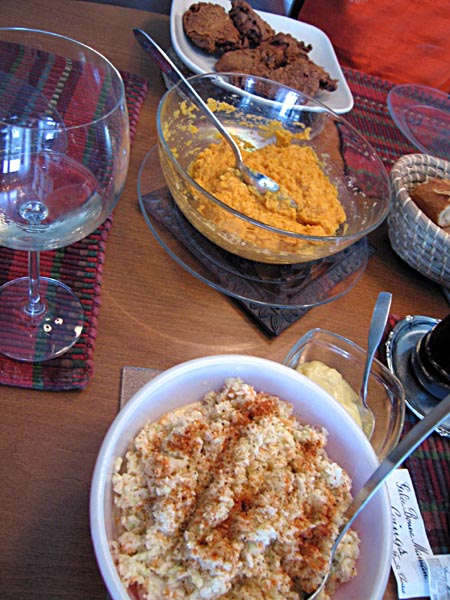
On the table: coleslaw, mashed sweet potato,
and yogurt fried chicken

The last step was dropping a batch of four floured chicken pieces, one at a time, into a fryer containing hot canola oil about three inches deep. I used an electric fryer and set the temperature at 170ºC (340ºF).

As soon as the chicken was browned, I took it out, put it on a rack in a pan, and put the pan in the oven at about 250ºF (130ºC). The first batch of four chicken pieces was ready to eat when the second batch came out of the fryer and went into the oven. In the oven, the pieces had time to drip, so they were less greasy, and time to finish cooking all the way through. They stayed crispy.

Dans l'assiette

Next time I'll have to try the Korean method — less breading, double-frying. And maybe some pickled radish instead of coleslaw.

Meanwhile, this weekend's project is canard à l'orange — duck with orange sauce. Wish me luck. Later...

10 June 2017

The ghost snail

I've seen this snail three or four times over the past year or so. It looks like a ghost, I think. But it is not, and it is not an albino. It lives near a small water hole on the edge of the vineyard, near woods. Besides the day when there were two of them out there, it's the only one I've ever seen. I've read that the lifespan of a snail like this one is 3 years in the wild, but as long as 10 years in captivity.


It's the snail called the escargot de Bourgogne or « le gros blanc ». It's bigger than the snails we see mostly around here, which are called « petits gris » and are much more plentiful. Both species are edible. At 30 to 45 grams (1 to 1½ oz.), the Burgundy snail is two to three times bigger than its little cousin.


It's illegal in France to gather gros blancs snails during their reproductive cycle, from April through the end of June. They are protected and they are difficult to raise commercially, they say. Snails have been consumed by humans since prehistoric times, and they were a Roman specialty. Here in France, we can buy snails in cans or frozen, and we can also buy frozen garlic-parsley butter that is commonly called « beurre d'escargot ».

04 September 2008

Breaking the fast

It's 12ºC and raining this morning. That's 54ºF. Brrrr. Yesterday's high was 15.5ºC, or 60ºF. Re-brrrrr. Feels a lot like fall. The tomatoes will never finish ripening at such temperatures.

Rainclouds over the hamlet

Yesterday was the day when I could enjoy breaking the fast that began last Saturday evening. That's when I started eating a lot of chicken soup and not much else. By the way, there is no such thing as Jello here, so that's not part of the pre-colonoscopy diet.

(It's interesting that the French word for the procedure is côloscopie, one syllable shorter than in English. The French dictionary shows the first O of the word with a circumflex accent on it but the documents the hospital and doctors gave me didn't include that accent mark. It is true that colon in French is côlon, which distinguishes it from colon = colonist.)

Hauling a load of hay out through the vineyard in the rain

The pre-colonocopy diet I was told to follow lasted 48 hours, not the 24 hours some of you have told me you were required to do in the U.S. I had the procedure done in San Francisco when I turned 50 years old, but I don't remember any details about it.

So what was the French pre-test diet? The doctor gave me a list of foods that he said I was "authorized" to eat during those 48 hours. This was called the régime sans résidu:
  • Viandes grillées, rôties, jambon — Grilled or roasted meats, ham
  • Poisson grillés, au court-bouillon — Grilled or poached fish
  • Oeufs non frits — Eggs (not fried)
  • Riz, pâtes, semoule, purée de pommes de terre — Rice, pasta, semolina, pureed potatoes
  • Bouillons clairs —Clear broth
  • Sirops de fruits, jus de fruits sans pulpe — Fruit syrups, fruit juices without pulp
  • Gelée de fruits — Fruit jellies
  • Pain blanc frais et biscottes — French white bread or melba toast
The foods I was asked to avoid eating were:
  • Légumes crus ou cuits — Raw or cooked vegetables
  • Fruits crus ou cuits — Raw or cooked fruit
  • Lait, laitages, fromages, beurre — Milk, cheese, butter, dairy products in general
  • Pain complet — Whole-wheat bread
I ate mostly chicken broth with either rice or potatoes cooked in it, along with some of the chicken meat shredded and chopped into the soup. The chicken was poached so I figured it was okay. Thank goodness we DON'T have Jello here!

And yes, I had the procedure done under general anesthesia. That wasn't my choice, but theirs. And I was in the hospital for 7 hours, not two. They brought me a lunch of vegetables and fish at about 1:00. When I got home, I had one more bowl of my chicken soup, this time with some diced cooked carrots and celery added to the broth to make it a little more interesting.

Blanched slices of yellow summer squash

Yesterday, it rained and we couldn't do anything outside. So we cooked. We had a few more yellow summer squash that Walt had picked the day before, so we cooked those as follows.

Layers of squash and herbed breadcrumbs

Cut thin slices of zucchini or yellow squash. Blanch them in boiling salted water for a few minutes. Arrange a layer of the slices in the bottom of a baking dish. Mix breadcrumbs with a little olive oil to slightly moisten them. Mix in some chopped fresh sage and some salt and pepper. Spread a layer of crumbs over the squash slices. Spread a layer of grated parmesan cheese over the crumbs.

The squash gratin, topped with
parmesan cheese,
browned in a hot oven

Repeat this procedure twice more, making three such layers in the pan. Bake in a hot oven to heat the dish through, melt the cheese, and brown the top surface. This is very good eaten hot, warm, or cold. It's a variation on a recipe I saw in the Joy of Cooking.

To accompany the squash gratin, I cooked a pork roast. I put a rolled boneless pork shoulder in a very hot oven, on a rack, until it was nicely browned all over. Meanwhile, I cooked some chopped onions, carrots, and garlic in olive oil in a frying pan, with salt and pepper of course. I deglazed that pan with some white wine and some chicken broth (the broth I had eaten so much of over the weekend) so that I had about a cup or a cup-and-a-half of liquid.

Breaking the fast in a big way...

When it was well browned, I put the pork roast into a deep baking dish and I poured the liquid over it. I put at least two dozen, maybe more, fresh sage leaves in the dish with it. And then I baked it, covered with foil with a few holes poked in it for ventilation, for about two hours in a medium oven. Let the roast rest for 30 minutes when it comes out of the oven. (Cook the squash in the oven during that time.) Then slice the roast and enjoy it all.

01 January 2009

Happy 2009 to all

Happy New Year! It's 2009 already. I'm finishing up my 60th year on Earth, and we are already well into our 6th year in France.

Oysters to be opened and Champagne to be enjoyed

New Year's Eve and France mean just one thing to me. Oysters! Fresh from the market. Washing them. Opening them. Making mignonnette sauce. Photographing them. Eating them.

Yesterday's post was almost all words with no pictures. Today's brings the picture average back up.

The oysters, 26 of them, opened and ready to eat

We went to the special New Year's Eve market in Saint-Aignan yesterday and bought two dozen oysters. That cost 8.00€ and the man selling threw in a couple more for the price. He was selling them at 5.00€ a kilogram. At the supermarket, they were slightly cheaper, but it's nice to get them at the outdoor market.

We got no. 4 oysters. Those are the next to smallest. No. 1 is the largest size. The smaller ones are better, to my taste, especially for eating raw.

Une huître

How do you open them? With an oyster knife or a flat-head screwdriver. Hold the oyster with a thick towel all folded up to the right size, and insert the knife blade into the hinge at the narrow end of the oyster. Apply pressure and wiggle the blade around until it slips into the hinge and the oyster's top shell pops up. The insert a sharp knife into the shell, scraping the inside of the top shell to cut the muscle that holds the oyster shut. You've done it. Try not to lose too much of the water inside the shell.

That's mignonnette — red wine vinegar with
diced shallots and pepper — in the little bowl.

What do you eat them with? Some people like lemon juice. I prefer vinegar, because that's what we ate with oysters in North Carolina. And vinegar is served with oysters in France too, in the form of what is called a sauce mignonnette. That's about half a cup of vinegar (we used red wine vinegar, but it's your choice) with a finely chopped shallot steeped in it for a few minutes. Grind in a good quantity of black pepper and stir. That's it. Spoon some vinegar sauce, or squeeze some lemon juice, on the oysters as you eat them.

A loaf of good French rye bread, called pain de seigle

The other accompaniment is bread and butter. Rye or some other dark bread is especially good. You might be surprised to see what a French rye loaf — un pain de seigle — looks like. We got ours at the Chêne du Renard bakery up in the vineyard, and had it sliced there. I bought some beurre demi-sel to have with the oysters, rather than the sweet butter we normally use.

A bottle of Muscadet wine
from the Loire Atlantique département


And that's it, except for the wine. They say the best wine with oysters is Muscadet, which is made down at the mouth of the Loire River in what is the southeastern corner of Brittany. I bought a bottle of Muscadet at SuperU for the oysters.

But then I went to see Jean-Noël Guerrier to buy some of his red Côt (a.k.a. Malbec) wine and he gave me a bottle of his new 2008 Sauvignon Blanc as a gift. I admit it: I tried both the white wines with the oysters. I couldn't decide which one I liked better. Jean-Noël's was much more florid and fruity. The Muscadet was leaner and bone dry. Meanwhile, Walt had Champagne with his oysters, thanks to Jill Hertzmann, who bought him a bottle of Périer-Jouët when she was here in September.

Oysters

That's oysters then. They were delicious. They came from Brittany, but we didn't find out what town or area they were from. They weren't really small, even though they were no. 4s. No. 3s would have been bigger than what we like.

28 February 2020

Croque et frites

Here's what the Grand Larousse Electronique (© 2007) food and cooking
encyclopedia says about the French sandwich called un croque-monsieur:


Sandwich chaud, formé de deux tranches de pain de mie beurrées, garnies de lamelles de gruyère et d'une tranche de jambon maigre. Le croque-monsieur est doré sur les deux faces, soit dans une poêle, avec du beurre, soit sous le gril.*


On peut napper le dessus d'une béchamel au gruyère et faire gratiner, ou remplacer le jambon par du blanc de volaille, le gruyère par du gouda, ou même ajouter une rondelle de tomate, voire d'ananas.**

Le premier croque-monsieur fut servi en 1910 dans un café du boulevard des Capucines, à Paris. Resté une préparation typique des cafés, brasseries et snacks, il constitue aussi une entrée ou un hors-d'oeuvre chaud.***


We ate our lunchtime croque-monsieur sandwiches with home-made French fries yesterday.


French Wikipédia adds:

L'origine du mot reste [...] inconnue, même si certains avancent plusieurs théories, la plus répandue étant que le bistrotier du café ait lancé, sous forme de boutade, que la viande à l'intérieur du sandwich était de la chair humaine.****


* A hot sandwich made with two slices of buttered loaf bread garnished with thin slices of Gruyère cheese and a slice of lean ham. The sandwich is browned on both sides, either in a frying pan or on a griddle.

** The top of the sandwich is sometimes spread with a béchamel sauce made with Gruyère and browned in the oven. Sometimes the slice of ham is replaced by sliced white meat of chicken, the Gruyere by Gouda cheese. You can even add a slice of tomato or of pineapple.

*** The first such sandwich was served in 1910 in a café on the boulevard near the Paris Opera. It has remained a sandwich typically served in cafés and snack bars, and can also be served as a hot hors-d'oeuvre or first course.

**** The origin of the name croque-monsieur (croquer means to bite into something crunchy, and monsieur means man of course) is unknown, though people have offered various theories. The most widespread explanation is that the café-owner who invented the sandwich might have joked that the meat inside the sandwich was not ham but human flesh.