Showing posts sorted by relevance for query Rochelle. Sort by date Show all posts

07 July 2023

La Rochelle et son port

The day after we went to see Vouvant, we drove about an hour south to the city of La Rochelle. I had always wanted to see the place, and finally had a chance to. We had tried to got there by boat from the Île d'Oléron a decade earlier, but the region's commercial fishermen were on strike had blocked the entrance to the port. The ferry service was shut down. It wasn't too easy to walk around in La Rochelle with Tasha the Sheltie on a leash, but it worked out fine. The city (pop. 77,000) crowded on a beautiful late October day.


La Rochelle has been a major port city in this region since the 12th century. In the 16th century it became an important Protestant stronghold in the French religious wars.

La Rochelle was a fortified city in the Middle Ages. The fortifications were demolished in the 17th century — the two towers that guarded the Vieux Port remain. The entrance to the port was protected by a chain that stretched from the Tour de la Chaîne to the Tour St-Nicolas (the taller one) to the south, preventing invading ships from entering.

Walt, Tasha, and I stayed close to the old port when we were there. We didn't venture into the old city, where streets are narrow and we were afraid the dog would be spooked by cars and crowds. She loved La Rochelle, as you can see. It was the first time she ever went to a restaurant with us. We had lunch outdoors in a sidewalk café where Tasha was comfortable and calm.

22 November 2018

La Rochelle : La Tour de l'Horloge

We were in La Rochelle on Monday, October 22, a month ago today. We'd been trying to get to La Rochelle for 10 years, and we finally made it. When we were staying in a gîte on the nearby Île d'Oléron in 2008, all the ports and bridges were closed by striking marins-pêcheurs (commercial fishermen). Our excursions were limited to seeing places on the island.


Above is the Tour de l'Horloge in La Rochelle. It's a Gothic-era tower but the top section was added on in the 18th century. The tower is actually an old city gate called La Port de la Grosse Horloge that leads into the old town from the port.


Originally, La Rochelle was a fortified city, but it outgrew the old walls a long time ago. The city used to have a tramway, with streetcars passing through the old gate. The man whose statue you see in the first photo is Guy-Victor Duperré, a La Rochelle native who was a naval officer and French admiral in the first half of the 19th century, during the Napoleonic era.

25 November 2018

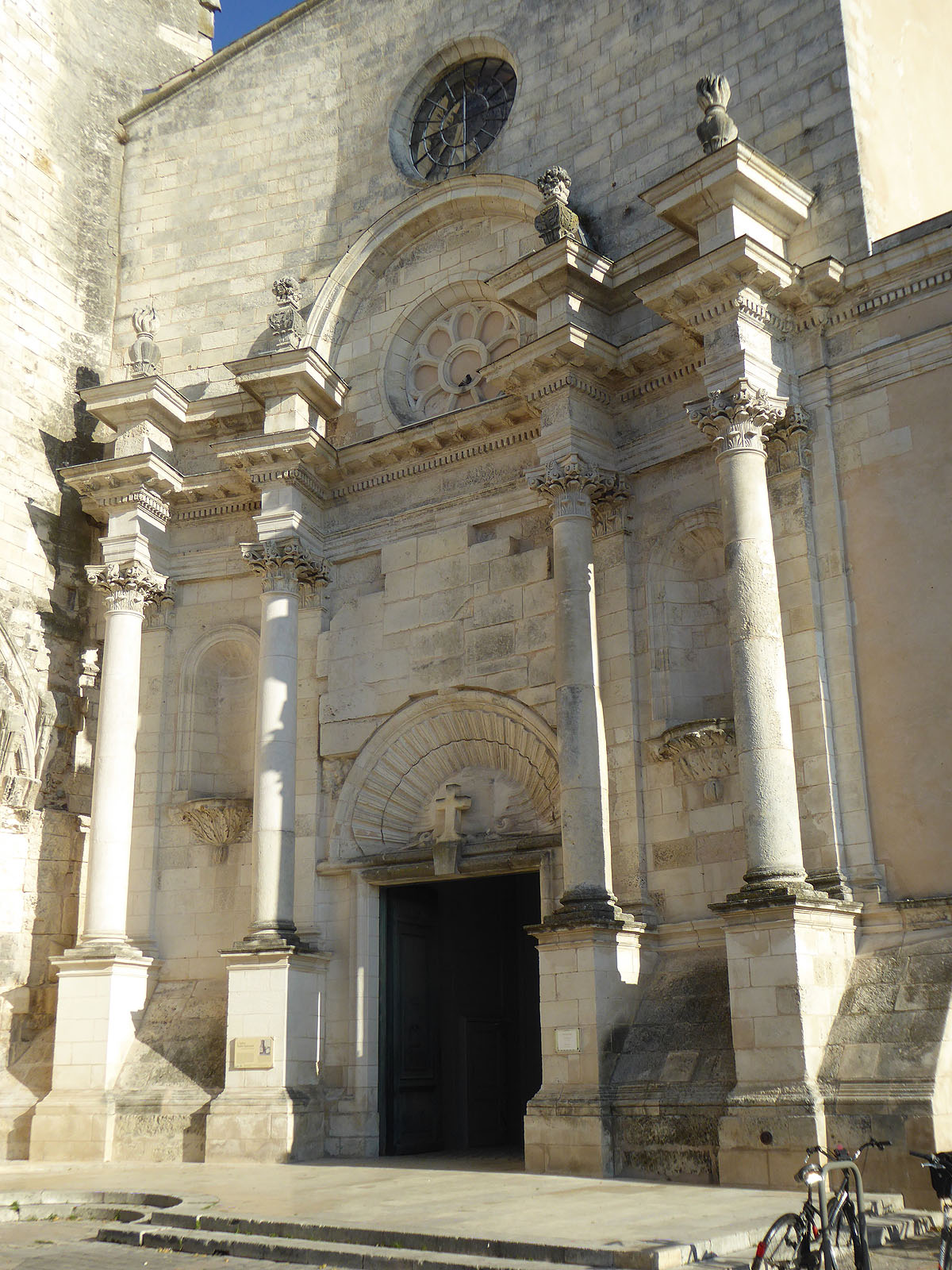
La Rochelle: L'Église Saint-Sauveur (2)

Built in the late 1600s, the Église Saint-Sauveur in La Rochelle is a Louis-XIII-style church. He was king of France from 1610 until 1643, and he re-captured La Rochelle after Protestants had seized it during their religious wars with Catholics in the late 1500s. The newer church is attached to a tower that was built in the 1400s. However, the history of the site goes back much further.


The first church was built here, near the town's Vieux Port, in the mid-1100s. That church was destroyed by fire in the early 1400s. A second church was built over the course of the century, and the reconstruction work was finished by 1492. The foundations of the old bell tower had not been destroyed by the fire, and the Gothic tower, which exists still today, was built on those foundations.


In the late 1500s, anti-Catholic forces sacked and pillaged La Rochelle's churches. They feared that the city would soon come under siege, and they needed to build better fortifications to protect the Protestant-held town. Where were they to get stone to build with in an area that is sandy and marshy? Well, they tore down the city's churches and used the carved stones as building blocks. The old tower of the Église Saint-Sauveur was left standing because it could be used as a watchtower and cannon-mount. The only other parts of the 15th century church that survived were elements of its main portal.


That's just a summary of a Wikipédia article in French about this church in La Rochelle. It was rebuilt between 1652 and 1679. Then that church was in turn destroyed by fire and was rebuilt again between 1708 and 1718. During the French Revolution, later in that century, the church was used by anti-Catholic revolutionaries as a warehouse. The building was put up for sale in 1794 but no buyer was interested. It was in pretty bad shape by the early 1800s, when it again started being used for Catholic religious services. More recently, it was completely restored between 1995 and 2008.

04 December 2018

Port cities

Here are some of the last photos I plan to post from our October morning visit to La Rochelle. I took this photo of a map in a glass case on the street near the Tour de la Chaîne. It shows the layout of what is called the Quartier de la Chaîne and the location of some of the city's towers — there are actually five of them around the Vieux Port, if you include the Tour de l'Horloge.


I snapped this photo of a detail on the wall of the Tour de la Lanterne. I've been examining it for a couple of days, but I can't figure out what it represents or represented. I guess the salt air has caused it to deteriorate badly.


Finally, here are two views of the channel that leads into La Rochelle's old port and harbor. The tide was very low when I took the photos. I wonder how deep the channel actually is. Some fairly big ferries and tour boats call in at the port, as you can see. They ply the waters between La Rochelle and places like the Île d'Oléron and the Île d'Aix.


This reminds me of home, of course. The town where I was born and grew up, in North Carolina, is also a port city. The style of the buildings and the history of the place is very different from La Rochelle's, but the natural landscape is similar. I've posted photos I've taken on trips back there on many occasions, so you might know what I'm talking about.


I figure I'll go back to La Rochelle one day. We didn't go out to the Île de Ré this time, and we didn't go to nearby Rochefort. Those are places I'd like to see. And smell, and taste.

08 July 2023

L'église Saint-Sauveur de La Rochelle

To my eye, it's kind of strange to see a church tower like the one above in the same picture as a port de plaisance (yacht basin). But that's the way it is in La Rochelle. The church is the église Saint-Sauveur.

I've often mentioned how French churches and châteaux have been modified, enlarged, and rebuilt over the centuries. Saint-Sauveur de La Rochelle is a prime example. It was built in the year 1152 by monks who lived on the nearby island called l'Île d'Aix. That church was destroyed by fire in the year 1419. It was rebuilt in the flamboyant Gothic style. The work was completed in 1492.

During the wars of religion in the late 1500s, Saint-Sauveur and other Catholic churches in La Rochelle were sacked, pillaged, and burned. Fearing a siege, the people of the city tore down churches and used the stone to construct fortifications. Only the tall Gothic tower was left standing because it served a military purpose — it made a good observation tower. The church was rebuilt between 1652 and 1679 after the French king Louis XIII took control of the city. That church was destroyed by fire in 1705. Another new church was built on the site. During the French Revolution, there was an effort to sell the church, but nobody wanted to buy it. It ended up being used a warehouse. And on and on... The photo just above shows what the church looked like when we were there in 2018.

27 November 2018

La Rochelle : Restaurants et menus


Some of the things you could eat in other restaurants around the Vieux Port are on these signs. Oysters are "farmed" all along France's Atlantic coast, from Cap Breton in the far southwest all the way up to the Cotentin peninsula in Normandy. Muscadet wine, a dry white which many people think is the best "oyster wine" in France, is made just north of La Rochelle in the Vendée and up to Nantes on the Loire river. The oysters advertised here come from the Île de Ré, which is just a short drive over a bridge from La Rochelle.


Here's a blackboard menu from another restaurant, showing the day's specials. Customers have a choice of three formules — three courses for 26 euros, two for 21 euros (main course with either starter or dessert), or just a main course for 16 euros. There's a lot of seafood on the menu, including squid (fricassée d'encornets), tuna (tartare de thon), sea bass (filet de bar), cod (pavée de cabillaud), and haddock.


It was a Monday, which in France is usually a very quiet day, but in La Rochelle there were a lot of people out and about. It was because of the great sunny weather, I'm sure. By the end of October, people expect the weather to turn chilly and gray very soon. They take advantage of the last sunny days of the year by taking walks through town and sitting down for some food in a sidewalk café.

16 February 2021

Maps, geography, etc.

I thought it might be a good idea to post a map of the Île d'Oléron. The island is about 18 miles from north to south, and about 7 miles wide at its widest point. I've added La Menounière to the map, which I found on the internet, so you can see where our gîte rural was located. There's a lighthouse at the northern tip of the island. At the southeastern corner there are a lot of oyster shacks and oyster farms. There's also a château down there. There's a passenger ferry that runs from that sort of knob of land on the east coast of the island over to the city of La Rochelle. We wanted to take it, and dogs are allowed, but it wasn't running because striking fisherman had blocked the entrance to the port at La Rochelle.


Here's map that shows a wider view. You can see La Rochelle and the Île de Ré to the north of Oléron, and Rochefort to the east. Bordeaux is about 2½ hours south. We didn't get to go to those cities on the 2008 trip. Oh, we could have, but going would have meant probably sitting in traffic for 90 minutes or so at the bridge, and the drive from La Menounière to La Rochelle takes about 90 minutes each way. So we would have spent four or five hours on the road. It wasn't worth it. Instead, over the course of the week, we went up to the top of the lighthouse. We poked around in Saint-Georges and Saint-Pierre. We saw the oyster farms and shacks and the château to the south. We also took a little train trip — with Callie — down to the sandy far southern tip of the island at Saint-Trojan-les-Bains. And Cheryl and I spent half a day taking photos in an interesting bird sanctuary and park at Dolus. That day, Walt stayed "home" with Callie and probably went for a walk on the beach.

P.S. Here in Saint-Aignan, our cold spell is over. I had a very pleasant walk in the vineyard yesterday afternoon without having to wear a hat, gloves, and a heavy coat. The temperature right now is about 50ºF instead of 25 and it'ss supposed to be in the mid-60s F by the end of the week and through the weekend. Maybe some of our yard work and home improvements will get done now.

29 November 2018

La Rochelle : La Tour de la Chaîne


At the entrance to La Rochelle's old harbor (le Vieux Port) stand two towers. The taller one is the Tour Saint-Nicolas. The other one is La Tour de la Chaîne. It's called that because at its base there was a heavy iron chain that could be stretched across the harbor entrance and attached to the other tower to keep boats from passing in or out. The Michelin guide implies that the chain was used to close the harbor every night. Nowadays, the harbor is more a yacht basin than a fishing or military port.

Here's a view of the two towers (you couldn't call them "twin towers") from a different angle. I'm standing outside the harbor, with a view of the channel that leads from the harbor out to the open waters of the Atlantic behind me. The Tour de la Chaîne was built in the 14th century (late 1300s) and used to be taller because it was crowned by a high roof. It was 34 meters tall then but only 20 meters tall today. An explosion in the 17th century, during the reign of Louis XIV, destroyed that roof and the tower stood roofless for a few centuries.


At the time, the Tour de la Chaîne was used as a munitions warehouse. The king of France had again taken possession of La Rochelle , ending the Protestant control of the 16th century. There were plans to tear down both the towers at the entrance to the harbor, but the people of the city opposed them. The towers still stand, and major — controversial — restoration work was undertaken in the late 19th century, lasting into the mid-20th century. There's one more tall tower in La Rochelle that I haven't mentioned yet...

03 December 2018

La Rochelle : La Lanterne

As is the case with much of this blog, my post yesterday about the late president George H.W. Bush and his trip to Africa during the 1985 drought and famine there was a spontaneous, unplanned post. I'll have to go back to the articles I wrote during that trip to refresh my memory about other things that happened. That's research, and might take time.


Meanwhile, back to La Rochelle, the city we visited on October 22, 2018. This is fourth tower in my series, after the two towers that guard the entrance to the old harbor and the 15th century Saint-Sauveur church tower. It is known as the Tour de la Lanterne. The round base is a tower that dates back to the 1200s or even earlier. The top, in the form of a steeple, was added on in the mid-1400s. The Tour de la Lanterne was built as a lighthouse. Below is a photo I took standing at the base of the Lanterne looking straight up. The tower underwent restoration work in the early 1900s.


Here also is a view in which you can see the three seafront towers of La Rochelle. I took it from the opposite side of the old harbor. The Lanterne, on the right, measures 55 meters (180 feet) in height.


During the 16th century religious wars, when La Rochelle fell under Protestant control, Catholics fled the city. Thirteen Catholic priests were imprisoned in the Lanterne tower, and then murdered. For a while, the towers was known as the Tour des Prêtres.

27 October 2018

Tasha's restaurant adventure


You might have figured out by now that when I bought and cooked fish the other day, we were on the coast. The fish market where I bought the "sea bream" that I cooked and posted about is in the central market hall in La Rochelle (photo above), which is an old port city on the Atlantic Ocean north of Bordeaux and south of Brittany.


We spent a week in the area, and we also visited the coastal island of Noirmoutier, the port/resort called Les Sables d'Olonne ("the sands of Olonne"), and the beautiful old city of Niort. I have a lot of photos to post. Over the course of a week, we went to exactly one restaurant, and it was in La Rochelle. That's because we were traveling with a dog, and it was too hot to leave her closed up in the car. While dogs are welcome in many French restaurants, Tasha had never had the restaurant experience before, and we didn't know how she'd behave.


In La Rochelle, there's a long row of restaurants with outdoor seating along the street that runs along the western edge of the town's old harbor (photo of view above). We got to town at mid-morning, and after walking around and taking pictures for an hour or so, we decided to sit down and eat lunch. We got a table at a sidewalk café, on the edge of the seating area where Tasha would be out of the way and less likely to bother anybody or get stepped on.


We made sure we got there early so that we'd have our choice of tables. By 12:30, there wasn't a free table left on the terrace. Tasha was very good. She barked a couple of times when people rode by on bicycles, but nobody seemed to notice. She enjoyed attention and petting from a little girl sitting with her mother at the table next to ours. The waitperson brought a container of cold water for the dog when we sat down and ordered our lunch.


The food and wine were good. The sun was shining brightly. The temperature was in the low 70s in ºF but it felt a lot warmer in the sun. There was only a slight breeze. We couldn't have asked for a nicer day. In fact, during the week we spent on the coast not one drop of rain fell. There was fog some mornings but the afternoons were sunny and pleasant. It felt like what northern French summertime weather feels like.

12 January 2008

Après la pluie, le soleil

As Sam and Claudia pointed out, the amount of rainfall an area gets isn't the whole answer. It's what I said about Rouen, too — it doesn't rain in excessive amounts there, it just rains lightly much of the time.

Do you think weather like this counts as sunny or cloudy?

So another climate measure the experts keep track of is annual hours of sunshine. It turns out that some of the rainiest cities are also some of the sunniest: Bordeaux, Montpellier, La Rochelle, Grenoble.

Here's a list from sunniest to dreariest, in hours of sunshine (heures d'ensoleillement) per year:
Nice ......... 2694
Montpellier .. 2687
Perpignan .... 2506
La Rochelle .. 2250
Bordeaux ..... 2084
Toulouse ..... 2047
Grenoble ..... 2031
Lyon ......... 1976
Limoges ...... 1974
Nantes ....... 1956
Clermont ..... 1907

Besançon ..... 1872

Rennes ....... 1851
Tours ........ 1845
Dijon ........ 1831

Orléans ...... 1805

Paris ........ 1797

Caen ......... 1764
Brest ........ 1749
Reims ........ 1729

Romorantin ... 1716

Rouen ........ 1687

Metz ......... 1638

Strasbourg ... 1637

Lille ........ 1600
The southwest is definitely the land of sunshine: draw a line from Montpellier to La Rochelle and the cities south of it are the sunniest ones in France. And the northeast is the least sunny: Rouen, Metz, Strasbourg, and Lille win the cloudiest prize.

Tours (14th) is sunnier than Paris (17th), but Romorantin (21st) is drearier. So Saint-Aignan must be about tied with Paris, since we are halfway between Tours and Romo.

Or maybe Saint-Aignan has its own climate. There certainly are micro-climates in all countries and regions. Actually, La Renaudière, the hamlet we live in, has its own climate compared to the area down by the banks of the Cher River, one kilometer distant.

In 2003 — five years ago already — I was at La Renaudière one day at the beginning of February. While I poked around in this house we had decided to buy, measuring rooms to see if our San Francisco furniture would fit and thinking of all the possibilities, I had left the shutters closed. In one room it was too dark, though, so I opened up. It had started snowing!

Snow at La Renaudière, February 2003

In just a few minutes, a good dusting of light snow had covered the ground. I thought, well, I'd better get going before the roads become impassable, especially the little lane that leads out of La Renaudière down a steep hill back to the main road along the river. I slipped and slid down the hill in a little Peugeot 205, and when I got to the bottom of the hill there was no snow at all. It was raining.

Often there is fog along the river but not up here on the edge of the vineyard. You can see the fog shrouding the river valley when you're out walking the dog in the morning. And I'm sure we get a lot more wind than spots down along the river, which are protected by the higher terrain all around them.

Meanwhile, we now keep our own rainfall statistics.

Average annual rainfall in Tours: 684 mm
Average annual rainfall in Romo: 733 mm

Total rainfall at La Renaudière:
2005 — 449 mm
2006 — 591 mm
2007 — 587 mm

In 2005, we were in drought conditions — that's clear. But it's funny about 2006, which seemed like a basically dry, sunny year, and 2007, which was a gray, rainy, wash-out of a year. So much for rainfall statistics.

09 July 2023

La Rochelle : fish for dinner


La Rochelle is a fishing port. It would be a shame to spend a day there and not eat seafood. Above is the menu of a restaurant at the Vieux Port that featured fricasseed calamari, fish chowder, and tuna tartare as appetizers; as main courses, fillet of sea bass with seared pork belly and pureed potatoes; a thick slab of cod fillet with leek and haddock risotto; and for the meat-eaters, and a steak with béarnaise sauce and fried new potatoes. For dessert, you could choose warm brioche caramelized in salted butter, served with vanilla ice cream; a chocolate lava cake, also with vanilla ice cream; or lemon custard served in a glass and topped with meringue. Something else you could have for dinner was oysters. Our choice was to go the the market and buy some fish to cook at the gîte where we were staying.

This is the market hall in La Rochelle. That's where we went to buy seafood. We bought fish for dinner that evening and oysters for a dinner later in the week. When you're traveling with a dog, it's hard to go to a nice restaurant. You can't just leave the dog in the car or alone at the gîte. And you can't enjoy a couple of glasses of wine with dinner in a restaurant and then drive an hour in the dark to get back to the place where you're staying. Besides, we like to cook.

The man selling fish in the market hall was informative and helpful. We had talked about buying either un bar (a sea bass) or une dorade (a sea bream). The fishmonger recommended the bream and filleted it for us. Then we went into the open-air market at the other end of the building and bought 20 fresh, live oysters for 10 euros. They would keep in the refrigerator for a day or two and make another good dinner. As you can see, we ate the bream fillets with some spinach and a few steamed new potatoes. We were happy with that. I don't remember what we had for dessert.