Yesterday, Saturday, was a full day. We started it in the morning, between rain showers, with a trip to the farmers' market in Saint-Aignan. We had three meals in the planning: Saturday lunch, and then lunch and dinner on Sunday. I've always said that life in France is essentially planning your next good meal. Whatever else you do is just filler.
Peter Hertzmann is visiting for the weekend. He's the cook, and the food is excellent. Have a look at his web site, which is called A La Carte.
At the market we found an heirloom vegetable that Walt and I have been wanting to try. These little corkscrew-shaped roots are called crosnes in France, and Japanese or Chinese artichokes in English. The French name apparently comes from the name of the town in France where they were first cultivated, Crosne, which is near Orly, just south of Paris.
The woman who was selling them said we should trim off the little rootlets and then wash the crosnes well to remove any sand. Then rub them in a towel with some coarse salt to remove some of the skin, which on these looks to be pretty thin anyway. To cook the crosnes, you poach them in simmering water or broth for 10 or 12 minutes. Then you sauté them lightly with a little butter and parsley, adding some cream if you want. Un peu de crème ne gâche jamais le plat, the woman at the market said. She said to serve them with grilled meat — pork chops or veal cutlets, for example.
What else did we buy at the market? Some mushrooms from the mushroom lady, some chicken breasts and eggs from one of the poultry vendors, some sausages from Mme Doudouille, and some Brussels sprouts from one of the vegetable stands.
Yesterday Peter cooked a mushroom and cheese omelet for lunch. Today we'll have chicken breasts and green beans (from the supermarket) for lunch, and then sausages with crosnes and Brussels sprouts for supper. (Some of you are interested in this level of detail about food, I believe.)
After lunch yesterday, Peter and I drove over to Valençay to see the château there. It's about 25 km from Saint-Aignan. Peter was especially interested in seeing the kitchens there, which were once managed by the famous chef named Carême. Unfortunately, the château de Valençay was closed for the winter. It re-opens on March 25.
We then took a drive south to the town of Levroux, where we walked around and took some pictures of the early Gothic church there. More of that in future posts. We drove on through the country, and even though the fields are very green, the weather was dreary.
Last night we had dinner in the restaurant at the Hôtel du Cheval Blanc in the town of Bléré, near Chenonceaux. It's a Michelin one-star restaurant and was not disappointing. We ate fish and drank local white wine. More about that later too.
Showing posts with label Indre Valley/Palluau. Show all posts
25 February 2007
15 December 2006
The Saint-Laurent priory at Palluau
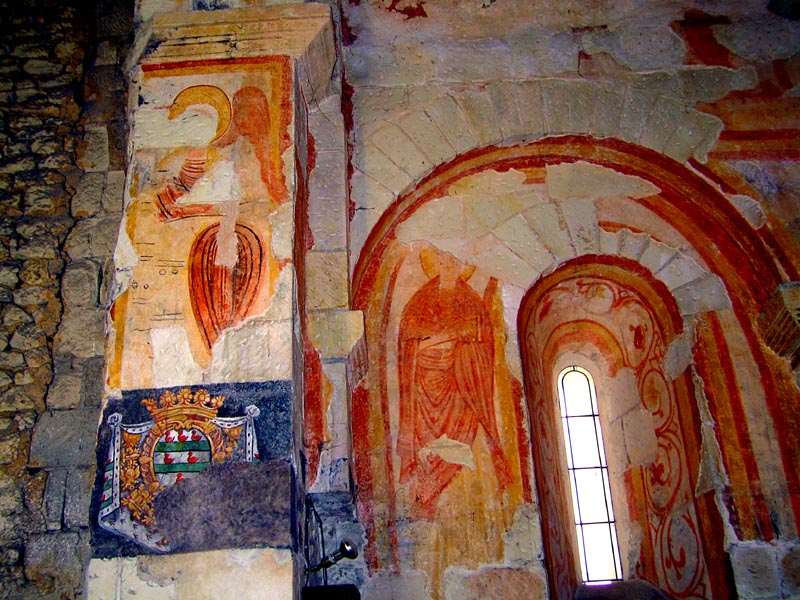
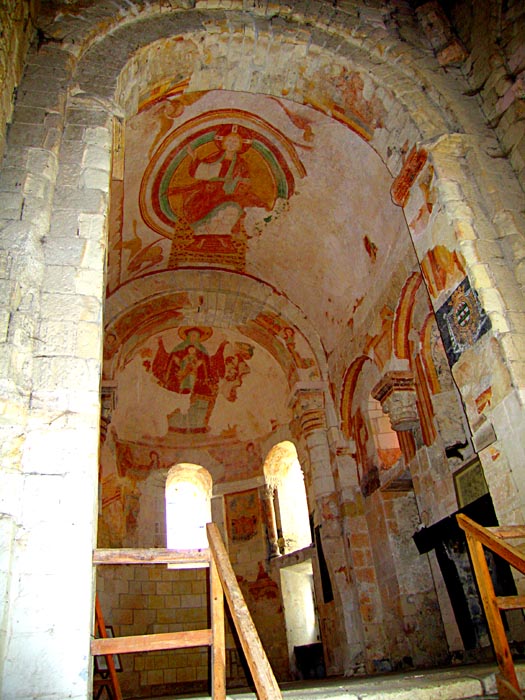
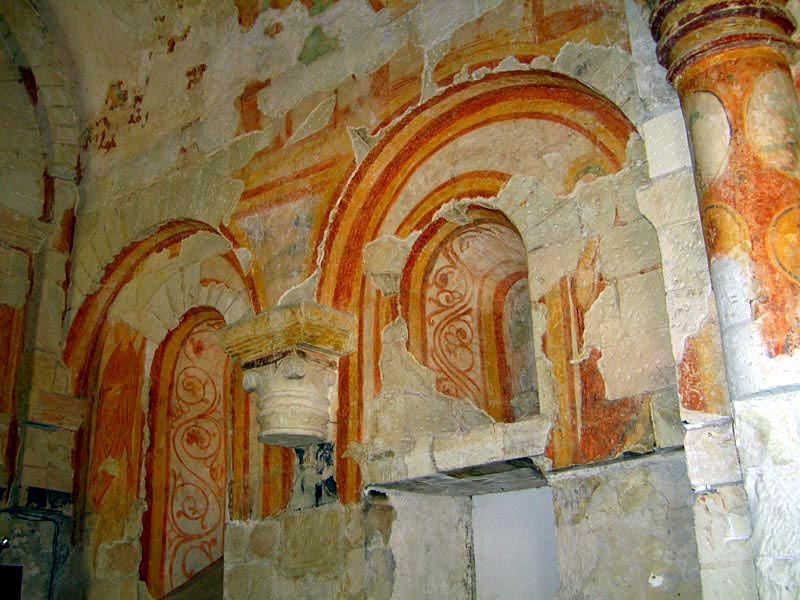
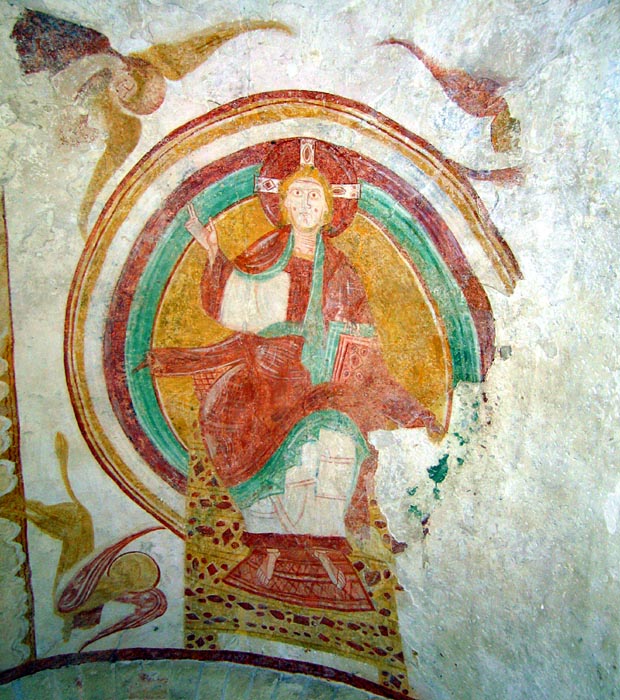
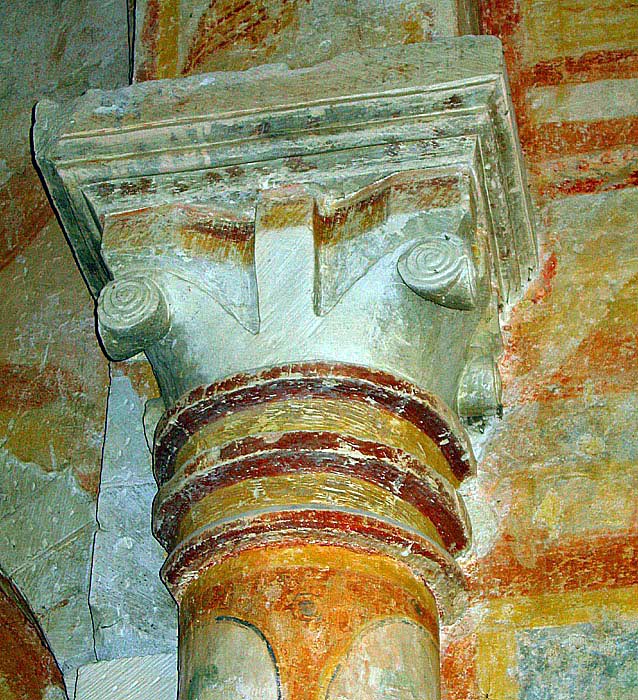
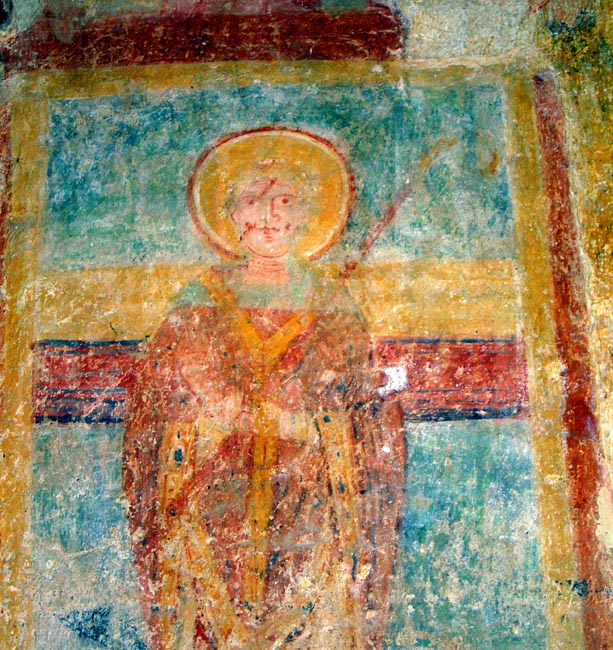
One place I wasn't able to see on my first trip to Palluau-sur-Indre was the old priory dedicated to Saint-Laurent (Saint Lawrence). It was built in the 11th century and its walls are covered in polychrome frescoes dating back as far as the 12th century. I saw it and took these pictures there in July 2006.
The Michelin guide says these are some of the finest frescoes in the region. The painted figures include a Christ "in majesty" — that's an art term meaning he is sitting on a throne and wearing a crown — a Virgin Mary also in majesty, and an unnamed bishop or abbey who is holding a crozier (a staff).
A priory, by the way, is a small monastery or convent. This one was de-sacralized and turned into living quarters at some point in its long history. A fire in the 19th century destroyed all the archives that might have detailed the priory's history, so not much is known about it.
I found a couple of Web sites that give information and show some pictures of the frescoes in the Saint-Laurent priory. One has descriptions in English and French, and the other in French only. In all modesty, I think the pictures I'm posting are better than the ones on those sites (thanks to Photoshop).
The priory is open to the public. Rough wooden stairs and railings have been put up to make the place a little safer. The main chapel is above the old crypt (no frescoes there) and up half a level off the street.
There is enought paint and color left on the walls to give you a good idea how highly decorated the old priory really was. I've seen similar frescoes in the old church at Saint-Aignan, for example, and especially in the enormous church at Saint-Savin-sur-Gartempe, about 65 km SW of Palluau. Both are worth a visit.
Here are a few more pictures.
I don't know how the wall paintings managed to survive for nearly 1000 years. Evidently they were painted over by residents of the building centuries ago. Village children discovered them just before World War II, according to the site in French I gave a link for above.
Serious restoration work began in the late 1970s and continued until about 1990.
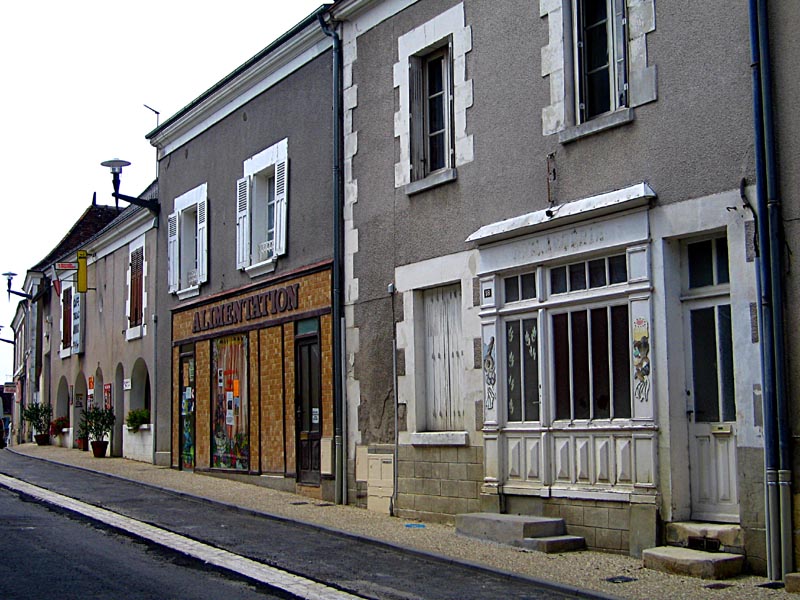
The Saint-Laurent priory is on this fairly non-descript street, with a café-tabac, a grocery store (Alimentation), and an empty storefront on the other side. The town's main church and the château are on another street, parallel to this one and up higher on the hill the town sits on.
The Michelin guide says these are some of the finest frescoes in the region. The painted figures include a Christ "in majesty" — that's an art term meaning he is sitting on a throne and wearing a crown — a Virgin Mary also in majesty, and an unnamed bishop or abbey who is holding a crozier (a staff).
A priory, by the way, is a small monastery or convent. This one was de-sacralized and turned into living quarters at some point in its long history. A fire in the 19th century destroyed all the archives that might have detailed the priory's history, so not much is known about it.
I found a couple of Web sites that give information and show some pictures of the frescoes in the Saint-Laurent priory. One has descriptions in English and French, and the other in French only. In all modesty, I think the pictures I'm posting are better than the ones on those sites (thanks to Photoshop).
The priory is open to the public. Rough wooden stairs and railings have been put up to make the place a little safer. The main chapel is above the old crypt (no frescoes there) and up half a level off the street.
There is enought paint and color left on the walls to give you a good idea how highly decorated the old priory really was. I've seen similar frescoes in the old church at Saint-Aignan, for example, and especially in the enormous church at Saint-Savin-sur-Gartempe, about 65 km SW of Palluau. Both are worth a visit.Here are a few more pictures.
I don't know how the wall paintings managed to survive for nearly 1000 years. Evidently they were painted over by residents of the building centuries ago. Village children discovered them just before World War II, according to the site in French I gave a link for above.
Serious restoration work began in the late 1970s and continued until about 1990.
The Saint-Laurent priory is on this fairly non-descript street, with a café-tabac, a grocery store (Alimentation), and an empty storefront on the other side. The town's main church and the château are on another street, parallel to this one and up higher on the hill the town sits on.
14 December 2006
History of Palluau-sur-Indre
One of the places I've visited in 2006 that really sticks in my mind is the little town of Palluau-sur-Indre, about 25 miles, or 40 km, south of Saint-Aignan. I don't know what it is about the place that makes me keep thinking about it.
Maybe it's that I had never heard of it before last June 15, when we went there on an outing. We were just exploring. Here's what I blogged about Palluau then. That day, I discovered that it was the home town of a man named Frontenac who played a key role in the establishment of the city and province of Québec, in Canada. The big château/hotel in Quebec City is named for him. I stayed there many years ago, when I was in Quebec City for a conference.
Yesterday I found a web site in French that gives a nice historical overview of Palluau-sur-Indre. The author says that not much is known about the area before the year 1000. But according to legend, the Romans built fortifications there in the first century of our era. It was on the Roman road that led from Orléans to the city of Poitiers, to the southwest.
One early period that is documented is the arrival of Vikings in the year 902. They pillaged Palluau and the nearby abbey at Saint-Genou, founded in 828. The area around Palluau was under Viking domination for about 35 years, and then the Vikings were pushed out of the Loire region.
The first mention in writing of the château at Palluau dates back to 1073, evidently. Palluau was at the southeastern edge of the territory controlled at the time by the Count of Anjou, a certain Geoffroy Plantagenêt. A few decades later, Geoffroy's descendent Henri II would increase his holdings considerably by becoming king of England as well as count of Anjou and duke of Normandy.
So the count of Anjou was a powerful figure and Palluau was a strategic site that was well fortified. Richard the Lionhearted inherited the English throne and the county of Anjou from his father. The Plantagênet's were locked in a struggle against the king of France, Philip Augustus, based of course in Paris.
Palluau and its château changed hands several times, but Philippe Auguste was eventually victorious, after numerous battles and sieges. Palluau became part of the French kingdom by the year 1200 or so.
A couple of centuries later, during the Hundred Years War, which was fought between the English and the French on what is now French territory, the English took control of Palluau again for about five years. They tore down the château before they were forced by the French king's forces to retreat farther west at the end of the 1300s.
The château de Palluau in its present form was built, then, in the 1400s. The Palluau "skyline" has changed very little since then. In the 1500s, the French Renaissance, the owners of Palluau modernized the château and made it into a pleasant place to live. They were helped by workmen brought to the region from Brittany by the French queen, Anne de Bretagne, who spent a lot of her time in the château at Loches, just a few dozen miles down the Indre river from Palluau.
In the early 1600s, the château was sold to the Buade de Frontenac family. A member of that family, Louis de Buade de Frontenac, was later named governor of New France (French Canada).
In the 1700s, the château at Palluau became the property of who else but the Duke of Saint-Aignan, a man named Paul de Beauvillier. He was a powerful figure in the court of Louis XIV, and he spent most of his time in Paris and at Versailles. When the French Revolution exploded in the late 1700s, Palluau was used as a prison for a time.
Since 1990, the château at Palluau has been owned by a real estate corporation. The property is managed by an Englishman...
Maybe it's that I had never heard of it before last June 15, when we went there on an outing. We were just exploring. Here's what I blogged about Palluau then. That day, I discovered that it was the home town of a man named Frontenac who played a key role in the establishment of the city and province of Québec, in Canada. The big château/hotel in Quebec City is named for him. I stayed there many years ago, when I was in Quebec City for a conference.
Yesterday I found a web site in French that gives a nice historical overview of Palluau-sur-Indre. The author says that not much is known about the area before the year 1000. But according to legend, the Romans built fortifications there in the first century of our era. It was on the Roman road that led from Orléans to the city of Poitiers, to the southwest.
One early period that is documented is the arrival of Vikings in the year 902. They pillaged Palluau and the nearby abbey at Saint-Genou, founded in 828. The area around Palluau was under Viking domination for about 35 years, and then the Vikings were pushed out of the Loire region.
The first mention in writing of the château at Palluau dates back to 1073, evidently. Palluau was at the southeastern edge of the territory controlled at the time by the Count of Anjou, a certain Geoffroy Plantagenêt. A few decades later, Geoffroy's descendent Henri II would increase his holdings considerably by becoming king of England as well as count of Anjou and duke of Normandy.
So the count of Anjou was a powerful figure and Palluau was a strategic site that was well fortified. Richard the Lionhearted inherited the English throne and the county of Anjou from his father. The Plantagênet's were locked in a struggle against the king of France, Philip Augustus, based of course in Paris.Palluau and its château changed hands several times, but Philippe Auguste was eventually victorious, after numerous battles and sieges. Palluau became part of the French kingdom by the year 1200 or so.
A couple of centuries later, during the Hundred Years War, which was fought between the English and the French on what is now French territory, the English took control of Palluau again for about five years. They tore down the château before they were forced by the French king's forces to retreat farther west at the end of the 1300s.
The château de Palluau in its present form was built, then, in the 1400s. The Palluau "skyline" has changed very little since then. In the 1500s, the French Renaissance, the owners of Palluau modernized the château and made it into a pleasant place to live. They were helped by workmen brought to the region from Brittany by the French queen, Anne de Bretagne, who spent a lot of her time in the château at Loches, just a few dozen miles down the Indre river from Palluau.
In the early 1600s, the château was sold to the Buade de Frontenac family. A member of that family, Louis de Buade de Frontenac, was later named governor of New France (French Canada).
In the 1700s, the château at Palluau became the property of who else but the Duke of Saint-Aignan, a man named Paul de Beauvillier. He was a powerful figure in the court of Louis XIV, and he spent most of his time in Paris and at Versailles. When the French Revolution exploded in the late 1700s, Palluau was used as a prison for a time.
Since 1990, the château at Palluau has been owned by a real estate corporation. The property is managed by an Englishman...
20 November 2006
Le château du Mée en Berry
It was July 15 and CHM and I were touring around the French countryside in the triangle formed by the towns of Châtillon-sur-Indre, Valençay, and Châteauroux. The province we were in is called Le Berry, and the administrative département is L'Indre, which is also the name of the river that runs through the area. It's a tributary of the Loire.
It was late in the afternoon and CHM noticed a little château symbol on the Michelin map that was labeled Le Mée. Earlier in the day we had been to see the château and an old chapel full of frescoes in Palluau-sur-Indre and the old abbey church at St-Genou.
We drove along little roads near places called Bel Air, La Presle, and Villegouin, thinking a lot the the time that we might be lost. That was OK, because when you're lost is when you find the most interesting things to see. The unexpected, you know? CHM and I have been lucky to be able to get lost in several parts of France, including one memorable trip to find little châteaux out in the Normandy countryside about eight years ago.
CHM, by the way, is a Parisian who lives most of the time in U.S., and has for nearly 40 years now. He was my boss 25 years ago, when I worked in Washington DC, and he's old enough to be my father. We have become fast friends over the years and I always look forward to his visits.
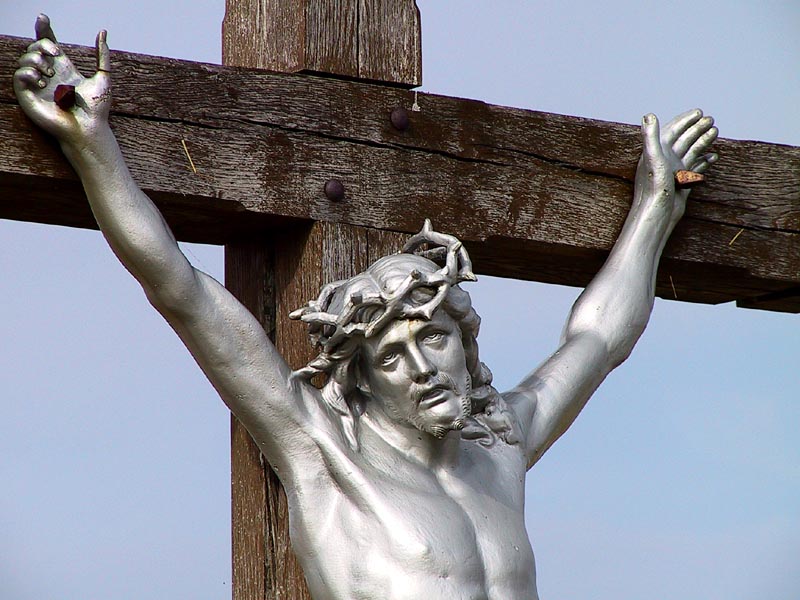
So there we were exploring the narrow winding roads of Le Berry near the town of Pellevoisin, about 25 miles south of Saint-Aignan. The first thing we came across that indicated we were headed in the right direction — toward Le Mée — was a pretty spectacular crucifix standing at the side of the road. It was on the map, as are so many of these calvaires scattered across the French countryside. I really don't know why they are placed where they are, though.
I've done Google searches for the château du Mée and haven't found much of anything. It was built in the 14th or 15th century, according to various sources. But there's no information beyond that.
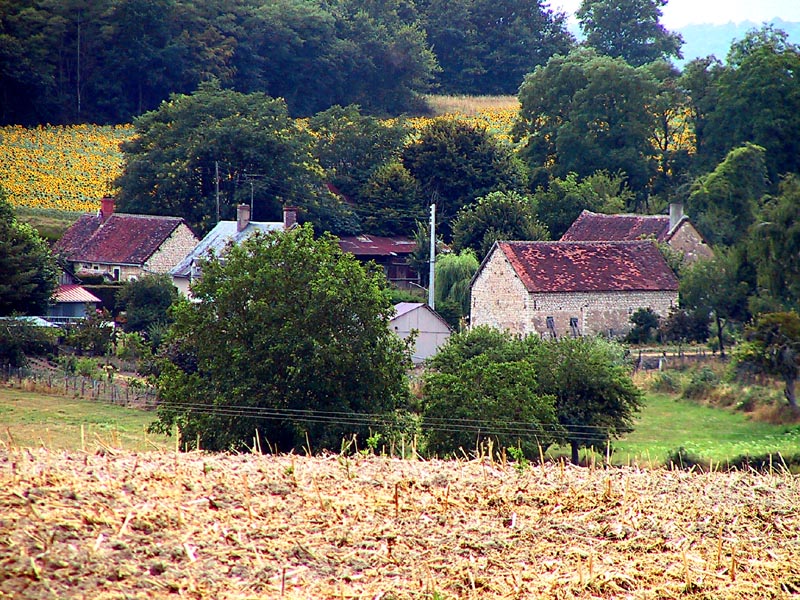
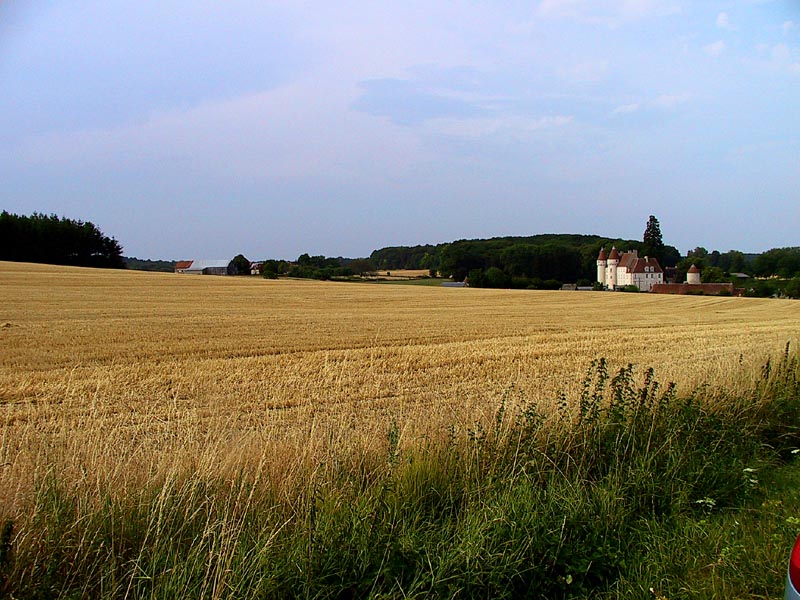
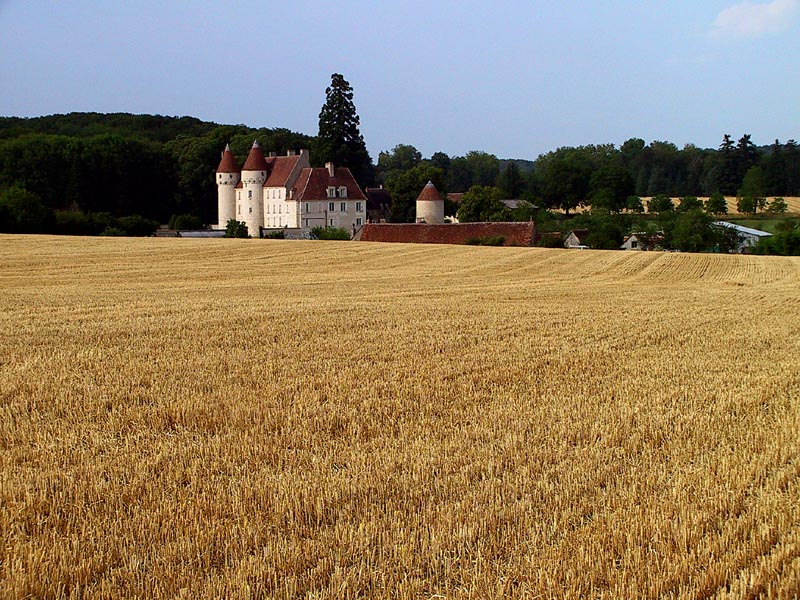
We stopped the car on the side of the road near the calvaire. The field of barley along the road had recently been cut, so there was only stubble left. We wee able to walk out into the field and take pictures of the château from a distance.
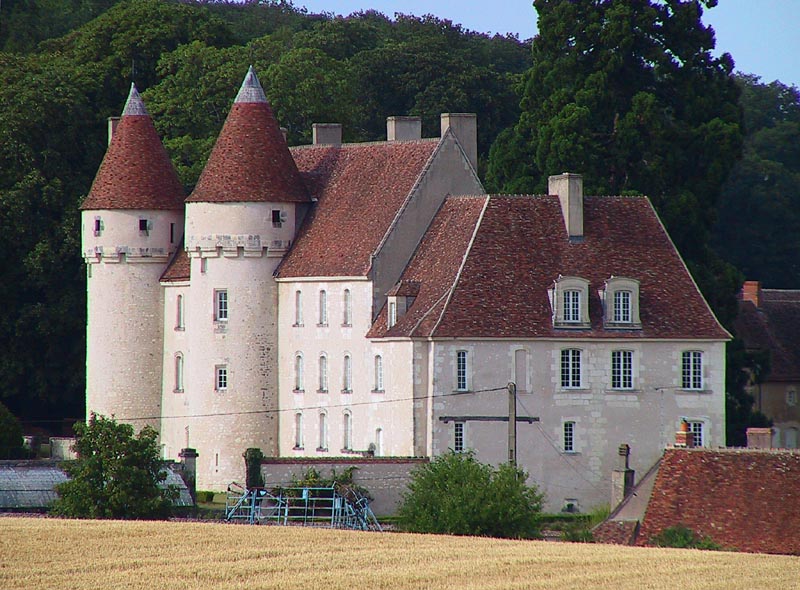
Looking at the château, you can see how brilliantly white the building stone is. The building must be privately owned — otherwise, more historical information about it would be available. There wasn't even a sign indicating its existence.
It was late in the afternoon and CHM noticed a little château symbol on the Michelin map that was labeled Le Mée. Earlier in the day we had been to see the château and an old chapel full of frescoes in Palluau-sur-Indre and the old abbey church at St-Genou.
We drove along little roads near places called Bel Air, La Presle, and Villegouin, thinking a lot the the time that we might be lost. That was OK, because when you're lost is when you find the most interesting things to see. The unexpected, you know? CHM and I have been lucky to be able to get lost in several parts of France, including one memorable trip to find little châteaux out in the Normandy countryside about eight years ago.
CHM, by the way, is a Parisian who lives most of the time in U.S., and has for nearly 40 years now. He was my boss 25 years ago, when I worked in Washington DC, and he's old enough to be my father. We have become fast friends over the years and I always look forward to his visits.
So there we were exploring the narrow winding roads of Le Berry near the town of Pellevoisin, about 25 miles south of Saint-Aignan. The first thing we came across that indicated we were headed in the right direction — toward Le Mée — was a pretty spectacular crucifix standing at the side of the road. It was on the map, as are so many of these calvaires scattered across the French countryside. I really don't know why they are placed where they are, though.
I've done Google searches for the château du Mée and haven't found much of anything. It was built in the 14th or 15th century, according to various sources. But there's no information beyond that.
We stopped the car on the side of the road near the calvaire. The field of barley along the road had recently been cut, so there was only stubble left. We wee able to walk out into the field and take pictures of the château from a distance.
Looking at the château, you can see how brilliantly white the building stone is. The building must be privately owned — otherwise, more historical information about it would be available. There wasn't even a sign indicating its existence.
14 November 2006
Le château de Pouzieux
In November 2004, I was driving south from Saint-Aignan down toward the town called Le Blanc. Just outside Châtillon-sur-Indre, about 25 miles south of Saint-Aignan, I noticed what looked like a château off on the left side of the highway.
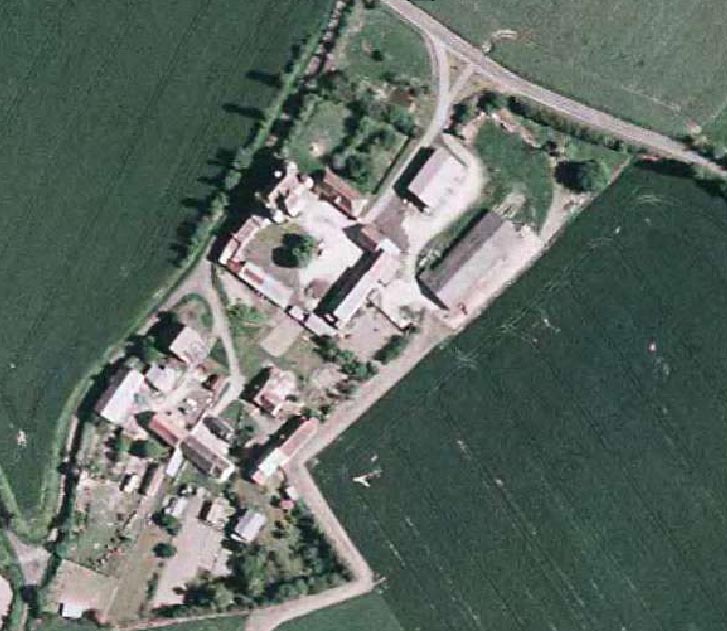
Pouzieux seen from above, thanks to www.geoportail.fr.
The château is at the top of the big square courtyard in the middle of the picture.
I stopped and took a picture, but we were headed to more picturesque places, including Angles-sur-l'Anglin and St-Savin-sur-Gartempe, so we didn't have time to do more.
Last July, I mentioned this little château to my friend CHM who was visiting, and he was interested in seeing it. We decided to drive down to Châtillon one afternoon and explore a little.
Looking at the www.geoportail.fr site for detailed maps and aerial photos of France, I have just identified the building we saw as a place called le château de Pouzieux.
It appears it was built beginning in the 13th century but dates mainly from the 15th. It is privately owned and the château is actually part of a farming operation.
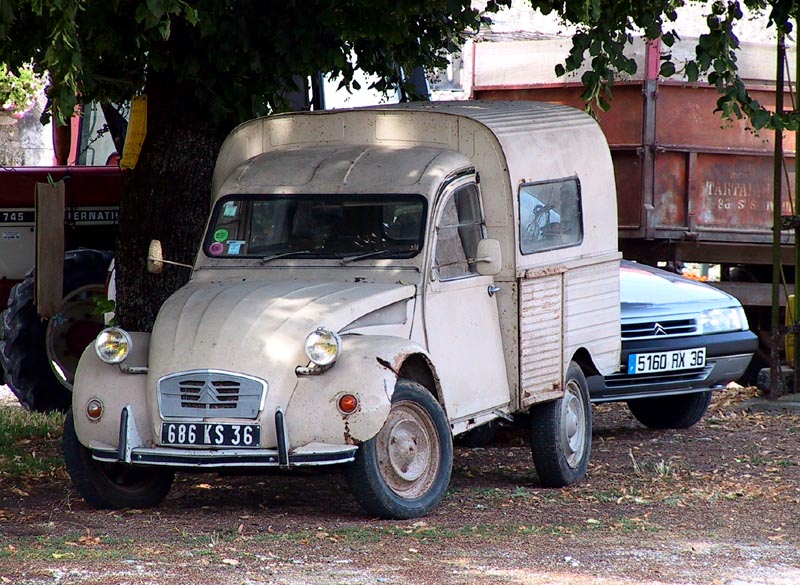
Inside Pouzieux's courtyard there was this old Citroën 2CV van.
Parked behind it is a much newer Citroën model. Did you know that
Citroën, now owned by Peugeot, still makes a full line of automobiles?
When CHM and I visited, there wasn't a soul in sight. We drove up to the building, parked the car, and nosed around a little. There were signs saying the courtyard was private property, so we didn't risk going beyond the gates. We took a lot of pictures though.
Pouzieux seen from above, thanks to www.geoportail.fr.The château is at the top of the big square courtyard in the middle of the picture.
I stopped and took a picture, but we were headed to more picturesque places, including Angles-sur-l'Anglin and St-Savin-sur-Gartempe, so we didn't have time to do more.
Last July, I mentioned this little château to my friend CHM who was visiting, and he was interested in seeing it. We decided to drive down to Châtillon one afternoon and explore a little.
Looking at the www.geoportail.fr site for detailed maps and aerial photos of France, I have just identified the building we saw as a place called le château de Pouzieux.
It appears it was built beginning in the 13th century but dates mainly from the 15th. It is privately owned and the château is actually part of a farming operation.
Inside Pouzieux's courtyard there was this old Citroën 2CV van.Parked behind it is a much newer Citroën model. Did you know that
Citroën, now owned by Peugeot, still makes a full line of automobiles?
When CHM and I visited, there wasn't a soul in sight. We drove up to the building, parked the car, and nosed around a little. There were signs saying the courtyard was private property, so we didn't risk going beyond the gates. We took a lot of pictures though.
16 June 2006
Palluau-sur-Indre
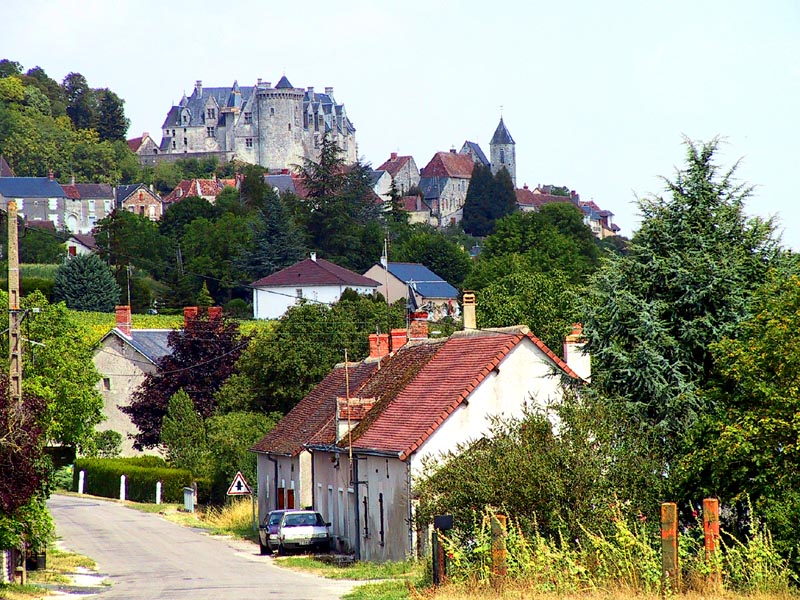
I was really taken with the village of Palluau-sur-Indre on Wednesday. It's the perfect French village, in many ways. There's a big château at the top of town, and a pretty church near the château. According to the Guide Michelin, the population is under 1,000.
The elaborate decorations and flowers around the altar
makes it seem the church is the center of village life.
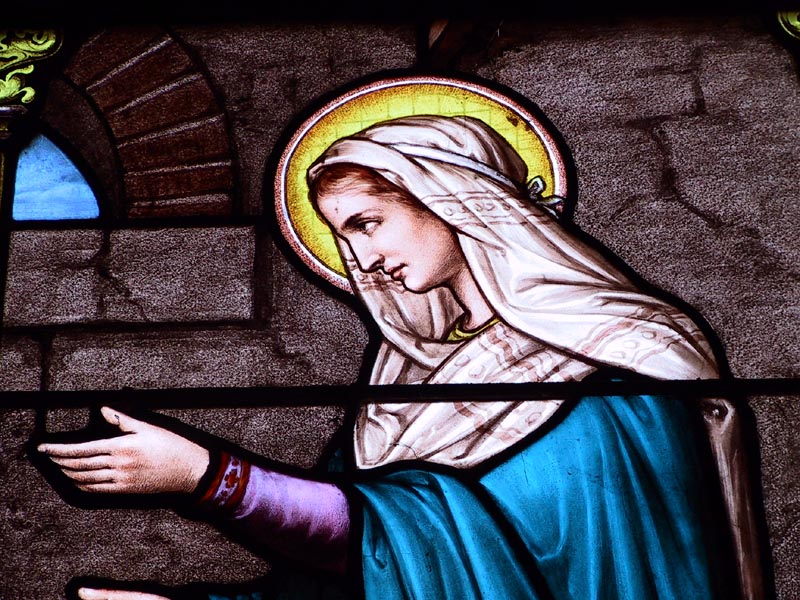
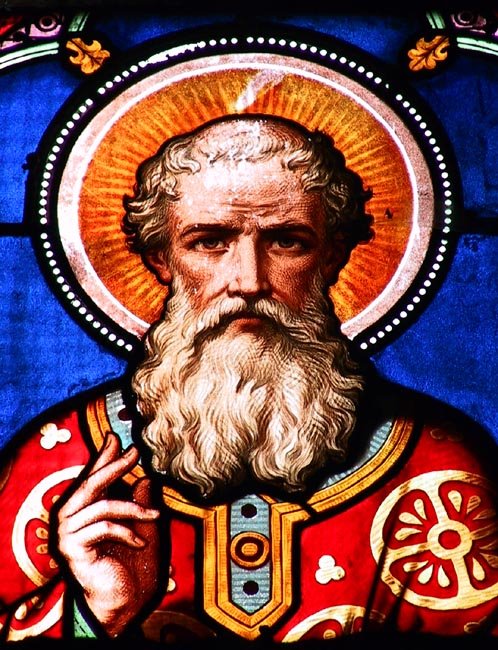
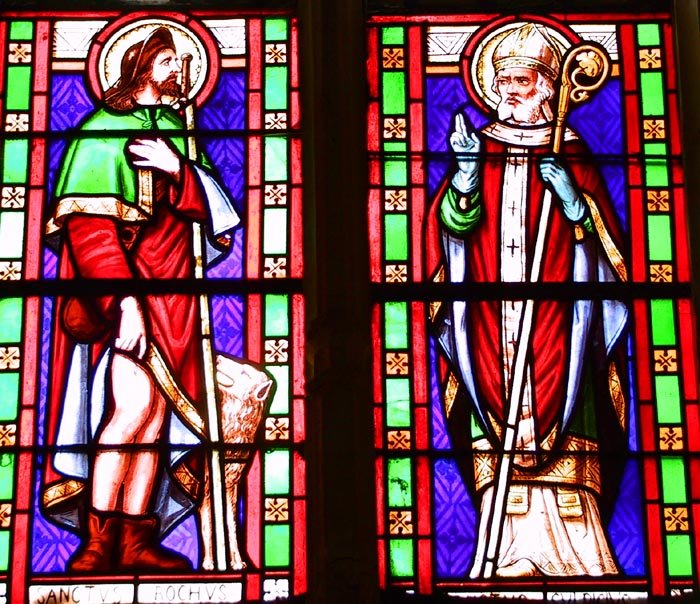
Five of the ten photos of stained-glass windows I posted yesterday were ones I took in the Palluau church. There was of course other artwork in the building, including polychrome stone statuary from the 15th and 16th centuries and numerous paintings.
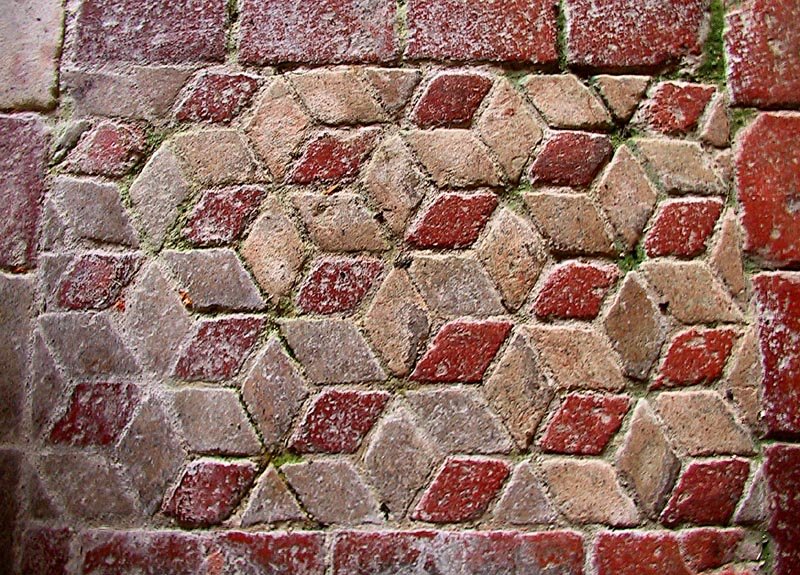
But as usual in these small French towns, you have to look up, down, and sideways to see the small details that a quick glance won't reveal. Here, for example, are two patterns I noticed in the 15th-century tilework on the floors in a side chapel of the church.
The church is actually named for Saint-Sulpice and was originally built in the 12th century, replacing an older church named for Sainte-Menehould. Work on the Saint-Sulpice church continued off and on until the 16th century.
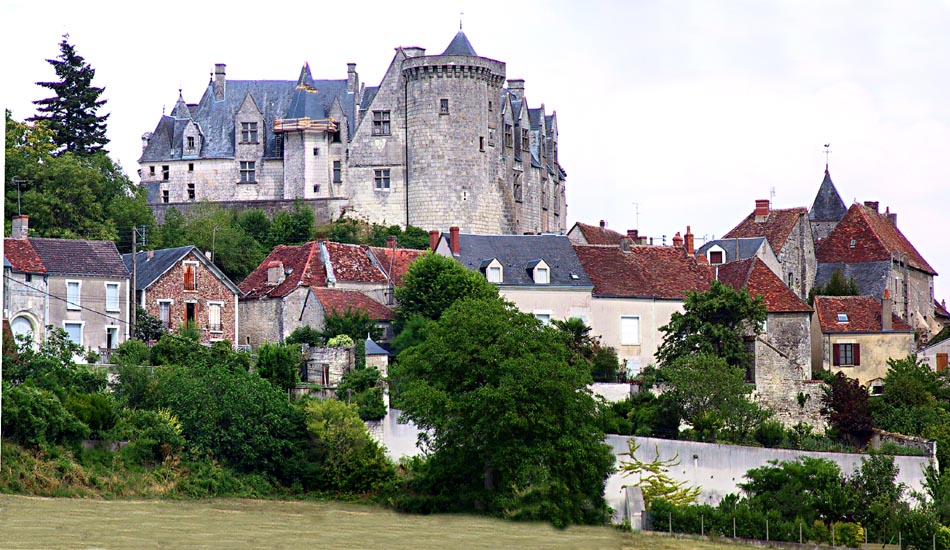
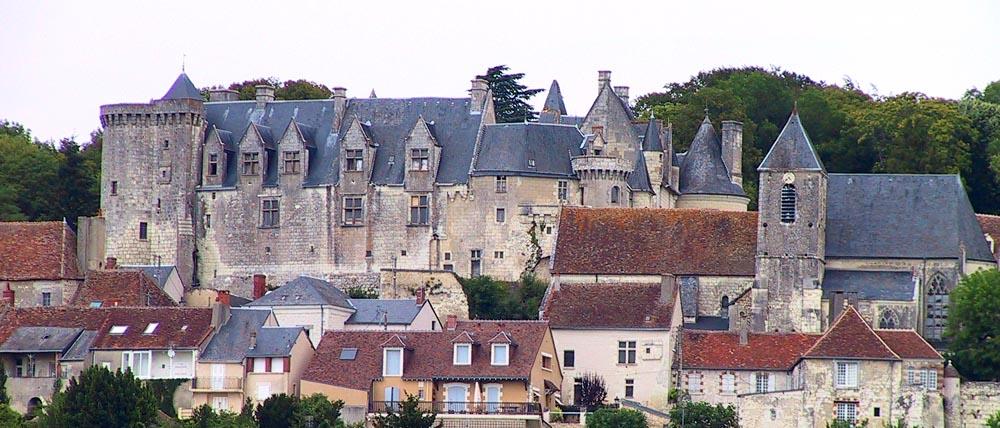
When I said that the gothic-style château was just above us on a promotory, this is what I meant. It really dominates the upper town, including the church. It isn't open to the public now, but the people at the tourist office said it would probably be open for tours in July and August.
The massive towers of the château date from the 12th century and were part of the building's defenses. The newer parts, built in the 13th century, are residential.
Another thing Palluau has that make it typical is an unexpected history. I mentioned it yesterday: the comte de Palluau was Louis de Frontenac, one of the governors of the province of Québec in the New World.
Palluau also has a monument we didn't get to see on Wednesday, because of the street paving work in progress. It's an old monastic building, a priory, that features romanesque frescoes showing religious scenes, including one of Mary wearing a crown and sitting on a throne with arms that are dragons' heads. We've got to return to see that.
Because it is on a promontory above a river valley, there are also great views from upper Palluau. That is also typical of so many little French towns.
The village is modernizing now. The 21st century is upon us, and villages all over our region are putting in new sewer systems, building road bypasses, and tearing up old streets and repaving them. Broad-band Internet access is widely available (I have it in the country outside Saint-Aignan).
At the same time, Palluau is picturesque despite the modernization now taking place. A walk through the old streets reveals those typical old French windows and doors that often need a fresh coat of paint. Old buildings are for sale or have recently been sold, and are being freshened up. There are flowers everywhere right now. It's the season.
I'm glad I saw Palluau this week. The place is changing, and it will be interesting to see how it turns out. Of course, plus ça change, plus c'est la même chose, as we say in French. The village has existed for a thousand years, or maybe two thousand, so it's not likely to lose its identity and character in my lifetime. I'm looking forward to going back.
The elaborate decorations and flowers around the altarmakes it seem the church is the center of village life.
Five of the ten photos of stained-glass windows I posted yesterday were ones I took in the Palluau church. There was of course other artwork in the building, including polychrome stone statuary from the 15th and 16th centuries and numerous paintings.
But as usual in these small French towns, you have to look up, down, and sideways to see the small details that a quick glance won't reveal. Here, for example, are two patterns I noticed in the 15th-century tilework on the floors in a side chapel of the church.
The church is actually named for Saint-Sulpice and was originally built in the 12th century, replacing an older church named for Sainte-Menehould. Work on the Saint-Sulpice church continued off and on until the 16th century.
When I said that the gothic-style château was just above us on a promotory, this is what I meant. It really dominates the upper town, including the church. It isn't open to the public now, but the people at the tourist office said it would probably be open for tours in July and August.
The massive towers of the château date from the 12th century and were part of the building's defenses. The newer parts, built in the 13th century, are residential.
Another thing Palluau has that make it typical is an unexpected history. I mentioned it yesterday: the comte de Palluau was Louis de Frontenac, one of the governors of the province of Québec in the New World.
Palluau also has a monument we didn't get to see on Wednesday, because of the street paving work in progress. It's an old monastic building, a priory, that features romanesque frescoes showing religious scenes, including one of Mary wearing a crown and sitting on a throne with arms that are dragons' heads. We've got to return to see that.
Because it is on a promontory above a river valley, there are also great views from upper Palluau. That is also typical of so many little French towns.
The village is modernizing now. The 21st century is upon us, and villages all over our region are putting in new sewer systems, building road bypasses, and tearing up old streets and repaving them. Broad-band Internet access is widely available (I have it in the country outside Saint-Aignan).
At the same time, Palluau is picturesque despite the modernization now taking place. A walk through the old streets reveals those typical old French windows and doors that often need a fresh coat of paint. Old buildings are for sale or have recently been sold, and are being freshened up. There are flowers everywhere right now. It's the season.
I'm glad I saw Palluau this week. The place is changing, and it will be interesting to see how it turns out. Of course, plus ça change, plus c'est la même chose, as we say in French. The village has existed for a thousand years, or maybe two thousand, so it's not likely to lose its identity and character in my lifetime. I'm looking forward to going back.
15 June 2006
An excursion in the Berry
Yesterday we took a drive down towards the (small) city of Châteauroux to do some shopping in the big-box stores there. Pour joindre l'agréable à l'utile — to make a nice day out of it — we decided to pack a picnic lunch and leave early so we could do some touring along the way. We'd never spent much time in little towns down there in the Berry. It's about 40 miles from Saint-Aignan to Châteauroux, towards the southeast.
Looking through the Michelin Green Guide for the Berry and Limousin provinces, I came across a page describing the village of Palluau-sur-Indre. If you know French, you can see that Palluau is an unusual name, and that alone intrigued me. The Green Guide says Palluau is a "charmante petite ville" with a château and church at the top of a hill and houses that step up the hill from the river valley. It sounded interesting to me, so we started there.

Well, in Palluau right now all the streets are torn up for repaving. We kept coming to ROUTE BARRÉE signs and having to sit and wait while heavy equipment blocked up the roads. Finally we found a way to drive around back of the village and arrived at the church. We parked in front of the tourist office. The château was on a steep hill — a cliff, really — just above us.
An interesting side note: Palluau was the home town of Louis de Buade de Frontenac, who was governor of New France (Quebec) in the late 1600s. The hotel called the Château Frontenac in Quebec City is named for him. Frontenac was the comte de Palluau.

The tourist office was closed, but an older couple inside noticed us and invited us to come on in anyway. They were very nice but told us we had come to Palluau on a bad day. The village is under contruction, and the château is closed until July 1, they said. Please come back in July. We ended up visiting the church and walking up and down the one street that was not being repaved. We took some pictures and moved on. As you can see, I took a lot of pictures of stained-glass windows in churches over the course of the day.

Just across the Indre river from Palluau is a little town called Saint-Genou. That means Saint Knee in English (I'm sure Genou was a fine name long before it came to mean knee). We drove over there. The entry to the town was a road at least half a mile long that was lined with big trees, in typical French fashion. It was beautiful.

Saint-Genou was the site of an ancient Benedictine abbey, of which just a small part of a church remains. The abbey was founded in 828, according to the Green Guide, and later was named in honor of the saint named Genou, who had been sent to Gaul by the pope to convert the natives to Christianity.

I like this sentence in the Green Guide, describing Saint-Genou: "Commencée en 994, la nouvelle église fut consacrée en 1066 ; son déclin s'amorça en 1516." Begun in 994, the new church was consacrated in 1066. 1066! And that was the new church. Its decline began in 1516. Well, it had about a five-century run, and that's not too shabby. It's a gorgeous old church.

After our quick, unplanned stop in Saint-Genou, we drove on through the bigger town of Buzançais (not mentioned in the Green Guide) and then to the town of Levroux, where there is a gothic church. The name Levroux derives from the same root as the word leprosy, and the town got that name because Saint Martin cured a local notable of the disease in the 400s. Levroux has existed as a settlement since prehistoric times, and archological digs have turned up significant Roman ruins there.

We couldn't find a good spot for our picnic in Levroux, but in the window of the tourist office there we saw an aerial photo of a great-looking château in the neaby village of Villegongis (don't you just love all these names?). We headed that way, thinking we would surely find a picnic table out in the country or on the grounds of the château. Unfortunately, the château grounds were closed to the public "exceptionnellement" because crews were cleaning up tree limbs that had fallen during recent windstorms. We didn't get to see the château or have our picnic there.

We drove on to another village called Chézelles and did find a picnic spot there, though sans table. We made our sandwiches on a little park bench near a playground behind the village hall, and sat on the ground to eat them.
After shopping successfully at Carrefour and Leroy-Merlin in Châteauroux, we drove back home through the towns/villages of Coings (un coin appelé Coings, pas mal !), Bretagne (there was a picnic table there -- next time), Bouges-le-Château, Veuil (another château), and Villentrois (yet another). It was yet another fine day.
Looking through the Michelin Green Guide for the Berry and Limousin provinces, I came across a page describing the village of Palluau-sur-Indre. If you know French, you can see that Palluau is an unusual name, and that alone intrigued me. The Green Guide says Palluau is a "charmante petite ville" with a château and church at the top of a hill and houses that step up the hill from the river valley. It sounded interesting to me, so we started there.

Well, in Palluau right now all the streets are torn up for repaving. We kept coming to ROUTE BARRÉE signs and having to sit and wait while heavy equipment blocked up the roads. Finally we found a way to drive around back of the village and arrived at the church. We parked in front of the tourist office. The château was on a steep hill — a cliff, really — just above us.
An interesting side note: Palluau was the home town of Louis de Buade de Frontenac, who was governor of New France (Quebec) in the late 1600s. The hotel called the Château Frontenac in Quebec City is named for him. Frontenac was the comte de Palluau.

The tourist office was closed, but an older couple inside noticed us and invited us to come on in anyway. They were very nice but told us we had come to Palluau on a bad day. The village is under contruction, and the château is closed until July 1, they said. Please come back in July. We ended up visiting the church and walking up and down the one street that was not being repaved. We took some pictures and moved on. As you can see, I took a lot of pictures of stained-glass windows in churches over the course of the day.

Just across the Indre river from Palluau is a little town called Saint-Genou. That means Saint Knee in English (I'm sure Genou was a fine name long before it came to mean knee). We drove over there. The entry to the town was a road at least half a mile long that was lined with big trees, in typical French fashion. It was beautiful.

Saint-Genou was the site of an ancient Benedictine abbey, of which just a small part of a church remains. The abbey was founded in 828, according to the Green Guide, and later was named in honor of the saint named Genou, who had been sent to Gaul by the pope to convert the natives to Christianity.

I like this sentence in the Green Guide, describing Saint-Genou: "Commencée en 994, la nouvelle église fut consacrée en 1066 ; son déclin s'amorça en 1516." Begun in 994, the new church was consacrated in 1066. 1066! And that was the new church. Its decline began in 1516. Well, it had about a five-century run, and that's not too shabby. It's a gorgeous old church.

After our quick, unplanned stop in Saint-Genou, we drove on through the bigger town of Buzançais (not mentioned in the Green Guide) and then to the town of Levroux, where there is a gothic church. The name Levroux derives from the same root as the word leprosy, and the town got that name because Saint Martin cured a local notable of the disease in the 400s. Levroux has existed as a settlement since prehistoric times, and archological digs have turned up significant Roman ruins there.

We couldn't find a good spot for our picnic in Levroux, but in the window of the tourist office there we saw an aerial photo of a great-looking château in the neaby village of Villegongis (don't you just love all these names?). We headed that way, thinking we would surely find a picnic table out in the country or on the grounds of the château. Unfortunately, the château grounds were closed to the public "exceptionnellement" because crews were cleaning up tree limbs that had fallen during recent windstorms. We didn't get to see the château or have our picnic there.

We drove on to another village called Chézelles and did find a picnic spot there, though sans table. We made our sandwiches on a little park bench near a playground behind the village hall, and sat on the ground to eat them.
After shopping successfully at Carrefour and Leroy-Merlin in Châteauroux, we drove back home through the towns/villages of Coings (un coin appelé Coings, pas mal !), Bretagne (there was a picnic table there -- next time), Bouges-le-Château, Veuil (another château), and Villentrois (yet another). It was yet another fine day.
Subscribe to:
Posts (Atom)