16 November 2019

A wedge and a circle

I'm just really enjoying this new/used Sony camera. With its so-called "one-inch" sensor, which is much, much larger that the sensors in my Panasonic camera's sensors, the photos I'm taking are so different from all the ones I've taken before.

Since the pecan... errr, walnut... pie post yesterday elicited a lot of opinions, here's a Sony slice of it.

The same morning when I made the walnut pie, I also made the above for lunch. Can you tell what it is?

Hope you enjoy your Saturday. It's raining here... so what else is new?

15 November 2019

Pecan Walnut Pie

A few days ago, the subject of pecan pie came up in comments on a blog post about a pecan tree that stood in my late mother's back yard in North Carolina. MA had grafted and planted the tree there in the 1970s. That tree died last winter, about a year after MA passed on. That seems to me to be an odd coincidence. Here is a photo of that pecan tree that I took in May 2003, when Walt and I spent a month in N.C. before flying off to start a new life in Saint-Aignan. My mother (Mary Allen) and Walt are in the picture.


Yesterday I decided to make a pecan pie following my mother's recipe. She and her sister self-published three cookbooks in the 1990s, focusing on local specialties. They probably sold 10,000 or more books in gift, souvenir, and museum shops up and down the North Carolina coast. Her pecan pie recipe is in the first of those three books (The Cooking Ladies' Best Sellers).


The problem I faced was that I didn't have any pecans left. I had brought back a lot of shelled-out pecans in 2018, but we finished them all last winter. Never mind — I happened to have a big bag of shelled walnut meats in the freezer, thanks to our friend C. and M. who live across the river from us here in the Loire Valley. They generously gave us a good quantity of cerneaux de noix (nut meats) as a gift a few months ago. Maybe I'm just chauvinistic, or maybe I'm just right, but I've always thought pecans have a sweeter, more pleasant taste than walnuts.

By the way, in the Carolinas, we called walnuts "English walnuts." In Québec French, they are called noix de Grenoble (noix, pronouced [nwah], means walnut in French). Anyhow, walnuts can stand in for pecans in a pinch. I've looked into planting a pecan tree here in the Saint-Aignan area, but from what I've read it seems that our summers are not hot enough for them and they won't produce pecans without a long period of hot weather. On the left is my walnut pie ready to go into the oven. Below is the finished pie.

Mary Allen's Pecan Pie

Blend together thoroughly:
3 eggs
1 cup sugar
1 cup Karo syrup*
1 tsp. vanilla extract
2 Tbsp. melted butter

Then stir in:
1½ cups pecans

Pour the mixture into:
1 unbaked pie shell

Bake at 350ºF (180ºC) for 50 to 55 minutes.

Test for doneness by sticking a skewer or the point of a clean knife into the filling.
When it comes out clean, the pie is cooked. Serve warm or cold.

* This pie is very sweet, and I don't even put as much sugar in the mixture as the recipe calls for. If you're not American, you might not know what Karo syrup is. It's light-colored, high-fructose corn syrup and Karo is the brand name. For substitutes, see this web page. Another note: I made the pie with pâte sablée, ("sugar crust") and you can get the recipe here.

14 November 2019

Mud, vines, and cameras

It rained really hard overnight. Again. Wind and rain. I'll be going out with Tasha in a few minutes. Then I'll see what's going on out there. Yesterday Walt mentioned that he had talked to the work crew that has set up their chantier just outside our back gate.


They told him the would grade the area and smooth it all out before leaving. Here's what they did day before yesterday. They tied their red-and-white tape to our back gate post. I'm still not sure what they'll do with that pile of gravel.


When I went out with Tasha that day, she heard some activity in the vineyard and perked up her ears. I don't know what it was. I was trying to keep her out of the mud. I took both the photos above with the Sony RX100 camera.


Above is a photo I took a week ago in the vineyard north of our house with one of my Panasonic cameras, a Lumix TZ18 (called the ZS8 in North America). I bought it used years ago, and I still think it takes very good photos. So I'm keeping it.

13 November 2019

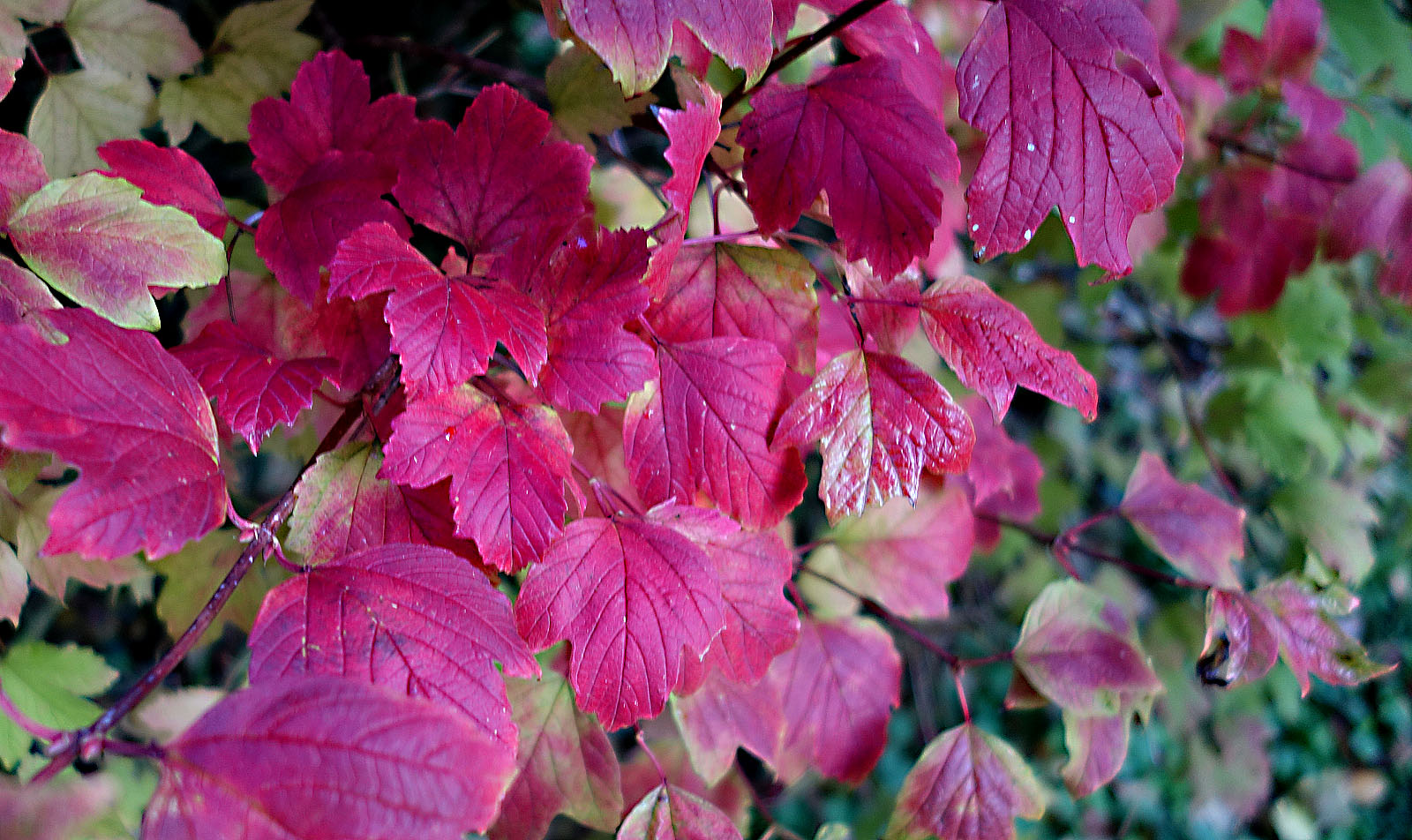
“Macro” shots of red leaves


I'm still getting to know my new (but second-hand) Sony camera, the DSC-RX100 M2 — the second model in this line, the original being the RX100. I'm taking it out on walks when I can. When it's not raining, in other words.


I'm so used to Panasonic cameras that I have to work pretty hard to figure out how the Sony works, what the good settings for my photography are, and what features it has and doesn't have.


One feature it doesn't have is a "macro" mode. That the shooting mode that you use to take extremely close-up photos. Panasonics have such a mode. I was just think about why it's called "macro" mode. Macro is the opposite of micro, so I guess it means you're taking close-ups of micro-details and then displaying them in a very large, or macro, format.


Anyway, you'd never know the Sony camera doesn't have a macro mode. All you have to do to get the same effect is to open the lens all the way up — in other words, no zoom — and take the photos. That's what I did for these. The photo above shows the Viburnum bush with all the red leaves in the three macro-style photos.


Actually, not having to switch the camera into macro mode for such photos is an advantage. Why? Because you don't have to switch it back out of macro mode when you're done. It's one less complication you have to deal with when you're taking a lot of photos. Here's a zoomed out photo I also took with the Sony RX100.