Showing posts sorted by date for query chèvre. Sort by relevance Show all posts

14 February 2025

Le nouveau volet, et des poivrons rôtis

Here's what the new volet roulant in the kitchen looks like. By the way, un volet roulant (a roll-down shutter) is also called un store. In the first photo, the store is closed but the sheer curtains are open. In the second, the sheer curtains are closed.

While the five new shutters were being installed, I was in the kitchen roasting peppers that I bought at the supermarket the day before. I roasted them in the air fryer. Five of them fit perfectly in the fryer drawer. They came out looking beautiful. Now all I have to do is peel them (in theory, the skin just falls or slips off) and then de-seed them (also a fairly easy job but messy). The roasted flesh of the peppers will be good in salads or eaten on crackers or toast with some goat cheese (fromage de chèvre) or cream cheese (fromage à tartiner) and a little glass of wine.

30 March 2024

Lapin en gibelotte pour Pâques

For tomorrow's Easter dinner, I'll be cooking rabbit. It's a standard item here in the supermarkets and on the open-air markets. This year, I just bought a couple of rabbit thighs. The hind legs of the rabbit are very meaty and very lean. I'll cook it in a way that's called en gibelotte, which means in a stew made with a white wine sauce,mushrooms, onions, and smoked pork bacon (lardons fumés). I'll be adding some turnips, leeks, carrots and chicken gizzards (gésiers) to the stew, because I like them. I'll take pictures.

If you want to see various versions of rabbit stew on my blog, click this link and then scroll down to see some old blog posts.

We'll also be enjoying some fromage de chèvre as the cheese course with our rabbit lunch. I bought an A.O.C. Sainte-Maure de Touraine log of goat cheese. As you can see I did my shopping at Super U. More tomorrow...

20 December 2022

Décembre 2004 (1)

Our low temperature Sunday morning was 23F, and the high for the day was about 30F. Yesterday morning the low was 40F, and the high for the day was about 52F. This morning the low is 50F. We're supposed to get rain today. I guess December is like that. That's why one of the major themes of the 12th month is food. And by December 2004 we were pretty much settled in.

   Food like the roasted turkey above, with a stuffing of chestnuts, prunes, and smoked pork lardons.
And French cheeses. To my palate, soft cheeses taste better in winter. The three on the platter
above are: un camembert, un neufchâtel, and un chèvre demi-sec.


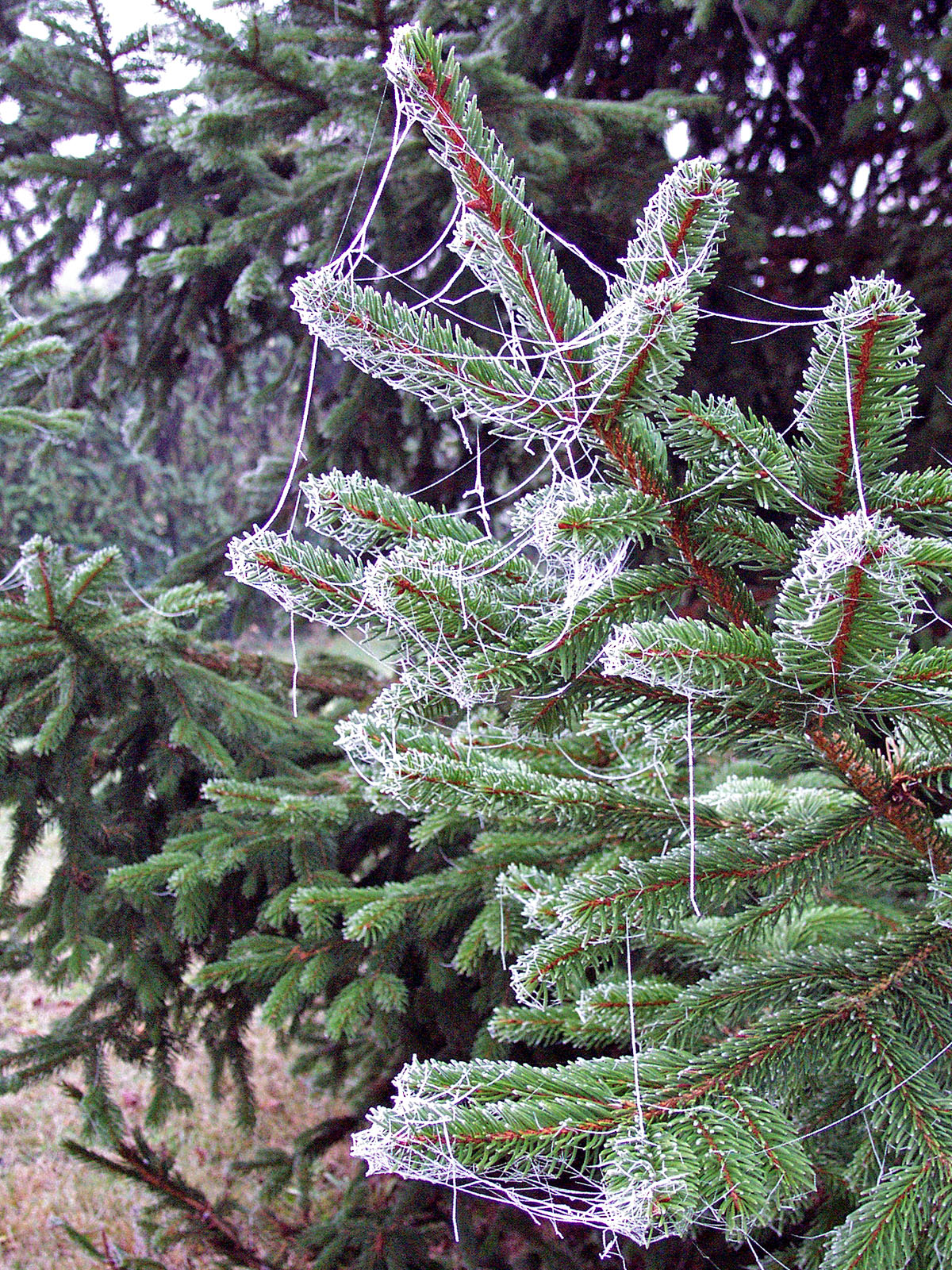
A fir tree (un sapin) in winter in our back yard

  
Foods like pizza that cook in a hot oven are good in winter too — the oven helps heat up the house.
The last photo shows what our yard and our first vegetable garden in Saint-Aignan looked like in mid-December.
The grass was green, and the greens growing in the garden were too.

P.S. The Télématin news is reporting this morning that the current covid surge is just getting worse. An example is the city of Rouen, north of Paris in Normandy. There, paramedical and medical services are overwhelmed by people suffering with of covid or wintertime flu. I think it's time to put our masks back on.

06 February 2022

Saumur : le château

The big colorful image below shows the Château de Saumur as it was depicted in a medieval "illuminated" (illustrated) manuscript called Les Très Riches Heures du Duc de Berry (link to Wikipedia article). It was a "book of hours" or prayer book — 206 pages of fine parchment painted by three artists in the Netherlands between 1412 and 1416. Today the book is kept in the library of the Château de Chantilly, just north of Paris.

1       2

My photos above and below the medieval illustration show what the Château de Saumur really looks like these days. A château was originally built on this site in the 10th century by order of the Comte de Blois, who had expanded his county to take in the town of Saumur. It was re-captured in the 11th century by the Comte d'Anjou named Foulques Nerra, whose descendents were the Plantagenêts, and then recaptured by the French king Philippe-Auguste from them in the year 1203. As a royal palace, the chateau was the home of the court of the French king Louis IX, who is best known as saint Louis and reigned for nearly 44 years, from 1226 until 1270. Saumur's château, like most of them, was modified, re-built, and expanded many times over the centuries. It was briefly used as a prison by Napoleon in the early 19th century, and later as a munitions depot by king Louis XVIII.

 3

I remember the first time I saw the Château de Saumur. It was in January 1992. Walt and I had spent a week in Paris, staying in a hotel we liked just outside the jardins du Luxembourg. Then we rented a car for a week of driving through Normandy, Brittany, and the Loire Valley, before returning to Paris. I caught a bad cold in Brittany. On our way back to Paris from Nantes, we decided to have a picnic lunch in the car, instead of going to a restaurant, before driving on to Orléans for a night in a hotel there. The weather was cold, damp, and gray. We arrived in Saumur at noontime and drove the car all the way up to the château terrace and parked right in front of the main entrance — you can't do that today. I think we were the only people up there that day and at that hour. We sat and ate luhch in the car with the motor running because we needed to keep the heater going. I was feeling miserable.

4       5

Years later, in October 2000, we were staying in a gîte in Vouvray (outside Tours) for a week. There was a little grocery store nearby where we could buy local products like rillettes, rillons, and fromage de chèvre. It was run by a very friendly and helpful young woman. I asked her one day if she was a native of Vouvray. No, she said, I moved here from Saumur. I return there every year for a few week pour me ressourcer — that means something like "to recharge my batteries" or to decompress. She said she loved and missed Saumur very much. That triggered my memory of the lunch stop in January 1992 and I decided it would be nice to drive over there and see the château in better weather, and when I wasn't miserable with a cold. That's when I took photos 1 and 5 above.

29 March 2021

Valençay : le fromage

Do the goats in the mini-zoo at Valençay contribute milk to local cheese production? CHM asked that question in a comment the other day. I don't know the answer. But I do know that Valençay goat cheese (fromage de lait de chèvre) is one of the area's finest food products.

Velençay goat cheese is made in the shape of a pyramid with its top lopped off. There are several legends about why...

The cheeses are coated in a light layer of salt and wood (or vegetable) ash, which gives good flavor, especially as they age.

As you can see, the cheese itself is very white and has a pleasantly grainy texture compared to, say, cream cheese.
The flavor is fresh and mild, not strong or "goaty".

Loire Valley goat cheeses, including varieties named after local towns (Sainte-Maure-de Touraine,
Selles-sur-Cher, Valençay) are made in a variety of shapes — discs, cylinders, pyramids, logs, etc.
The picture above is one I took years ago in the Saturday-morning outdoor market in Saint-Aignan.

This is a photo our friend Cheryl took in a local restaurant the first time she visited us (Sept. 2003).
We enjoyed a very fine meal featuring local specialties that evening.

22 August 2019

Clafoutis aux courgettes et au fromage de chèvre


I've made and posted about the French cream pie called un clafoutis many times. Usually they are for dessert, but you can also make what you might call a savory clafoutis — savory in French would be salé because the clafoutis mixture is salted, not sweetened. I've made savory clafoutis before, with cauliflower. Another name for this kind of pie is "crustless quiche" ( une quiche sans pâte).


A quiche normally has a crust made with flour and butter. A clafoutis doesn't have a crust that you have to make (or buy) separately — it makes its own crust, in a way. The clafoutis batter contains a small amount of flour, whereas the quiche batter is just eggs and cream (or milk), with cheese, ham, and/or vegetables for flavor. For this crustless quiche, the first step is to sauté a zucchini that has been cut into chunks the about size of cherries. (Cherries are the classic and original clafoutis ingredient.)


After the zucchini cubes are slightly cooked and slightly browned, put them in the pan you are going to bake the clafoutis in. For this pie, I decided to add some meat too — it's diced turkey breast that I sauteed in the same pan I cooked the zucchini in. Into the pie plate it went. The idea is to put the flavor ingredients in the pan and then pour the creamy egg custard over them.


The other flavor ingredient in this savory clafoutis is cheese — goat cheese, called fromage de chèvre in French. As I wrote about yesterday, here in the Loire Valley we can buy locally made goat cheeses that are either chèvre frais (not ripened), chèvre demi-sec (medium ripe), or chèvre sec (ripened until dry and hard, sort of like Parmesan cheese). For this pie, I decided to use fromage frais de chèvre, which has the consistency of cream cheese or cottage cheese — both of which would be a good substitute for fresh goat cheese.


I mashed the fresh goat cheese with a fork, added some flour, and then added milk and eggs to make a custard with a smooth, liquid consistency. For a clafoutis like this in a 10-inch pan, I used 200 grams of cheese, 60 grams of flour, 200 milliliters of milk, and three whole eggs. Carefully pour the liquid over the pre-cooked zucchini and turkey cubes. Oh, and add some fresh herbs to the custard — I had fresh basil and fresh thyme. Don't forget the salt and pepper.


Here's the result pictured as a slice ready to be served. You can see some zucchini and turkey cubes embedded in the cooked custard.

Okay, you could make this same crustless quiche using grated cow's milk cheese (cheddar or swiss), or with cream cheese or cottage cheese. And next time I make one, I want to use a ripened goat cheese cut into chunks along with the zucchini and turkey chunks. Cubes of ham or pieces of smoked bacon (lardons) instead of poultry would also be good. There are so many possibilities.

18 May 2019

Gratin de pommes de terre au fromage de chèvre

I've done a few posts about goat cheese (fromage de chèvre) recently. Goat cheese — and maybe it should more properly be called goats' milk cheese;  we don't say "cow cheese" after all — is a local specialty in the Loire Valley and around Saint-Aignan. Here's another post about using it in your cooking: potatoes au gratin with goat cheese and ham.


I had about 700 grams (1½ lbs.) of little firm-fleshed potatoes in the cold pantry that were just begging to be cooked and eaten. And I of course had several pieces of locally made goat cheese in the refrigerator. That seemed like a good ingredient match.


Here's the process: peel and cook the potatoes (in a steamer pot is a good way to do them) until they are done but still slightly firm. When they cool down, slice them into disks. Meanwhile, slice an onion or two and sauté the slices in butter or olive oil until they're softened and starting to turn golden brown. Set them aside.

Next, make a cream sauce by heating up about a cup of (cow's milk) cream and stirring three or four ounces (about 100 grams) of soft, fresh goat cheese into it until it is melted and, well, creamy. If you can get hard, dry goat cheese — it is hard like Parmesan cheese — grate enough of it to cover the top of the gratin you are about to assemble, and add a little bit, if there's enough, to the cream sauce for flavor.


Plan on a three-layer "casserole" or gratin. First put a thin layer of the cream sauce in the bottom of the baking dish to keep any potatoes from sticking to it as they bake. Arrange a third of the potatoes on top of the sauce and spoon a little more sauce over them. Lay on about half of the sautéed onions. Optionally, lay a piece of ham in with the onions (you could put in some cooked smoked-pork lardons or even diced or shredded chicken breast). Add salt only sparingly.


Add on another layer of potatoes, more sauce, more ham, and more onion. Finally, put on a third layer of potatoes and spoon the rest of the sauce creamy goat cheese sauce over those. Then sprinkle on as much grated goat cheese as you want.


You can sprinkle black pepper and/or paprika over the grated cheese, and drizzle on some olive oil. Bake the gratin in the oven for 30 to 40 minutes to finish cooking the potatoes — they ought to be tender — and to brown the grated cheese topping. (I wish I had mixed the paprika and black pepper into the grated cheese beforehand...).

It occurs to me that you could make the same gratin, but with a different flavor, using cream cheese and grated Parmesan.

10 May 2019

Un sandwich au fromage de chèvre, jambon, et blettes

When I went shopping for goat cheese the other day, I picked up the one below without really examining the label. It turned out to be a cheese made with 30% goat's milk and 70% cow's milk —un fromage aux laits de mélange. The cheese comes from a fromagerie in the little town of Selles-sur-Cher. I decided to use it to make a grilled sandwich, as you see in the one-minute slideshow below.


This is a sandwich inspired by the French café-standard grilled ham and cheese croque-monsieur. The other ingredient besides cheese and sandwich ham is cooked Swiss chard. It's a sandwich you bake in the oven and then eat with a knife and fork.

To make two sandwiches, spread some soft, fresh goat cheese on two lightly toasted slices of bread. Next, lay down a layer of ham on each. Spread cooked, creamed chard (or spinach) over the ham — you can use cream or soft goat cheese to "cream" the greens.

Slice up a semi-hard (demi-sec) goat cheese (I used the mixed-milk cheese) and put a couple of slices on top of the creamed chard. Spread the top slice of bread with some more soft fresh goat cheese and lay on two more slices of goat cheese. Bake the sandwich in the oven with top and bottom heat until the cheese on top starts to turn golden brown. We ate our sandwiches with French-fried potatoes.

09 May 2019

Gratin d'asperges au jambon et au fromage de chèvre...

...and a video, below. Yesterday I called this a cooking experiment, mainly because I wasn't sure that fresh goat cheese would have enough flavor to complement white asparagus spears and ham. I needn't have worried; it was good. Here's what the fresh goat cheese looks like. It a little bit like Italian ricotta or, maybe, American cottage cheese that has been blended to a smooth but slightly grainy texture. It's spreadable.


Put 120 grams (4 oz.) of cheese into 120 grams (4 fl. oz) of heavy cream or whipping cream (crème fleurette in France) along with two whole eggs. Use a blender to turn the mixture into a smooth liquid. Add salt and pepper to taste. Pour the liquid into the bottom of a baking dish that is big enough to hold the asparagus spears. Then wrap four bundles of pre-cooked, fairly "fat" asparagus spears (2 or 3 per bundle depending on how fat they are) in slices of ham. You can use proscuitto-style ham (cured jambon cru) or U.S. "sandwich ham" (jambon de Paris). Lay the bundles in the baking dish on top of the cream sauce.


Crumble some more fresh goat cheese and sprinkle it over the asparagus-ham bundles. I used the same cheese that went into the creamy sauce, but you could use grated semi-hard (demi-sec) or fully hard (sec) goat cheese — or even grated Italian Romano or Parmesan cheese, which will give a different but good flavor. Sprinkle on some more black pepper and some paprika (a mixture of hot, smoked, and sweet paprikas, for example). Brown the gratin in the oven for about 30 minutes at 350ºC (180ºF) to cook the creamy custard and melt the cheese.


I'm sorry I didn't take more pictures. Below is one of the bundles of ham-wrapped asparagus spears as it came out of the pan after baking in the oven. It's not as photogenic as the photos on Walt's recent asparagus tart post or ones I found on a blog that presents a similar recipe made with green asparagus and using both goat cheese and Italian mozarella.


Finally, I wanted to post this YouTube video about the goat cheeses made in and around Selles-sur-Cher. The cheese I used for the gratin does not actually qualify for the Selles-sur-Cher appellation because it's made with pasteurized, not raw goat's milk and it's not aged but fresh. It's made by a dairy just outside the little town of Selles-sur-Cher, however.


Here are two other web sites (link one and link two) with a lot of information about Selles-sur-Cher cheese, including videos, recipes, and maps. They're all in French of course.

19 October 2016

Encore des figues


Our friends' fig tree just won't quit. Day before yesterday we received an impromptu delivery of another 3 lbs. — 1.4 kilos — of ripe green figs. It was a nice surprise.


This time I thought about making fig newton cookies — or as somebody on the web called them, "fig chewtons." I washed, de-stemmed, and cut up all the figs into quarters.


Here you can see that they might be called green figs — figues vertes ou figues blanches en français — they are pink inside. And ripe.


I figured if I cut them up and cooked them down to make a compote, I could freeze the compote in small containers and take some out whenever I wanted to make some cookies or enjoy some compote de figues avec du fromage de chèvre, du roquefort, ou du foie gras.


Here's the compote after two or three hours of cooking. I'm not sure if it's done yet, and I'm wondering if I should puree it. Maybe I'll puree a mall batch and see what that's like. I cooked the figs with sugar, honey, lemon juice, port wine, and pinches of powdered cinnamon, nutmeg, and allspice.

22 July 2016

Le Relais d'Artémis: Lunch (3)

Finally, here were our desserts at the Relais d'Artémis, near Chambord. The menu also featured a cheese course made up of local goat cheeses, including a smoked fromage de chèvre that was especially good.

An assortment of goat cheeses from the Loire Valley, with lightly dressed lettuce leaves

Le nougat glacé du pâtissier au miel et noix de pécan, coulis de fruits rouges
(The pastry chef's frozen nougat with honey and pecans, and a coulis of red berries)

Déclinaison autour de la fraise de Maslives et son sorbet liqueur de Chambord
(Variations on a strawberry theme with Chambord liqueur sorbet)

Here is the menu, showing just the dishes we ordered:

Menu Diane
Le Relais d'Artémis, Bracieux/Chambord

~ Tartare de saumon fumé maison et Saint-Jacques aux citrons confits ~
~ Terrine de foie gras de canard maison ~
******
~ Pavé de sandre rôti au jus de vin de Loire ~
~ Cœur de ris de veau rôti et ses petits légumes glacés ~
~ Côte de veau aux morilles (suggestion du chef) ~
******
Plateau de fromages
******
~ Déclinaison autour de la fraise de Maslives et son sorbet liqueur de Chambord ~
~ Le nougat glacé du pâtissier au miel et noix de pécan, coulis de fruits rouges ~

06 July 2016

Menus and wine labels


 One of the things we did over the weekend, when our friend Peter Hertzmann was visiting, was to go have lunch over at the restaurant called La Villa in Montrichard. It was our third visit to the restaurant this year.

The menu is on the left. Besides the œuf en meurette (poached eggs in a red wine sauce), the other first courses were snails (the cassolette is the dish the snails are cooked and served in) and a "roasted" goat cheese (it's not la chèvre or goat that's roasted, but le fromage de chèvre — you can tell because the word is rôti and not the grammatically feminine form rôtie).

The main courses were a Guinea-hen (pintade) breast (suprême), a lamb "mouse" (the souris or "mouse" is the shank end of the leg of lamb, which is slow-cooked and tender when served), or a seafood on a skewer ("skewer of the sea").

The desserts were an upside-down apple pie (tarte Tatin is a local invention), the daily special dessert, a chocolate cake, the cheese plate, or a parfait. (We didn't have dessert.) The price of the menu was 26.90 €, or about $30 U.S.


The daily specials were listed on a separate board. They were, in order, braised mussels served with French fries (about $15), a sautée of shrimp with pesto (about $14), a grilled turbot filet (about $25), and the Jean-Luc burger (about $20), which included a slice of foie gras (duck liver) and house-made French fries.

We had a light lunch. Peter had the foie gras burger, and Walt and I both had mussels and French fries. Peter said the burger was not really made with ground beef, but was more like a steak sandwich. It was cooked rare. The mussels were tiny and tender-sweet, cooked in white wine with onions and herbs. The fries were good but not too crispy.


To wash it all down, we ordered and enjoyed a bottle of chilled rosé wine that was made by Vincent Roussely in the village called Angé, not more than five miles from Montrichard, and about five miles from our house. We've been to Vincent's winery , Le Clos Roussely, several times now. His wines are organic.

This wine has a cute name that is an elaborate pun. Temps Danse means either "weather" or "time" (le temps means both in French) "dances". Normally in French, nouns are preceded by articles (le, la, les, de la, du, or des, depending on the gender and number of the noun), but here the article is dropped. When you pronounce Temps Danse, what you hear is the word tendance, or "tendency", which in French means "trendy" or "currently popular" or "stylish" — almost "faddish".


The label on the back of the wine bottle explains that the wine is made out of grapes from old Pineau d'Aunis and Cabernet Franc vines. In French it says that the wine tastes of red currants and spices.

The English you see on the label is not exactly a translation of the French. It explains that the Pineau d'Aunis grape is an "original" grape variety, but I'm not sure what that means. The word original in French can mean "unusual", "rare", or "special", or even "weird" or "bizarre". The Pineau d'Aunis is a local grape that you don't find in other regions — sort of an "heirloom" grape. You can read the rest of the English...

Remember that you can click on the photos to enlarge them.