Showing posts sorted by date for query Rochelle. Sort by relevance Show all posts

15 October 2023

Lost in a labyrinth

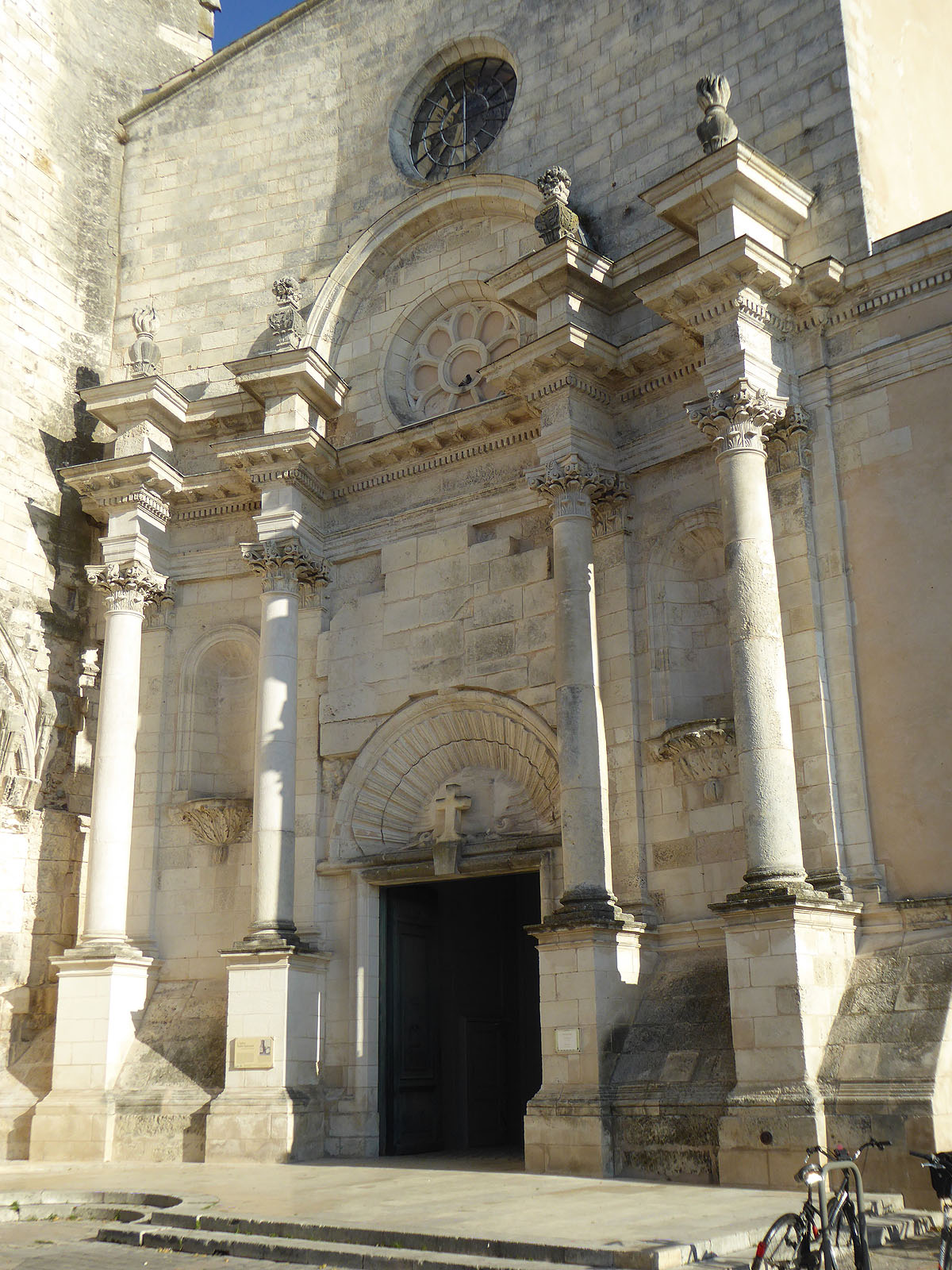
Here's the only picture I managed to take in the town of Montmorillon last Monday. I took it before we had the delicious but debilitating lunch that kept us up most the first night at the gîte in Vindelle.

The bright sunlight was obviously too intense for my Android tablet's camera.

The drive from Montmorillon to Angoulême was 140 kilometers (about 90 miles) and took about two hours. We still felt good and the drive was mostly uneventful. The only odd thing about it was all the convoys of big rigs (poids lourds) that were driving away from Angoulême and toward either Limoges or points north, including the Paris region. We didn't count, but there might have been 100 trucks in all. We were glad we weren't stuck behind them. There were few if any big trucks going toward Angoulême.

Above is a map that shows Saint-Aignan at the top and Angoulême at the bottom, as well as the route we drove when we left Montmorillon that afternoon. On it you can see major cities including Nantes, Tours, Bourges, Limoges, and La Rochelle, so that you can orient yourself.

When we arrived at Angoulême, all went smoothly as far as finding our way off the major N10 (la nationale dix) road was concerned, and then on to an Angoulême suburb that has the unusual name of Saint-Yrieix, just south of where our gîte was located. The Gîtes de France reservations staff had sent us paperwork giving us the address of the gîte in Vindelle, the owners' address and phone numbers, and so on. On that paper, there was this information: Pour l'accès à votre locationlocation means rental, as does gîte — En arrivant de St Yrieix, tourner à droite en face de l'église puis prendre la 1ère à gauche. (Yrieix is pronounced, I think, as [ee-ree-ex] or maybe [ee-ree-ay].

When we arrived at the church in Saint-Yrieix we turned off the main road and ended up in some kind of industrial zone in which there were many businesses with suburban subdivisions scattered all around. We kept following signs but running into dead ends where we had to turn back and try again. We stopped at a pharmacy and I went in and asked if somebody could help me find the way to Vindelle, or at least out of the labyrinth we were in. The first employee I spoke to was clueless. She went and found another employee, who came out and started searching for directions to Vindelle on the computer behind the counter.

She wrote out a series of instructions that filled an entire page and listed 6 or 8 roundabouts and which roads off of each of those we should take — the 1st, 2nd, 3rd, and so on. It looked like it would be a two-hour trip! So off we went again, and soon we were lost and encountering more dead ends. Two men were standing and talking at the front gate of house in a subdivision we found ourselves lost in, so we stopped and I asked them for help. They told us about the most direct route we could take, but warned us that they thought that road was closed because of construction work. They were nice but had nothing more to offer us.

Can you tell that we don't have GPS in the Citroën? Finally we found our way on our own. It had only taken about an hour after we got off the main highway on the north side of Angoulême to drive the 5 miles to Vindelle. It was frustrating but comical at the same time. We arrived at the gîte at just past five o'clock, which was the appointed check-in time. The owners were waiting for us and were very informal, friendly, and helpful. Look at Walt's blog for some gîte pictures.

17 July 2023

Le Marais poitevin

West of Niort, north of La Rochelle, and south of Fontenay-le-Comte is an extensive area (approx. 400 mi²) of marshland or delta that has been drained and "tamed" over the centuries. It's the largest marsh along France's Atlantic coast, and the second largest area of marshland in the country after La Camargue, where the Rhône river flows into the Mediterranean. The main river flowing into the Marais poitevin is called la Sèvre niortaise. A network of man-made canals and islands have turned the marsh into a big park for hikers and boaters.


Don't get the idea that the Marais poitevin is a wilderness. It's been populated for thousands of years. In the Middle Ages, the village called Maillezais [my-uh-ZAY] became a Catholic bishopric and the abbey church above became a cathedral. The draining and improving of the marshland had started in about the year 1000. Today the village has a population of about one thousand. It's 30 minutes from Niort by car, and 45 or 50 minutes from La Rochelle. I grabbed the image above from a YouTube video about the place. I didn't take the picture myself.


The wars between French Catholics and Protestants in the 16th century were not kind to the towns and villages of the Marais poitevin. Neither was the French Revolution at the end of the 18th century. Not all the churches were reduced to ruins. Anyway, the ones that are in ruins are pretty picturesque.

16 July 2023

Seen in Niort


I really enjoyed the few hours we spent wandering around in old Niort. As the Michelin green guide says, « Niort dégage une impression de prospérité et de quiétude bourgeoises qui n'est pas sans charme ». The day we were there, there weren't many people out, and there was little or no activity at the big market hall near the old castle. Walt walked around with Tasha on her leash and I walked around being a shutterbug. The few people we saw paid us no mind. There was no car traffic on the town's narrow, winding streets. It was the last day of our week-long trip to the Atlantic coast, and it was relaxing. The following day would be the long drive-day to get back to Saint-Aignan.


We had finally seen La Rochelle and its Vieux Port (after an earlier failed attempt). We had finally spent a few hours on the Île de Noirmoutier (but we had skipped the Île de Ré). We had enjoyed eating seafood and local brioche and préfou breads. Tasha had been well-behaved. The weather had been very good for October. And we had enjoyed driving around and taking photos in the region's Marais Poitevin and long walks along the Vendée river near our gîte — more about all that tomorrow...

10 July 2023

La Rochelle : deux tours

In this photo, the two towers called la tour de la Chaîne and la tour de la Lanterne are the two most striking landmarks. La tour de la Chaîne is twinned with la tour St-Nicolas at the harbor entrance, not visible here but here. The two of them used to protect the Vieux Port at La Rochelle. La Lanterne stands slightly to the west.


Here's what the The Michelin green guide says about the tour de la Châine:

« La tour de la Chaîne doit son nom à la grosse chaîne qui y était fixée et qui, durant la nuit, la joignait à sa sœur St-Nicolas, fermant ainsi le port. Selon Rabelais, cette chaîne, que l'on voit encore au pied de la tour, aurait servi à attacher Pantagruel dans son berceau. »

That's legend (or fiction), of course. The two towers protecting the port were built in the 14th century.


About the tour de la Lanterne, the Michelin guide says this:

« Moins ancienne que les deux précédentes (elle date du 15e siècle), la tour de la Lanterne concilie des soucis esthétiques évidents avec les impératifs militaires.

L'ouvrage, dont les murs ont 6 mètres d'épaisseur à la base, contraste par sa masse avec l'élégante flèche octogonale, servant jadis de fanal, qui la surmonte. Elle servit de prison... »

It doesn't look much like a prison, does it? While the tour de la Chaîne does. (BTW, un fanal is the word for the light in a lighthouse, a beacon.)

I wish I had been able to climb up to the top of one of the towers to see the panoramic views out over the city that the Michelin guide mentions. No dogs allowed, though. Maybe I'll go back there one day.

09 July 2023

La Rochelle : fish for dinner


La Rochelle is a fishing port. It would be a shame to spend a day there and not eat seafood. Above is the menu of a restaurant at the Vieux Port that featured fricasseed calamari, fish chowder, and tuna tartare as appetizers; as main courses, fillet of sea bass with seared pork belly and pureed potatoes; a thick slab of cod fillet with leek and haddock risotto; and for the meat-eaters, and a steak with béarnaise sauce and fried new potatoes. For dessert, you could choose warm brioche caramelized in salted butter, served with vanilla ice cream; a chocolate lava cake, also with vanilla ice cream; or lemon custard served in a glass and topped with meringue. Something else you could have for dinner was oysters. Our choice was to go the the market and buy some fish to cook at the gîte where we were staying.

This is the market hall in La Rochelle. That's where we went to buy seafood. We bought fish for dinner that evening and oysters for a dinner later in the week. When you're traveling with a dog, it's hard to go to a nice restaurant. You can't just leave the dog in the car or alone at the gîte. And you can't enjoy a couple of glasses of wine with dinner in a restaurant and then drive an hour in the dark to get back to the place where you're staying. Besides, we like to cook.

The man selling fish in the market hall was informative and helpful. We had talked about buying either un bar (a sea bass) or une dorade (a sea bream). The fishmonger recommended the bream and filleted it for us. Then we went into the open-air market at the other end of the building and bought 20 fresh, live oysters for 10 euros. They would keep in the refrigerator for a day or two and make another good dinner. As you can see, we ate the bream fillets with some spinach and a few steamed new potatoes. We were happy with that. I don't remember what we had for dessert.

08 July 2023

L'église Saint-Sauveur de La Rochelle

To my eye, it's kind of strange to see a church tower like the one above in the same picture as a port de plaisance (yacht basin). But that's the way it is in La Rochelle. The church is the église Saint-Sauveur.

I've often mentioned how French churches and châteaux have been modified, enlarged, and rebuilt over the centuries. Saint-Sauveur de La Rochelle is a prime example. It was built in the year 1152 by monks who lived on the nearby island called l'Île d'Aix. That church was destroyed by fire in the year 1419. It was rebuilt in the flamboyant Gothic style. The work was completed in 1492.

During the wars of religion in the late 1500s, Saint-Sauveur and other Catholic churches in La Rochelle were sacked, pillaged, and burned. Fearing a siege, the people of the city tore down churches and used the stone to construct fortifications. Only the tall Gothic tower was left standing because it served a military purpose — it made a good observation tower. The church was rebuilt between 1652 and 1679 after the French king Louis XIII took control of the city. That church was destroyed by fire in 1705. Another new church was built on the site. During the French Revolution, there was an effort to sell the church, but nobody wanted to buy it. It ended up being used a warehouse. And on and on... The photo just above shows what the church looked like when we were there in 2018.

07 July 2023

La Rochelle et son port

The day after we went to see Vouvant, we drove about an hour south to the city of La Rochelle. I had always wanted to see the place, and finally had a chance to. We had tried to got there by boat from the Île d'Oléron a decade earlier, but the region's commercial fishermen were on strike had blocked the entrance to the port. The ferry service was shut down. It wasn't too easy to walk around in La Rochelle with Tasha the Sheltie on a leash, but it worked out fine. The city (pop. 77,000) crowded on a beautiful late October day.


La Rochelle has been a major port city in this region since the 12th century. In the 16th century it became an important Protestant stronghold in the French religious wars.

La Rochelle was a fortified city in the Middle Ages. The fortifications were demolished in the 17th century — the two towers that guarded the Vieux Port remain. The entrance to the port was protected by a chain that stretched from the Tour de la Chaîne to the Tour St-Nicolas (the taller one) to the south, preventing invading ships from entering.

Walt, Tasha, and I stayed close to the old port when we were there. We didn't venture into the old city, where streets are narrow and we were afraid the dog would be spooked by cars and crowds. She loved La Rochelle, as you can see. It was the first time she ever went to a restaurant with us. We had lunch outdoors in a sidewalk café where Tasha was comfortable and calm.

17 June 2023

Meillant, un château dans le Berry

The Château de Meillant is just half an hour's drive south of the city of Bourges. I've blogged about it before. I just want to remind you that there's a lot to see in Bourges and around Bourges. CHM and I saw this château in June of 2009, when I took these pictures.


We had an earthquake yesterday just before 7:00 p.m. It was quite a shock — not so much in terms of magnitude, but psychologically. I never really thought I'd feel an earthquake in this part of France, even though I know there have been some in past centuries. Walt and I were sitting on the sofa up in the loft watching television. We both felt the shaking (it was more like jiggling). I wondered if I had fallen asleep and had dreamed I was in California. There was no damage around here, but there was damage down south, near Bordeaux and La Rochelle.


Earlier in the day, I drove up to Blois to do some shopping for foods we don't find easily out here in the countryside. I came home with a pound of fresh kale leaves, nearly 5 lbs. of frozen shrimp, a bunch of green asparagus spears, a pound of beautiful green beans, and more. I drove up to Blois by myself. It takes about 45 minutes, even though it's less than 30 miles north of Saint-Aignan. Some streets in Blois were closed off to car traffic but I didn't get lost. My driving and directional instincts served me well.

01 October 2021

Le centre-ville

Le centre-ville is what we call "downtown" in the U.S. It's the "city centre" in other English-speaking countries. The town you see here is located in a département that saw its population fall from nearly 300,000 in 1850 to fewer than 120,000 in 2018 because of massive out-migration — the town itself experienced a similar population decline. Only one other département in France has fewer people living in it than the one in which this commune (pop. 3,300) is the third largest town. Despite that, it's a town that is nationally and internationally known because of its major industry and product.

     2


Quoting Wikipédia:
« Depuis le Moyen Âge, beaucoup d'hommes venant de toutes les communes du département
vont tous les ans dans les grandes villes, sur les chantiers de bâtiments, pour se faire embaucher
comme maçon, charpentier, couvreur... C'est ainsi que les maçons [de ce département] deviennent
bâtisseurs de cathédrales. En 1624, ils construisent la digue de La Rochelle. Au XIXe siècle, ils participent
à la construction du Paris du baron Haussmann. Initialement temporaire de mars à novembre,
l'émigration devint définitive : ainsi [le département] perd la moitié de sa population...
 »

06 March 2021

Some Oléron restaurant menus

Another place we visited on the island was the community called Boyardville. It's on the bay side (east side) of the island, just north of the oyster farming area. Boyardville is a resort town with a beach, a yacht basin, and several restaurants. When we went there, we thought we'd be able to take a boat ride over to the city of La Rochelle, but we learned that the harbor at La Rochelle was blockaded by striking fishermen.

"Starboard" menu
[3 courses]

  • Calamari Roman-style (deep-fried)
  • 5 "long" Oléron oysters
  • Whelks (steamed and served cold with mayonnaise)
  • Summer salad
~~~~~~~~~~
  • Savory buckwheat crêpe with ham, egg, and cheese
  • Grilled beefsteak with a side dish
  • Mussels cooked in white wine, with French fries
  • Chitterling sausage served with grain mustard and a side dish
~~~~~~~~~~
  • Sweet crêpe with butter and sugar
  • Ice cream (2 scoops, your choice of flavors)


May we suggest our...
  • Seafood plate (oysters, whelks, shrimp)
  • Oysters on the half-shell, served with a glass of wine

(In France, oysters are graded or calibrated according to their weight and given a number between 0 and 5. The higher the number, the smaller the oyster. The ones on this menu are #3, which is medium size. Most commonly on menus you see oysters graded #2 or #3.)

Also try our custom-made ice creams, waffles, and crêpes — table service or take-out. You'll love them!

03 March 2021

La Cotinière, un petit port de pêche dans l'île d'Oléron


Drive down the west side of the île d'Oléron just a couple of miles south from La Menounière, where we stayed for a week in May 2008, and you come to the village called La Cotinière. It's the busiest fishing port in the Charente Maritime département, which includes the city of La Rochelle, and it's one of the ten busiest fishing ports in France.


One tourist site I've looked at says of the village:

« A tout moment de la journée La Cotinière est en mouvement et animé par les bateaux y entrant ou en sortant au rythme des marées. »

Well, that wasn't quite the case when we were there, because all the commercial fishermen were on strike and the ports were quiet.


Fewer than a thousand people live in La Cotinière, but people come from all over the island and from nearby mainland areas to buy fresh seafood.


Mornings, there's an open-air market set up at the edge of the harbor, and we were able to buy oysters, clams, and shrimp there despite the commercial fishermen's strike.


A fleet of about 30 trawlers operates out of the port. Catches of sardines, soles, bars (bass), lottes (monkfish), and other fin fish are brought in daily and sold at auction (that's called la criée...)


Besides the morning market, the numerous village fish markets are open afternoons, selling the day's catch. Shrimp (crevettes) are one of La Cotinière's mainstays — it's one of the top five French shrimping ports.