20 October 2018

French chard

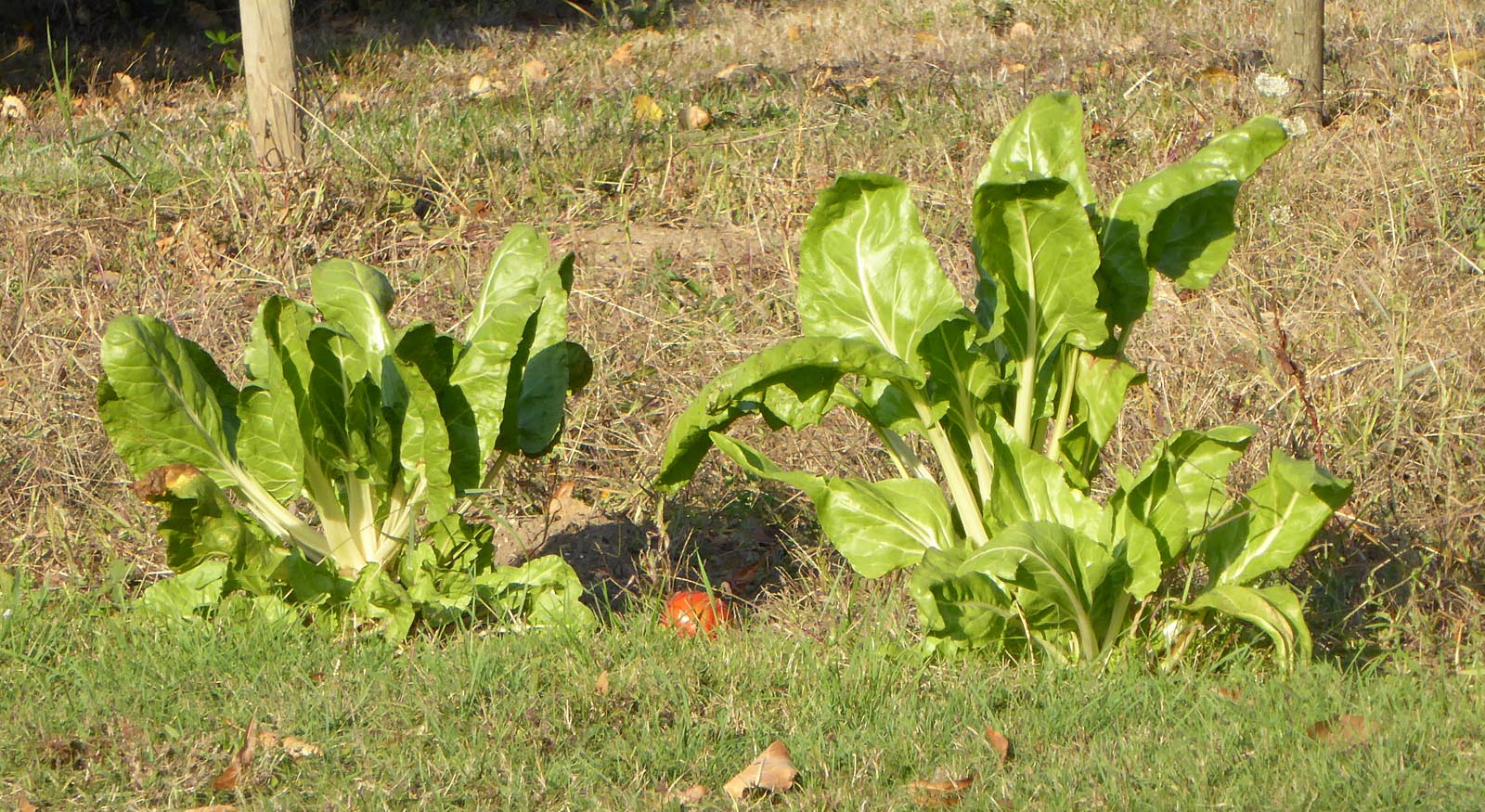
The other greens we have growing in the autumn garden are Swiss chard, called blettes, bettes, bettes à cardes, or poirée. The plant called bette is closely related to the betterave — which means beet root — plant. Chard seems to be a specialty of the Lyon area and the Rhône Valley in France. The plants in our garden are fairly small still. I expect them to grow a lot more once it starts raining here again. Look at these chard plants that spent the whole winter of 2017 out in the garden.


In France, the wide, white ribs of the chard leaves are often cooked separately from the green parts. The ribs are cooked in gratins, for example, with melted cheese. They're good diced up and cooked in a vegetable soup.


The white ribs of chard leaves, blanched in boiling water first, are good as a layer in a pan of lasagne (photo above). The green parts of the chard leaves are cooked like spinach, but have a milder flavor. The whole leaves can also be cooked together in the same pot.


The electronic Larousse Gastronomique (2007) calls the chard rib (the côte or carde) un légume délicat that can be cooked in a white sauce or a tomato sauce, or au jus. Chard is good cooked in butter or cream. Adding some Dijon mustard to a cream sauce is how one local woman told me she likes them cooked. The older hard-bound Larousse Gastronomique (1967) gives more than a dozen recipes for bettes. Chard is a really good filling for an omelet.

19 October 2018

Lacinato kale

Posting this makes me realize I really need to go out and water the kale we have growing in the garden. No rain, you know. At least it's not so hot outside, so the kale plants are really starting to grow.


I know the plants would like some rain, but they'll have to make do with some spray from the garden hose. I hope they'll grow bigger, up to three feet tall, with a lot more leaves.


This is the variety often called "dinosaur kale." That's because its leaves are sort of dark green and bumpy, resembling somebody's idea of what a dinosaur's skin might look like.


It also goes by the name of "lacinato kale," or cavolo nero, meaning "black cabbage" in Italian. Other names, according to Wikipedia, are Tuscan kale, Tuscan cabbage, Italian kale, black kale, and palm tree kale. It's my favorite variety of kale. The leaves cook up to a "meaty" texture, like collard greens, and the flavor is good too.

Some of these photos were taken early in the morning, before the sun was fully up in the sky. Others were taken late in the afternoon, in bright light. The differences in the quality of the light make the leaves look very different.


Like chard and collards, kale will survive all but a very hard freeze and can grow all winter out in the garden. Frost supposedly improves the greens, making them sweeter (January 2017 photo). I'm looking forward to harvests of dinosaur kale in December, January, even February...


18 October 2018

In the neighbors’ yard

Our neighbors across the street, whose main residence is in Blois, have sold their car. They've quit driving, I mean, and it's not clear when they'll come back to their house in the country or how often they'll come back in the future. Here are some photos I've taken recently of plants in their yard.


I'm not sure what this is. Is it a crepe myrtle? It seems happy planted up again the west wall of the neighbors' house. It's in full fall color right now, as you can see.


I know what these are called: they're medlars in English and nèfles in French. I've never tasted them but I may well do so this fall. They're not good to eat until they've been touched by frost. Then they are "bletted" and can be eaten raw or cooked. Unless the neighbors or their children come pick them, I'll ask for permission to take some after our first frosts occur.


These red flowers are called mandevilla or dipledenia. They are tropical or sub-tropical in origin, and frost will kill them. The neighbors left 6 or 8 pots of them on their terrace and around the yard. Unless somebody comes to take them away, I'll ask permission to put one or two of them in our greenhouse for the winter. Evidently, you can root cuttings and propagate new plants that way.


17 October 2018

October grapes

The weather site we look at daily, météociel.fr, gives us a forecast for the next 10 days. This  morning, there's not one drop of rain in that 10-day forecast. There are times when that would be wonderful news, but right now it's just plain strange. I guess the only thing to do is to take advantage of the sunshine while it lasts. Make hay...


By the way, in most years the winter rains start in late October. If it doesn't start raining in early November, I'm going to know something is seriously wrong. Meanwhile, most of the grapes around here have been harvested now, so the local vignerons have nothing to fear. With the warm days we are having, they probably could have left the grapes on the vines even longer. The photos here are a week old.


Two or three days ago, I was walking between two rows of vines near our house with Tasha. They were in a parcel that had been harvested a few days earlier. I noticed there were still quite a few little bunches of grapes on them, so I picked a few.


I pressed the grapes I'd picked when I got home, using a big mortar and pestle. I strained out the seeds and skins and made myself a glass of grape juice for breakfast. Delicious. It tasted as good as the grapes in these photos look.