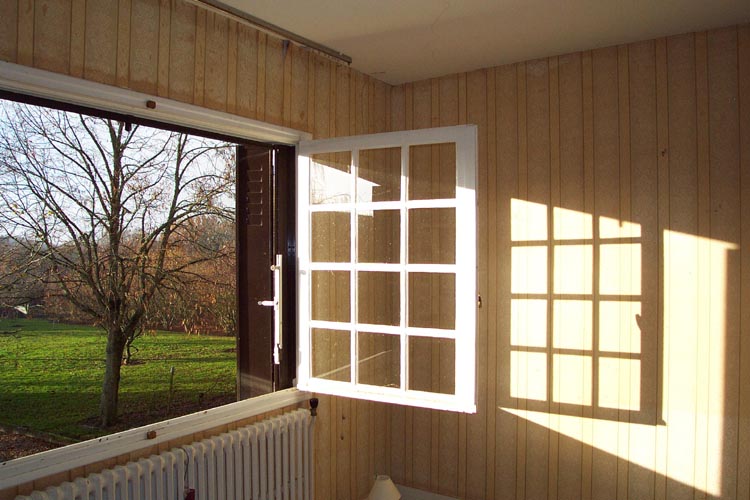
Showing posts with label moving to France. Show all posts

25 August 2007

Time to buy a house in France

Now is the time to invest in real estate in France. The Sarkozy government has just passed a new law making a portion of the interest paid on mortgages tax-deductible.

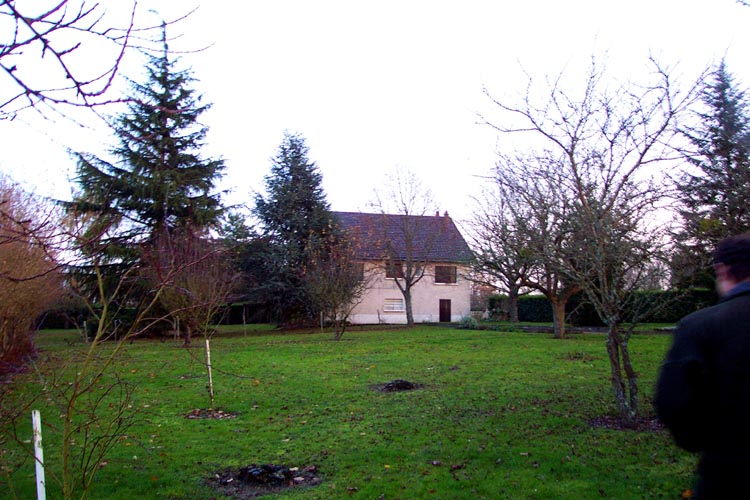
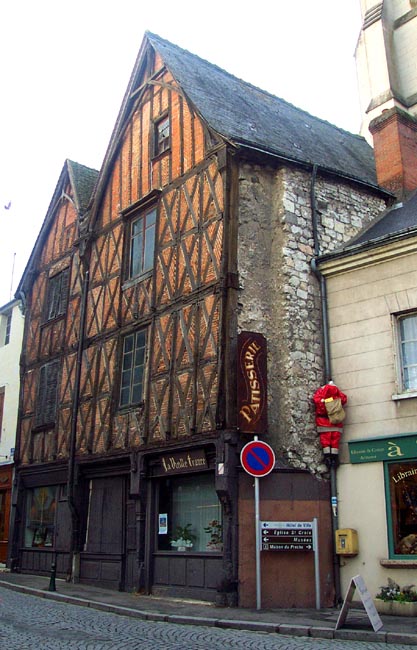
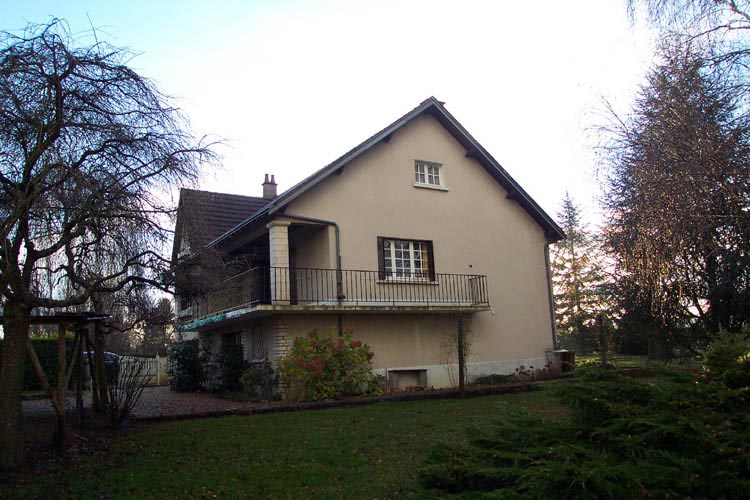
Here's a house on the other side of the vineyard from us.
I don't think it's for sale though. Somebody recently fixed it up.

The Figaro newspaper, in its article on the subject, says that a couple or individual will be able to deduct from their income taxes 40% of the mortgage interest they pay in the first year after buying a house or apartment. The deduction for a couple is limited to a maximum of 3,000 € that first year. For a single buyer, that ceiling is cut in half.

Over the subsequent four years, the tax deduction is 20% of mortgage interest paid, with a limit of 1,500 € for a couple and 750 € for a single buyer. For a couple with no dependents, the tax deductions over five years will come to a maximun of 9,000 €. After five years, the tax deduction ends.

Rows of vines in the Renaudie vineyards. This is one of my
posts where the pictures don't have much to do with the text.

I think Americans take the tax deduction based on mortgage interest for granted, but in France it is a new law. Sarkozy wanted the deduction to apply to existing as well as new mortgages, but the French Constitutional Council ruled that making it retroactive was unconstitutional. I don't understand the reasoning behind that ruling. Maybe somebody will explain in a comment.

As a result, only mortgages entered into after May 6, 2007, are eligible for the tax deduction. May 6 is the day Nicolas Sarkozy was elected President of the Republic.

Berries

Personally, I'd be a little upset if I had taken out a big mortgage earlier in 2007. I've already heard it mentioned on the news that some people might consider selling recently purchased property to buy something else in order to get the tax deduction on a new mortgage. One commentator said he doubted that people who did that would reap any real benefit.

There are four houses in this picture. Ours
is the one on the left that has a dark brown roof.

The French in general take out mortgages for a 10- or 20-year term, not 30 as in the U.S. I don't think that interest-only or negative-amortization loans exist in France. An aside: I just read that only 5% of British borrowers take out fixed-rate mortgages, while the other 95% take out adjustable-rate loans. That is a big problem in the the United Kingdom now. The default rate is high and rising, as it is in the U.S.

Apples

France is not a society that runs on credit. For example, there really aren't any credit cards here. The only bank cards you can get are debit cards, as far as I know. Somebody will correct me if I'm wrong. The only option we have on our MasterCards from the Crédit Agricole bank is whether we want our account to be debited each time we make a purchase or withdraw funds, or whether we want it to be debited just once, at the end of the month.

More apples

We never get letters in the mail offering us new credit cards. We used to get at least of few of those every month or even every week when we lived in California. In France, it's pretty much pay-as-you-go.

25 June 2007

The way it was supposed to be

Except for the occasional emergency, this is what life was supposed to become. It's the way I imagined it, the way I wanted it. We would retire from the work life and commuting hell in the big city (San Francisco, in our case) and go live the quiet life in the country. It was a choice. A plan.

Why France? Well, I lived here before, back in the 1970s and early 1980s. I "grew up" in France and lived through either my second childhood or my first retirement — I look at it both ways — in those years, before I went to Washington and then California to work for 20 years, to have a career.

I couldn't really imagine where in the American countryside two guys like us would settle and feel comfortable. I knew France would be fine for us. We would learn a lot, especially when it came to the language and the history. We might travel a little.

So what do you do with your time after you retire? That's the big question that faces you. You work on your house — cleaning, repainting, calling in contractors to do specialized tasks, and working out a list of priorities based on the amount of money you can or want to spend.

You garden. That's a seasonal task in the Loire Valley, there being five months out of the year when you can't really do much outside because of the rainy, cold weather.

But year-round, you shop and cook. Luckily, I love to plan meals, prepare fresh food, and cook. You try to stick to a healthy diet and not eat junk food. You go to outdoor markets and supermarkets and you compare not only prices but quality. You try to buy the best produce at the lowest price. You avoid prepared foods because you don't want to spend a fortune and you want to know exactly what there is in the food you eat.

You can spend a good part of the afternoon pitting the tiny
red plums you gathered for free in your neighbors' yard


You also look for specials on meats. You buy what you can when the price is low and put it into the freezer for later. You spend a lot of time learning how to prepare meats, and you spend a lot of time trimming, de-boning, cutting up, grinding, and cooking meats. You fall back on the French classics — boeuf bourguignon, boeuf aux carottes, coq au vin, lapin en gibelotte, blanquette de veau. You can't go wrong with the classics.

In the garden, you try to grow as much good food as you can. Tomatoes of course, eggplant/aubergines, cayenne and bell peppers, squash/courgettes, collard and mustard greens, okra, haricots verts/green beans, cucumbers, and pumpkins. Herbs. You take advantage of untended cherry trees out back and the generosity of friends and neighbors who have a surplus of plums and quinces. You pick apples in the yard and blackberries out on the edge of the road.

You make clafoutis, and if you can you make French-style tarts with apples, plums, pears, cherries, and blackberries. And you make jellies and jams and preserves. Even if you don't really eat that much jelly and jam, you make it anyway. You end up with a lifetime supply in the pantry. You try to give it away. You just hate to see the fruit go to waste.

You go and actually count the number of jars of jam and jelly you have in the pantry. There are about 30 of them, and some are quart jars. You think you ought to start selling the stuff at an outdoor market.

And then you make more preserves because
that's what you do with surplus fruit


And you blog. You write a blog. You read blogs. You leave comments and you spend a lot of time reading and writing e-mail messages. You read a lot of newspapers on the Internet, and you try to resist ranting too much about the current state of the world.

You only start the car and actually go somewhere a couple of times a week, especially since you get fresh bread delivered to your front door five days a week. That's the one thing you would have to go out for, or spend a lot of time making.

You get lots of visitors, especially from the U.S. You make some friends among the local people. But you don't seek out a busy social life, preferring to spend your time doing all the things you need to do to keep your life on track, as listed above. You never really have enough time, do you?

Voilà. A new life. Just as busy, but less stressful. That was the point, wasn't it?

02 May 2007

From there to here

This is a post I wrote at the end of March
but for some reason didn't publish then.

One afternoon a few weeks ago I watched a Gene Wilder movie made in 1984. It was a remake of a French movie I had seen much earlier called Un éléphant ça trompe énormément (1976), which was released in the U.S. with the strange franglais title Pardon Mon Affaire.

All in all, Wilder's American version of the film wasn't the funniest or most insightful movie I've ever seen, but the film (called "The Woman in Red") was set in San Francisco. It was fun to see views of and locations in the city we lived in for nearly 20 years. I haven't been back there since April 2003. I can't say I really miss it very much — except maybe I do, quelque part; I am writing about it, after all.

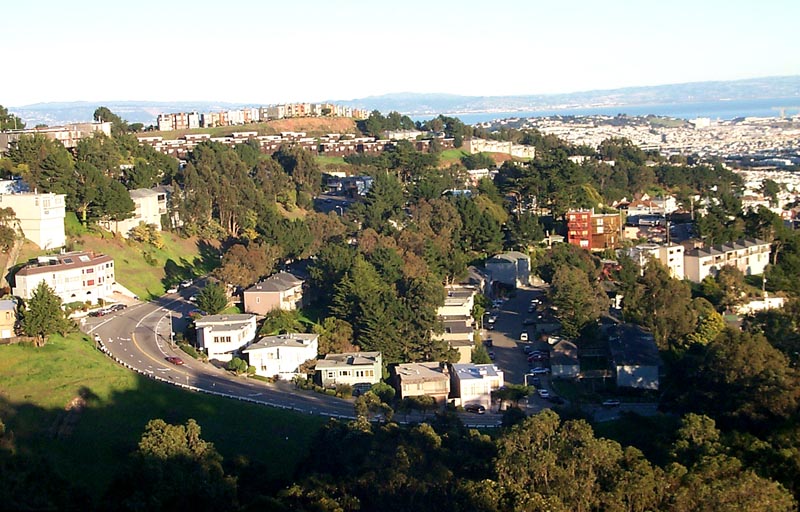
San Francisco, March 2003, from Twin Peaks

When the movie ended, Walt put some CDs on to play. I was in the kitchen making a pineapple-coconut upside-down cake, but I was listening. The first music I heard was Laurent Voulzy, a French singer we are going to see in Tours tonight. He's one of our favorites, and the only time I have ever seen him in concert was in Paris in ... 1978. We were both a lot younger back then!

The second CD Walt put in was Jackson Browne's Solo Acoustic CD from 2005, which our friend Sue gave us last year. Listening to Browne's lyrics and his patter recalled vivid memories and brought back intense feelings about the U.S. It made me realize again how glad I am to be living in France now, let me say.

One funny thing Browne said to the people in his audience, in Palm Desert, California, was that he wanted to congratulate them for their town's selection in some poll as "the best place in the world to live." Then he added: "But don't you get a little freaked out when you look around and realize that this is as good as it gets?" He has a point there, don't you think? Maybe you haven't been to Palm Desert...

La Renaudière, March 2004. I like the contrast
represented by these photos, taken one year apart.

Here are the lyrics that affected me the most, reminding me of all the hours that I spent behind the wheel of my car sitting in traffic on the California freeways and which, added to the workday, kept me away from the house about 12 hours a day for years. It's Browne's song called The Pretender, from 1976 — the same year as the French movie I mentioned above.
I'm going to rent myself a house
In the shade of the freeway.
I'm going to pack my lunch in the morning
And go to work each day.
And when the evening rolls around,
I'll go on home and lay my body down.
And when the morning light comes streaming in,
I'll get up and do it again.
Amen.
Say it again.
Amen.
The difference for me was that often the light wasn't yet "streaming in" when I left for work in the morning. I would often be on the road in the dark on winter mornings, and again out there in the dark and rain on winter evenings. Those were the hardest times, because it was day after day after day.

I was really traumatized, and I was pretty unhappy in California, when I think back on it. That's not to say everything was negative. I worked with a lot of great people over all those years in Silicon Valley, and for many years I found the work challenging and rewarding. The commuting, however, was mostly just fatiguing and frustrating, and sometimes it was downright hair-raising.

In my memories, it was either 80 or 90 miles an hour in heavy traffic, surrounded by drivers who had to be as sleepy or exhausted as I was, and where the slightest moment of inattention might be fatal. Or it was 10 to 20 miles an hour in stop-and-go traffic that you felt might never again speed up. Either way, it was hellish, and there was always some doubt in my mind that I would ever actually make it to my destination. I certainly didn't know at what hour I might arrive.

Having to "get up and do it again" morning after morning really wore me down, and made me realize I was not only wasting many hours and much energy but actually endangering my very existence. It's hard now to imagine the stress of all that, and the effect it had on my mental and physical well-being. Modern life, eh? What have we done to ourselves? What is this civilization we have created? To think that little more than a century ago, cars and airplanes didn't even exist. Are we speeding toward oblivion?

San Francisco, March 2003. I have to admit
that SF is really a beautiful place.

The other morning on the radio I heard this statistic: the average French worker spends 34 minutes getting to work in the morning and 34 minutes getting back home again at night. And the average French worker lives farther and farther from her or his place of employment. A great majority of working people in France now live in one town but work in another and therefore have a significant commute.

Touraine vineyards in the Cher River Valley, March 2004.
The view from just a few hundred yards out behind the house.

A 30- or 35-minute commute is easy for some. That's nothing, you might say. But that's just the average. The worst part of commuting is leaving the house in the morning, or the office in the evening, and not knowing how long you are going to be in transit, or on the road. And doing it morning after morning, evening after evening, in all kinds of weather.

In the morning, if you have a specific time when you have to be at work, you have to leave very early to make sure you've allowed enough time to get there. And in the evening, you just want to get home as fast as possible, and every time the brake lights come on in front of you, you find yourself cursing them. I was commuting more than 50 miles each way at one point in my career.

For me, those days are over. The sun is out at La Renaudière, and I don't have to start the car most days. There is a vegetable garden to be planted out back this month. The grass will need mowing again soon, since it rained a little yesterday. The birds chirp loudly, especially early in the morning, and I can just stand in the kitchen window and enjoy their singing.

And tomorrow we will go get Callie from the kennel and bring her home. That will be a big adventure.

01 May 2007

May Day, now and then

It's May 1. In France, that's the Fête du travail — Labor Day. It's a holiday, and since it falls on a Tuesday this year a lot of people are winding up a four-day weekend. In Paris and other big cities, the labor unions will hold marches and demonstrations this afternoon.

The weather has turned cooler, and there's a chance of rain. In France, we just lived through the warmest month of April since 1950, according to news reports. It's almost as if we've had a mini-summer, two months in advance. April was very warm if not frankly hot, and we had a total of 3 mm of rainfall for the whole month. That's one-tenth of an inch.

The cactus my friend CHM brought me from California
has enjoyed our unseasonably hot April weather.


***********

For the extreme right, namely Jean-Marie Le Pen's Front National party, May 1 is Joan of Arc Day in France. While the rest of the country is honoring working people, the far right has its own celebration around France's patron saint, who according to legend saved the country from English domination in the early 15th century, at the end of the Hundred Years War.

Le Pen will participate in a ceremony in Paris, and he will appear on the evening news tonight to tell his supporters how he thinks they should vote. He will endorse Nicolas Sarkozy, I suppose. I'm sure Sarkozy would just as soon Le Pen keep quiet, because some number of voters will certainly view such an endorsement in a negative light, and it might help mobilize the opposition on the left.

It's possible that Le Pen will ask his supporters — he got 11% of the vote in the first round, much less than he got five years ago — to stay home rather than vote for either candidate. He is nearly 80 years old, so it's unlikely he will ever be a candidate again. Five years ago he was one of the top two vote-getters, but this year he came in fourth. On some level, he must be angry that Sarkozy lured some of his voters away, spoiling his last chance to be president, or at least a major power broker.
The latest: at noon today, during his speech marking Joan of Arc Day, Le Pen asked his supporters not to vote on Sunday. He says abstaining will best make their point. Now that doesn't mean that all or even a large number of the four million people who voted for Le Pen on April 22 will actually stay away from the polls on May 6, but it does mean that the hard-core Front National members are less likely to vote for Sarkozy.

Santa Fe, New Mexico, U.S.A. — 01 May 2003

Meanwhile, centrist François Bayrou has decided not to endorse either of the two remaining presidential candidates. It's possible that a lot of his seven million supporters — he got 18% of the vote in the first round — just won't go to the polls on Sunday, or will cast a blank ballot as a protest.

Bayrou and Ségolène Royal, who scored 26% in the first round, had a "debate" last Saturday, during which they compared and contrasted their ideas and beliefs. It was broadcast by one TV channel and one radio station in France. Royal decided to appear in public with Bayrou, I think, because she thought it might be an opportunity to convince a larger number of his supporters to vote for her this coming Sunday.

Walt, Collette, and the Jeep somewhere in New Mexico,
headed east on May 01, 2003


Sarkozy, who got 31% in the first round, has refused to talk to Bayrou, saying basically that there's no need for a winner to negotiate with a loser. Most of the members of Bayrou's party in the parliament (something like 25 out of 30) have now endorsed Sarkozy. But Bayrou's UDF party is very small, and the percentage of the vote he got indicates that his support goes far beyond his party's membership.

************

I'm thinking about all this and I'm thinking about May 1, 2003, for some reason. That's when we were driving across the country from California to North Carolina on our way to Saint-Aignan. We had gotten rid of a lot of our belongings in January and February and then sold our house in March, having the rest of our furniture, clothes, and kitchen equipment packed into a container for shipment to France.

Spring 2003 — Tehachapi > Tonopah > Tucumcari

The container was sitting in a warehouse in Oakland. On May 1, we were enjoying touring around in New Mexico. I remember that we called the movers from our room at a Motel 6 in Tucumcari and gave them the go-ahead to put the container on a ship. We needed to be in France to receive the container when it arrived, and we were just betting that we'd be granted visas in time to get here before it did.

We didn't know how long we would end up staying in North Carolina, but my mother was willing to put us up at her house for the duration — including the dog. That's how mothers are.

25 February 2006

Scaling back and facing the realities

It was a good thing we had planned to have a garage sale and get rid of some clutter. A garage sale was something we had never done before, and Walt especially wasn't enthusiastic about the idea. Two things happened, however, to confirm for us that paring down our belongings was a good idea at this point.

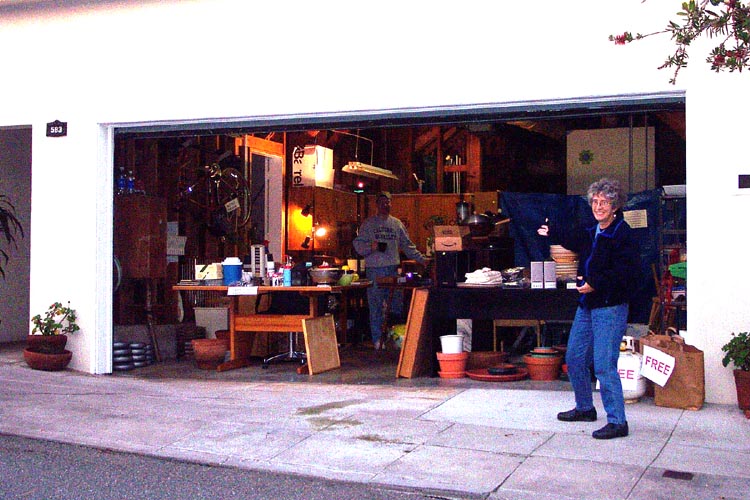
We "opened for business" at 8:00 on a Saturday morning. By 2:00 p.m.
we had sold or given away a lot of stuff. We took in just over $1000 that day.


First, the real estate agent that we had listed with came over and looked around. She knew the house, but she hadn’t seen it in several years. We had had a new kitchen put in, a new wooden deck built out back, and new windows put in front and back. We had also had a lot of painting done, and we had taken out old carpeting to reveal nice hardwood floors that, while more than 30 years old, looked brand new. The roof was new as well.

Jan, our real estate agent, inspected the house and declared that we had some things that would be fine for the showings she had planned. She said she didn’t need to do a radical makeover or a complete staging, as was often done then (and probably still is). However, we had about twice as much stuff in the house as she wanted to see. Take out a lot of it, even if you just store it in the garage for the time being, she said. Get rid of all these big plants. They hide the corners and make the rooms look small. (I was shocked when she said that. I thought the plants really dressed the place up.) Put in a smaller dining room table so that the dining area feels more spacious. Move the pieces of furniture in the family room sitting area closer together so that the room looks bigger. And so on.

Just a sampling of all the stuff we needed to get rid of. We gave a lot of it
away that day, selling things for a nickel here and a dime there.


The next thing that happened was that we contacted a moving company and inquired about having our belongings moved to France. We needed to know how much such a move would cost, how long it would take, and what kinds of customs regulations we would have to deal with. Friends of ours who had moved from California to New Zealand a couple of years earlier recommended a company, and we made the phone call.

The moving company sent over a man to do an inventory of our house. He walked through all the rooms with a checklist on a clipboard and talked to us about our furniture, clothes, linens, and kitchen equipment. We followed him around and pointed out all the things we would not be moving — some pieces of furniture and rugs that we no longer wanted or that we thought would not fit in the house at La Renaudière.

We had, effectively, two living rooms in the San Francisco house, and there was only one living room in the house in France. We ended up not moving any big armchairs or sofas; we gave them away. I think we sold only one armchair. We would also leave behind most of the electronics in the house — four television sets, three VCRs, three full stereo systems, etc., that we had accumulated over 20 years of living together, most of which were getting pretty old — and all the kitchen appliances, which would be sold with the house. France has 220-volt current, and all the 110V American appliances would be a headache over there.

I also needed to sell my car. It didn't sell that day.

After the inventory was done, the moving man went back to his office and did all his calculations. He reported that we had about 10% too much stuff to fit into a 20-foot container, but not nearly enough to fill a 40-foot container. As a result, he said, we needed to pare down by about 10%. He also said that on moving day we would be able to prioritize and hold back certain items until the last minute, when we would see whether they would maybe fit in the container. That way, we could be sure we packed the things we really wanted to keep and left the rest behind.

We got more serious about the garage sale then. We had to be ruthless about getting rid of things. One of my rules became the do-we-use-it criterion. Even if we really like it, unless it has true sentimental value, and unless we use it frequently and couldn’t easily replace it, it had to go. We could sell it in the garage sale (or at least try), give it to good friends or family, or donate it to charity.

Back in the 1980s, a cousin in North Carolina
had given the cuttings from which this plant grew.


I decided to get rid of hundreds of books, about 400 old vinyl LP record albums, and nearly all of the hundreds of 3½” floppy disks and more than 600 audio cassettes that we had accumulated over the years.

Some of my record albums dated back to the 1960s, but they had to go. I filled the trunk of the car with boxes full of them and drove around to several old record stores in San Francisco to see if anybody would buy them or take them as a donation, but it turned out to be a mostly wasted effort. The used record dealers in Haight-Ashbury were not impressed. None of the ablums was in mint condition — they had been played too often on old record players in the dorm back in the late 1960s and early 1970s. There was no market for them, I was told repeatedly.

I gave boxes and boxes of French books from my college and graduate student days to the libraries at San Francisco City College and the Lycée Français de San Francisco. Other books went to City College, the Salvation Army, or Good Will, along a lot of stuff that didn’t get sold or given away during the garage sale. We ended up having charitable companies come with trucks and take away pieces of furniture that we couldn't sell or give away otherwise. Friends rented a truck and came to get a refrigerator we had put in the back of the garage when we had our kitchen redone.

Here are a jade plant and a schefflera that I hated to part with.
San Francisco was great for plants. They could stay outside year-round
because the weather was never really hot and never really cold.


It was amazing to realize how much stuff we had but didn't need. I guess our life had gotten out of control, to an extent. What I most regretted having to get rid of, when all was said and done, was all our big houseplants. We had had some of them since the 1980s. They had moved across the country with us when we left Washington DC for San Francisco in 1986.

That earlier move had been so different. We had rented a truck in Washington and packed it full of everything we could fit into it. We didn’t have so much furniture back then, and we didn’t have computers and all the computer paraphernalia that we had accumulated, including a couple of desks and desk chairs. We had fewer books and fewer stereos and TVs back then, not to mention fewer clothes.

For the move to California, we rented a trailer so that we could haul my car to California behind the truck. We had earlier driven to California with a car top carrier on Walt’s car and left the car and the carrier full of stuff there with friends. We flew back. This time, we put my car on the rented trailer and filled it with plants. It became a rolling greenhouse for the transcontinental journey. The plants were declared healthy by the authorities at the California border near Tahoe and we and the plants rolled on down to the SF Bay Area.

Some of our plants had survived the 1986 move from DC to SF, or their
parents had. They all had to go because we couldn't move them to France.


This time, we wondered if we really were going to sell the house quickly and for a good price. Everything depended on that. If we didn’t sell it and ended up having to forfeit the deposit we had put down on the house in France, we would still feel good about having gotten rid of a lot of stuff that we didn’t really need. But not the plants. I would miss those, especially if we ended up not moving. I ended up selling most of them for a dollar or two. I just wanted them to go to good homes.

The other big headache, in a sense, was the dog. What if we couldn’t get permission to move Collette to France? We were not willing to leave her behind. If Collette couldn’t move to France, neither could we. She was already 11 years old, so we would just have to wait a few more years until she passed on if she couldn’t move with us. Then we could relocate. I started doing research on the Internet and making phone calls to see what restrictions France placed on the importation of domestic animals.

Walt and Collette in the empty San Francisco house, March 2003.

Meanwhile, I was going to have to sacrifice myself and go back to France in early February. We had decided to incorporate ourselves in order to buy the house there. That way, we would sidestep all the strict French inheritance laws, under which you are not allowed to leave your property to anybody but immediate family when you die. We agreed that if one of us died, we each wanted the other to own the house free and clear. And one of us needed to go to France to sign papers setting up the société civile immobilière, or real estate corporation, to make that possible. That was me. Walt would stay in San Francisco and continue getting our house ready for the first public viewing, which the realtor scheduled for about February 15. He was still employed at that point, actually.

We hadn't yet agreed on an asking price.

Also, we were starting to research the requirements for getting long-stay visas for France. We didn’t want to end up as illegal immigrants if we really did move.

It all depended on selling the house for the right price and at the right time. And on getting visas for ourselves and the dog. If we found that we couldn't sell the SF house for a good price, we still might have time to arrange financing for the house at La Renaudière before April 15. Or request an extension. Time would tell.

24 February 2006

Deciding to sell

To start reading this series of postings from the beginning,
click here and
then click Next at the end of each installment.

When we got back to San Francisco, I could take it easy — I was unemployed. It was December 15, and the only things I had to do were to help decide whether to cancel the house purchase contract in France and to think about looking for a new job. Walt was working as a consultant for a public transportation consulting group, so he had plenty to do. He liked his work and, especially, the people he worked with. His “office” was his computer room in the house and he did a lot of his work via e-mail. It was a nice situation.

How would you like to live at the bottom of this hill in San Francisco?
What if the brakes on one of these vehicles failed?

After three or four days of just letting the whole French house-hunting experience sink in, we came to the conlusion that we weren’t going to back out of the deal — we were going to put down a deposit on the house at La Renaudière. Even if I decided to go back to work in California (and there wasn’t much I could do about that immediately, since Christmas is a terrible time to look for work), we thought we could pull together the necessary funds to buy it. We could always go there on vacations, as often as possible, and fix the place up over time.

Late that week, I went to the bank and asked to have the deposit money wired to the real estate agency in Montrichard. Mr. Bourdais had given me his bank information for that purpose. I remember I was upset at how “bad” the exchange rate was at that point.

The back yard at our house in San Francisco

The previous spring, we had been able to buy euros for $0.87 when we were spending two weeks in Paris. That meant that a €30 meal in a restaurant only cost about $25. We got a big discount on everything, we felt, and our dollars went a long way. Paris prices seemed very reasonable by San Francisco standards.

The dollar and the euro reached parity in December 2002. That made it easy for us to evaluate French house prices, because the price in euros was the same as the price in dollars. However, the dollar continued slipping. It seems funny now, when a euro costs about $1.20, that I was upset because I had to pay the bank’s exchange rate of $1.06 per euro when I sent the deposit money. On $10,000, for example, that’s $600 extra. And then there was a $90 fee on top of that for processing the transfer.

I clenched my teeth and sent off the money. I told Walt that even if we ended up losing that money — if we canceled the deal and forfeited the deposit — it would have been worth it and, in the grand scheme of things, our lives would not be fundamentally altered. It was a risk we needed to take, in other words.

So it was done and we were that much farther along in the process.

A Sunday afternoon open house in our neighborhood in San Francisco

One of the things I used to enjoy doing every weekend in San Francisco was going to open houses in our neighborhood to see what houses were selling for and what you would get for your money. I don’t know how it works in other places, but in SF a lot of houses for sale are open for viewing by prospective buyers, not to mention neighbors and the simply curious, on Sunday afternoons. Some Sundays I would do a walking tour of the neighborhood to see houses, and on some Sundays I would get in the car and expand my viewing area some.

At an open house, a real estate agent is there to keep an eye on things and give out information. The people who live in the house are never there, or only very rarely. I don’t know if having open houses on weekends is standard practice in other parts of the U.S. Here in the Loire Valley, there are no open houses that I’m aware of. And often, when you go with an real estate agent to see a house for sale, the owners are at home. For me, that makes in harder to get a feel for the place. The owners are busy trying to show off the features they think are most attractive — “Look at this beautiful shag carpet — it’s like new!” — and the potential buyer has to be careful what he or she says, for fear of hurting somebody’s feelings.

Another house in our San Francisco neighborhood

One Sunday, right after I had sent the deposit off to France to hold the house we thought we might buy, I went out to open houses one more time. Probably, in the back of my mind, I had the idea of comparing the houses I would see with the one we were living in, and figuring out what our house might sell for. I went to see a house on Diamond Heights Boulevard. It was located just a few hundred meters from the end of Congo Street, which we lived on, and just where Elm Street turns into Diamond Heights Boulevard.

It was a very nice house, quite spacious, and the asking price was pretty high, I thought. But real estate was booming in San Francisco in late 2002 and early 2003. What did I know? More importantly, I was the only visitor at the open house at that particular moment, and I had a chance to spend some time talking to the agent who was in charge. She was a Scottish woman and she was easy to talk to. I ended up telling her that I was thinking about selling my house and was wondering what price I should ask for it.

Lower Diamond Heights Boulevard in San Francisco

That was the beginning, I guess, of the end of living in San Francisco. The agent said she would be glad to come look at my house in Janurary and give me her opinion about an asking price.

The idea was taking shape in our minds. It still seemed like an audacious thing to do -- sell the house (or “cash out,” as Californians called it) and move away.

For Christmas, some of our best friends in California, people we had spent holidays with since 1986, came to our house for a gift exchange and a good dinner. It’s funny, I don't have any pictures from that particular Christmas. I don’t know why.

Meanwhile, Walt and I decided to have some work done in the house in January, figuring that having everything clean and spiffed up would make the place easier to sell if we decided to sell it. If we decided not to sell it, it would be nice to have everything clean and spiffed up anyway. We ended up having the master bedroom and bathroom painted, and we had a neglected area of the downstairs family room fixed up and painted too. We put in some new light fixtures and some new bathroom faucets. We started cleaning up and cleaning out in a serious way and decided to have a garage sale to get rid of a bunch of junk that we really didn’t need any more. Our friend Sue offered to help us with the garage sale.

The garage sale with Walt and our friend Sue

In January, the Scottish real estate agent and a colleague of hers came to the house and gave us an evaluation. They were enthusiastic about the opportunity to sell the house. But we needed to get more opinions. I met another real estate agent at another open house around that time and asked her to come over and give us her opinion too. Then we decided to call the agent who had helped us buy the place in 1995 to get her professional opinion. We trusted her, but we weren't sure she would be enthusiastic about selling our 1960s-style house. We thought she was more interested in older houses.

Of the three agents, representing three different companies, we ended up choosing the agent who had helped us buy the house in the first place. She worked for a local real estate company, one that specialized in San Francisco houses. I liked the Scottish agent, but she was really focused on and experienced in the San Mateo area, 20 miles south of San Francsico. And the other agent we had talked to worked for a big national company — we didn't get the impression that she or that company had a good grasp of the realities of San Francisco houses and prices.

One of the things we had to do was prune the tree in front of our house

So we had decided to put our house on the market. We told the realty company what we thought it was worth, but they wanted us to ask less. They said finding the right price was the key to a successful sale. The price had to be realistic, and be low enough to inspire potential buyers to make an offer. The longer a house stayed on the market, they said, the lower the final price would be. It was important to sell it fast. In the market at that time, many houses were selling for prices above the asking price. If you could get buyers to start bidding on the house, you were likely to get the best offers.

Meanwhile, one of us needed to go back to France to sign some papers required for the purchase. Since I was unemployed, I volunteered.

23 February 2006

Back to California

I want to continue my postings about leaving California (click here to start at the beginning of the series) and moving to France. To recap, we had first decided to explore the possibilities by searching real estate ads on the Internet. Then after a month or two of Internet research, we made what was to be an exploratory trip to France in December 2002 to see what the realities were on the ground. We chose the Loire Valley because we had spent a couple of recent vacations in Vouvray and enjoyed the area. We thought the climate would be a good one for us.

Our exploratory trip ended up with us signing an agreement to buy a house near Saint-Aignan-sur-Cher. I for one had never imagined such a thing might happen so fast. But we liked the house, and especially its location and setting. And the price was right, by California standards.

Our last day in Amboise, where we had begun our house-hunting trip, was a December Friday. It was cold and drizzly in the morning, but the sun came out in the afternoon and I took some pictures in Montrichard. We checked in with the real estate agency, I remember, and with the bank where we had opened an account, to make sure everything was on track and that we had signed and gathered up all the necessary papers. We were scheduled to fly back to San Francisco on Sunday after a 24-hour stay in Paris.

We had a week to reflect on our decision to purchase a house. If we changed our minds, we would send a registered letter postmarked by December 20 to notify the real estate. French law mandates this grace period. If we decided to go ahead with the purchase, we would send the real estate agent a deposit. We really had nothing to lose at that point.

I asked the realtor, M. Bourdais, how long it would take to close the sale, if we decided to proceed. He said it was partly up to us. When would we like to schedule the closing? He suggested March 1. That seemed too fast. I suggested April 1.

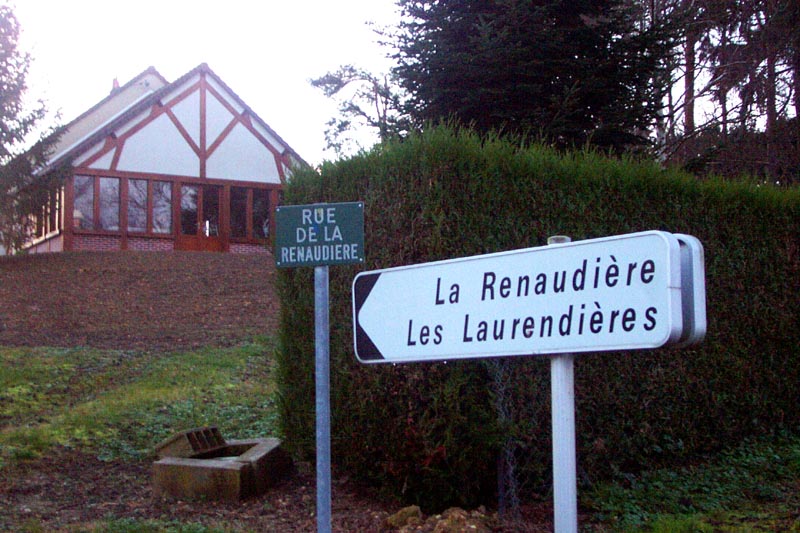
Signs marking the road that leads up to La Renaudière, our hamlet

“I don’t know if you are aware of it, but April 1 in France is a day on which people play jokes on each other,” he said, unaware that in the U.S. we also observe April Fool’s Day. He suggested that wouldn’t be an appropriate closing date. What about April 15? We agreed that would work. I didn’t want to appear to be delaying, but I wanted Walt and me to have time to figure out what we were actually going to do.

We had signed a paper saying that we did not plan to take out a mortgage in France to pay for the house. Not being able to qualify for a mortgage in France would release us from the contract and we would get our deposit back, but we still didn't want a French mortgage. It seemed like an unnecessary complication. That meant we would need to borrow the money in the U.S. to cover the cost. Or sell our house in San Francisco. We had not yet decided to take that drastic step. If we sent in a deposit and then decided to cancel the deal, we would forfeit the deposit.

The road that descends from La Renaudière back to the highway

I remember that we drove back over to Saint-Aignan to take one last look at the house late Friday afternoon. It was nearly dark (that is, about 5:30 p.m. at that time of year) when we got there. I took a few pictures. We went and saw the château and church in Saint-Aignan. There were banks of floodlights illuminating both buildings, and the sight was impressive. We again had good feelings about the location.

Adrienne and Jean, the owners of the gîte where we were staying, invited us over for dinner that Friday night. Jean made a Vietnamese rice dish, and we ate well and stayed late -- too late, considering that we had to drive to Paris first thing the next morning. We were still suffering from jet lag and the cold weather. Walt was still coughing. Our heads were still spinning.

The Paris of so many dreams -- luxury and fine food on the rue Cler

We had been very coy with Adrienne and Jean earlier in the week. They were curious to find out what châteaux and other sights we had been seeing, and whether we were having a good time. They assumed the purpose of our trip was tourism. I had put them off until Wednesday or Thursday, but then I finally told them we had been spending our time looking at houses with a real estate agent.

They were surprised, of course, but also fascinated to learn that Americans would actually want to come and live in France. We’ve had that reaction from a lot of people here. Until relatively recently, French people dreamed of going to America. And many still do -- don’t get me wrong. But I think there is less enthusiasm for America now than there used to be.

I must have taken this through the glass front of a café

Adrienne and Jean asked us to come have breakfast with them in the morning before we left for Paris. We did. We enjoyed their hospitality and their company. They were our first friends in the area, in fact.

We drove to Paris but I don’t remember the day very clearly. I have pictures, so I know we took a walk along the river from near the Eiffel Tower to the Louvre and on to Châtelet. It was still cold and gray. I usually have a pretty good memory for food and restaurants, but what and where we ate on that Saturday is a blur.

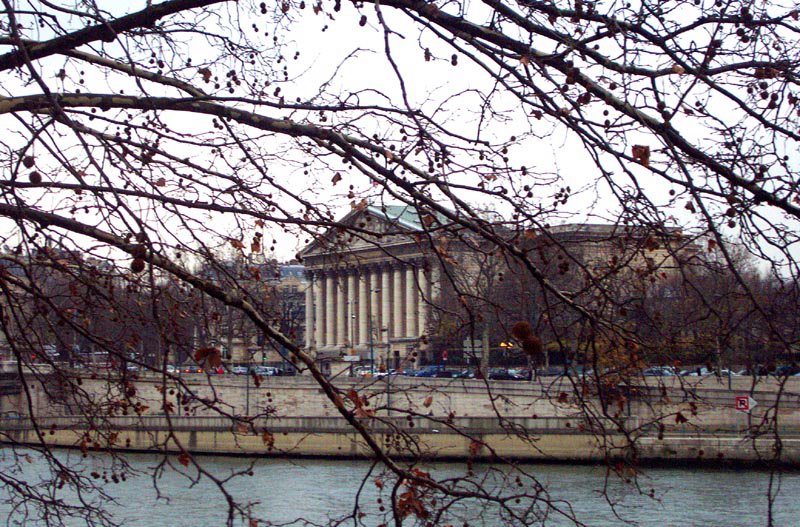
Walking along the Seine: the Assemblée Nationale

I just talked to Walt about it. He remembers going to a pharmacy near our hotel, Le Muguet in the 7th arrondissement, when we arrived in Paris that Saturday and finally getting some medecine for his sinus irritation. I don't know why we hadn't gone to a pharmacy earlier. He had been miserable all week and hadn’t slept much during the whole time we were in the Loire Valley. Maybe we just weren't thinking clearly.

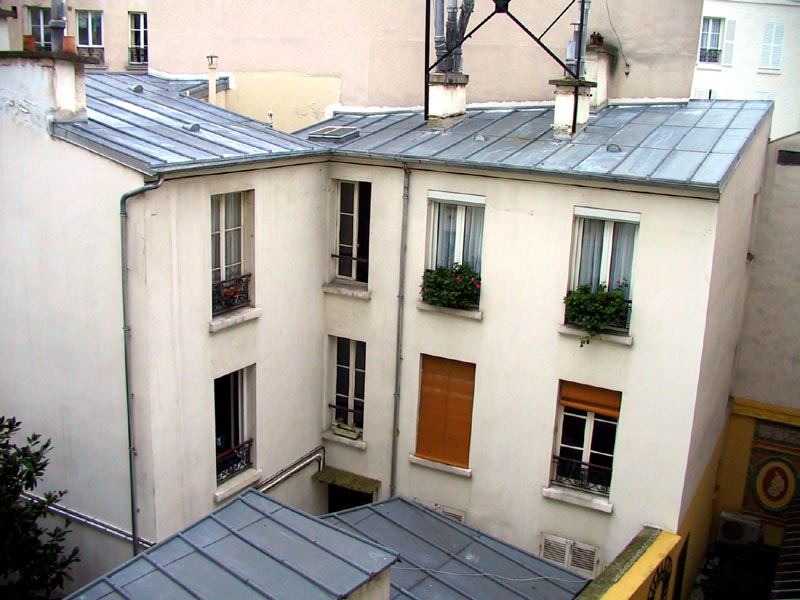
\View from the window of our room at the Hôtel du Muguet in the 7th

Talking it over, we now remember that we didn’t have dinner reservations anywhere for that Saturday night. We can’t remember if we ate lunch. But when dinnertime came, we were hungry, so we went to a big café at Ecole Militaire near the Hôtel du Muguet to get something. It’s called La Terrasse.

Graffitti in Paris: historical revisionism?

Walt says he had mussels for dinner. I think I had some oysters, but I don’t know what else. La Terrasse is a fine place but the food is not memorable, I guess. The next day we headed out to Charles de Gaulle airport and flew back to San Francisco to continue thinking it all over.

12 February 2006

Where do we sign?

If you want to read this series of postings in chronological order, start here: Quitting California. Click Next at the bottom of each posting to jump to the next one in the series. This is installment number seven.

That Thursday December 12, 2002, after a very busy Wednesday during which we saw at least seven houses near Montrichard and in Amboise, I think we must have had the morning off. It gave us time to think about the house at La Renaudière, which we were scheduled to see again in the afternoon.

There were no horses on the property at La Renaudière except this poster
pasted onto a door in the entryway. We remember Monsieur Ed with fondness.

At 2:30 we met Bourdais at his office and drove with him back toward Saint-Aignan. We went directly to the house, and we must have spent two hours walking around the yard, opening all the shutters on all the windows, and exploring the house from the ground floor up to the attic. Bourdais stayed with us all that time. He let us look around and talk about what we were seeing without butting in or giving us a lot of opinions. He was there to answer questions.

The house seen from the back of the back yard.
We use this open area for our vegetable garden.


At the time, we were in awe of the size of the yard. After nearly 15 years of living in apartments in Paris, Washington DC, and San Francisco, and then eight years in a San Francisco townhouse with a tiny back garden, it was amazing to be able to be so far from the house while still being on the property.

The house had been empty for two or three years and there was an alarm.
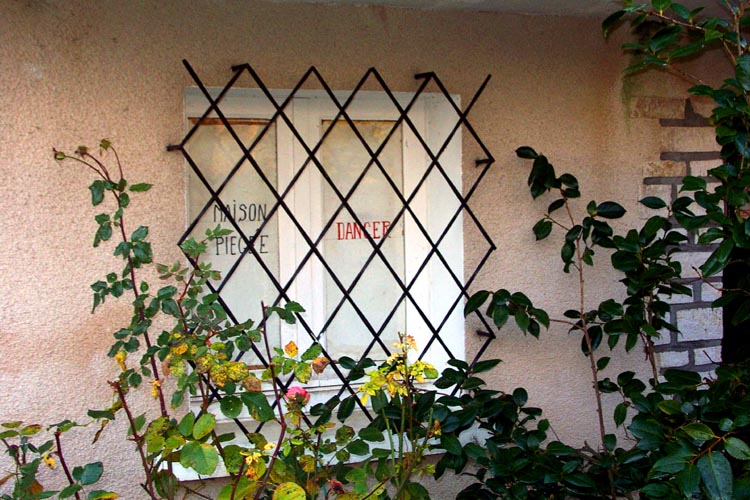
This sign in a garage window warned burglars and vandals to beware.

The yard doesn’t seem as big any more, and a lot of people around here have a lot more land than we do, but we realize we are lucky. When Walt was taking driving lessons (that's another story) last summer, he was talking with his teacher and a fellow student, who were both French. They asked him if he had bought an old farmhouse to renovate. They were trying to figure out why he was in France, I’m sure. He said no, his was a fairly new house that only needed updating and it was on only half an acre of land. They rolled their eyes and laughed and said, ONLY half an acre? That was a lot to them.

There are two rows of grape vines in the back yard.
These are table grapes, not wine grapes, we were told.


When we finished our tour of the house and yard and were ready to leave, Bourdais said he had asked his office staff to draw up all the papers for us to sign to begin the buying process. Were we ready? I was surprised, and told him I didn’t know if we wanted to take that next step yet. But you are going back to California this weekend, aren’t you? When will you sign if you don’t sign now?

The front of the house, with green tarps covering the front deck.

He explained that under French law we had a week during which we could change our minds (la période de rétractation) after signing the agreement to buy (le compromis de vente). When you get back to California, think it over. If you change your mind and don’t want to buy the house, send me a registered letter postmarked by Friday, December 20. That seemed reasonable. After all, he wasn't asking us to shell out any money on the spot.

The neighbors across the street have a couple of acres of land.
It's like living across the street from a park.


It just dawned on me that the next day was Friday the Thirteenth. That turned out not to matter, fortunately.

If you don’t change your mind, Bourdais said, send me a deposit by bank-to-bank wire transfer. He gave me a piece of paper that had on it all the information about his escrow account that an American bank would need to process the wire transfer.

The living room is a nice big space with big windows.

Escrow is an interesting word. In French, Bourdais called the equivalent account his compte séquestre. The money is sequestered until all agreements are finalized. I told him that the American term for that was escrow, trying to make sure I understood the process. He blanched, and I realized he had understood the French word escroc, which means crook. Un escroc (the final C is silent, so it’s pronounced sort of like escrow) is a swindler or con man. It took a minute to straighten that one out. He thought for a second that I was accusing him of being dishonest.

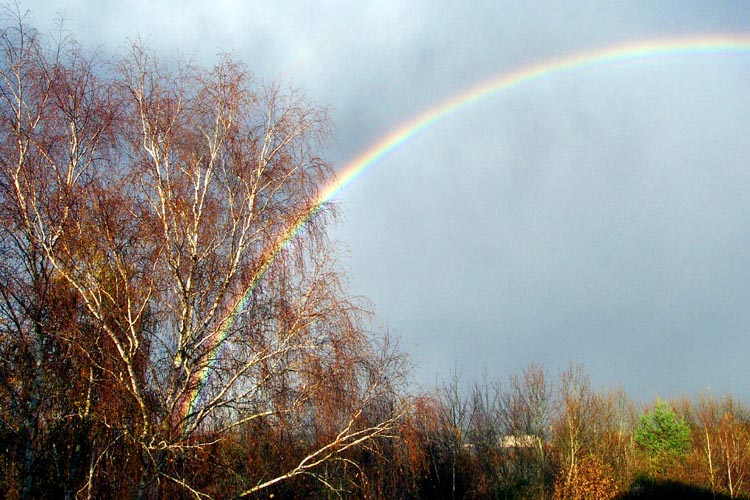
After a sudden shower during our December inspection tour, we saw
this rainbow from an upstairs window. We took it as a good omen.


So the impossible had happened. We went back to his office and signed the papers. In four days, we had bought a house in France, and at a very good price. We had arrived with very low expectations, and it had all worked out very smoothly. The only question we asked ourselves was: what are we going to do now?

09 February 2006

It all starts to blur

If you want to read this series of postings in chronological order, start here: Quitting California. It's the story of leaving California and buying a house in France. Click Next at the bottom of each article to jump to the next one in the series.

After that Tuesday afternoon and seeing the house at la Renaudière, things got a little blurred. Logically, we should have been more clear-headed, as jet lag abated. Walt still had his sinus problems and wasn’t sleeping much. I had no excuse except that the pace was wearing me down.

On Wednesday morning we saw four more houses. Here’s what I remember.

Montrichard

One house, near Montrichard, had a little swimming pool. That wasn’t anything we particularly wanted (though a hot tub might be nice). A pool seems like a maintenance headache, and this one wasn’t very attractive. It was too small, to start with. The house itself had a lot of small rooms off a long hallway. It was right on a road, and crowded by other houses. Crowded was the way the whole place felt. Let's keep going.

Another house in Montrichard was completely without character. It was fairly big and completely empty. It was carpeted throughout in beige, and the walls were beige. The front yard, or what passed for one, was a large plot of gray gravel. The exterior walls were beige. There was a little yard/garden on one side. The environnement was dull. We took a pass.

A house in the village called Bourré, near Montrichard, was one of the nicer ones we saw. It was modern and well maintained. There was a mother-in-law apartment downstairs, with lots of built-in furniture and wood paneling, all in knotty pine. The man selling the place -- he and his wife were moving back to Brittany, where they had come from -- was very proud to show us the electric front-gate opener he had recently had installed. He played with that little genie remote control unit the whole time we were there, showing us how the gate would open and close at the touch of a button. He must have thought we had never seen such a thing, but our the garages in every house and apartment building we lived in in California had them. The back yard of his house in Bourré was huge but went straight down a steep hill. The nextdoor neighbor’s yard was a construction zone -- piles of concrete blocks, bricks, and other building materials were everywhere. His house appeared to be about half finished. We moved on.

Back in Montrichard, along the river banks, we saw what might have been the nicest and best-maintained house we saw all week. The subject of flooding came up, since the house’s back yard ran down to the riverbank. We went downstairs into the garage and basement, where the owners had had a nice guest bedroom/bathroom suite put in. They pointed out to us that the water had only been about two feet deep in that room and in the garage during the flood two years previous. This house was down and across the street from one we had seen on Monday, and the gypsy encampment was still down at the end. Too bad about all that, because it was a very nice house. It was listed at a price over our stated budget, but Bourdais thought they might accept an offer at the lower price, if we made one. They were ready to move on. So were we.

Finally, we saw a house in the town of Pontlevoy, just 5 miles or so north of Montrichard. It was owned by an older couple who were there to take us on a tour. It was very old-fashioned and needed a lot of updating. There was a lot of unfinished space that the man used for various workshops. The garden was not huge but was beautifully planted with espaliered apple and pear trees. Unhappily, there was a big warehouse of some kind right across the street. Again the setting wasn’t what we were looking for. Au revoir.

That was Wednesday morning. At noontime, Bourdais asked us if we would like to see some houses in Amboise, which had been our original idea, that afternoon. We said yes, of course. He told us to go to his office in Amboise at 2:30. One of his agents there would show us three houses in our price range. That’s what we did.

One house was brand new. It was on a small lot in a suburban development. You got the impression that it was sitting in somebody else’s front yard, since there was another house facing it from behind, and there was no privacy whatsoever.

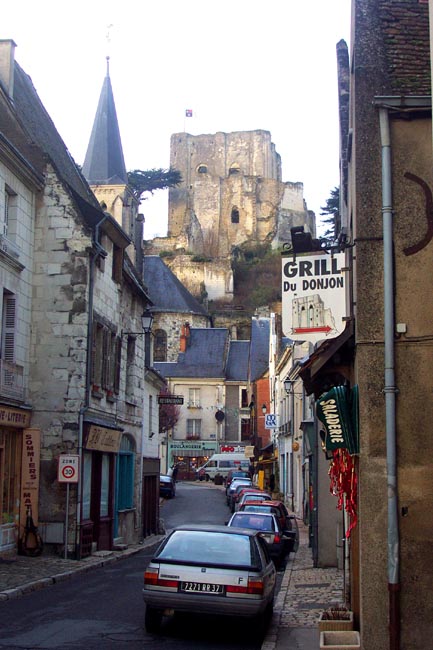
Old buildings in downtown Montrichard

The second house was enormous and fairly new. It had a huge living room with very high ceilings and a big mezzanine. There were four big bedrooms, and the kitchen was very nice. But there was no land whatsoever. The driveway was an easement on another property, and there was no garage.

The third house was smaller and darker. On the top floor, it had two studio apartments that the owners rented out to students from a language school nearby. We couldn’t see ourselves living there with renters overhead, and again, there was absolutely no land. The dog wouldn't like it.

We had asked Bourdais if we could go back to la Renaudière Thursday afternoon and spend a couple of hours there looking at the place and taking pictures. He agreed. I think he knew we had made up our minds.

06 February 2006

The house at La Renaudière

If you want to read this series of postings in chronological order, start here: Quitting California. It's the story of leaving California and buying a house in France. Click Next at the bottom of each article to jump to the next one in the series.

Here we were looking at house after house, not really knowing whether we were likely to buy something. As I said earlier, even after arriving in France I was telling Walt I wouldn’t be surprised if we didn’t see any houses at all during this week. Now it was Tuesday afternoon, and we had already seen six places that were for sale at prices under the maximum we had told Bourdais we could spend. What had started as an exploratory trip was getting very real. Especially Tuesday afternoon when we came up to la Renaudière, the hamlet where, three years later, we now live.
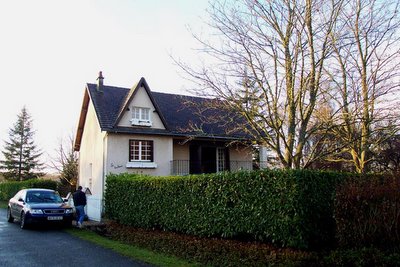
Bourdais's Audi parked outside the front gate at Les Bouleaux

The house at la Renaudière shouldn’t even have been on the tour. It didn’t have enough bedrooms — only two. All the other houses had at least three, as we had specified, and one had five. But Bourdais wanted to show to us this one anyway. He had a feeling we might like it, especially what they call here the environnement. That’s what they say about real estate, isn’t it? The three most important factors in buying a house are (1) environnement, (2) environnment, and (3) environnement.

Bourdais was right. The hamlet is nice and quiet but only 3 km (2 miles) from the center of Saint-Aignan. It is about half a mile, just less than a kilometer, off the main road (which I wouldn’t even call a highway — it’s a country road) up a lane that passes in front of some houses down below, climbs up a hill through a little wooded area, and then arrives at a settlement made up of eight houses.

The house has a name dating back to the time when there were no street numbers in the village. That wasn’t very long ago because the house was built in the late 1960s. It’s called Les Bouleaux, The Birches, because there are birch trees all around. It’s the last house on the right on the paved road, which becomes a gravel road running out into the vineyards right at the back of the property. In other words, there’s no car or truck traffic except for the few vehicles going to our neighbors’ houses and the tractors used for working the vines at harvest time.

The property itself is just over half an acre — 2300 square meters — and is bordered by a nice hedge on three sides, making the yard almost completely private. On two sides, it is surrounded by vineyards. Another side is the little country lane that is called the rue de la Renaudière, and on the east side a hedge and a fence separate our yard from the neighbor’s.
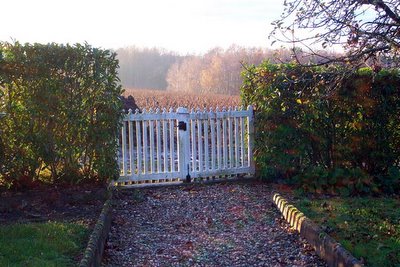
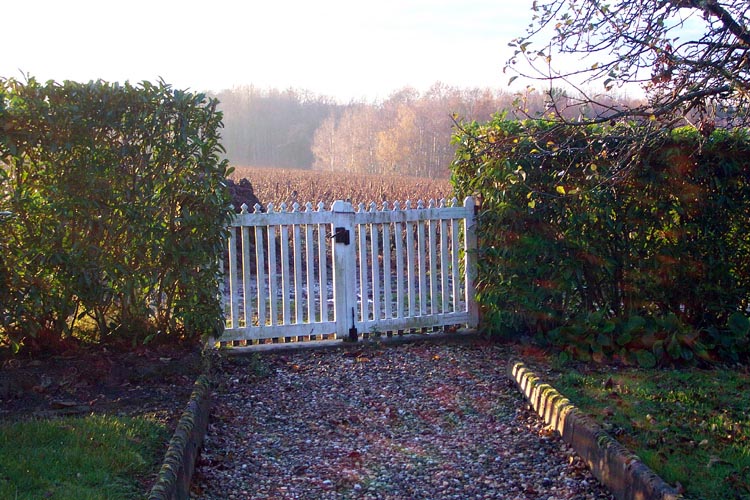
The back gate and the vineyards beyond it

Most importantly, the yard is basically flat. And it was already nicely landscaped when we saw it, with gravel paths and fruit trees and even a dozen or so grape vines planted in nice rows. It was all green, even in December.There’s a solidly built, concrete garden shed on a little concrete slab. There’s a garage that could hold two cars (and now holds a lot of boxes and other junk) and there’s a carport that we now use as a shed to store firewood.

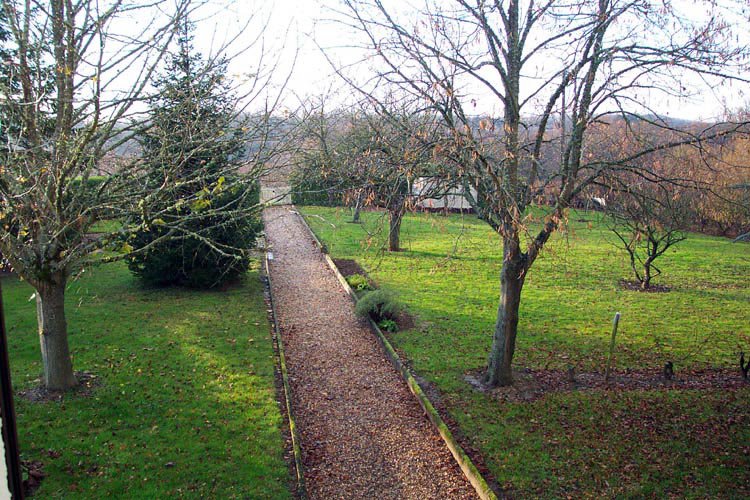
The back yard from the bathroom window

So the setting or environnement is just what we were looking for. The house, too, has many strong points. First of all, it’s old enough to have a little bit of character, but not so old that it needs major upgrades. It’s not a cookie-cutter model, as several others we saw were, with the same basic layout — a living room and then a long narrow hallway off which there are three or more bedrooms and a bathroom.
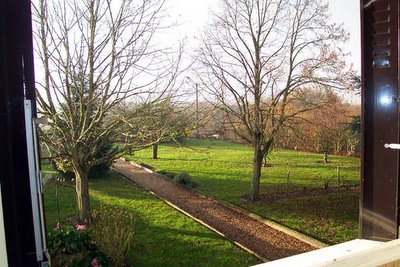
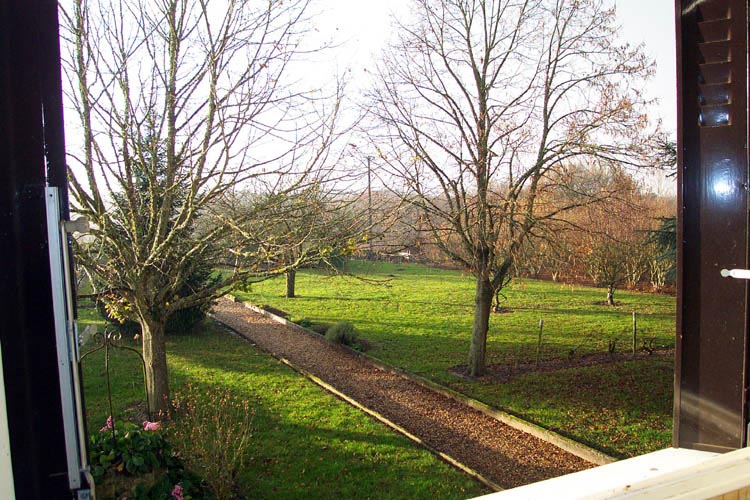
View in December from a bedroom window

The house has a downstairs entryway and then a handsome travertine staircase leading up to the main living area. Upstairs there’s a big landing with French doors leading into a large living/dining room, which measures about 425 sq. ft. There’s a big fireplace. The kitchen is not tiny but certainly not huge, and it came with cabinets and a sink already installed. There’s a huge bathroom with a big tub and there’s a separate half-bath or WC room.

The only shower stall was the one in the big utility room downstairs, where the water heater and boiler for central heating are located — but at least there was a shower. The water heater and boiler looked fairly new. There’s good-sized pantry for storing wine and grocery items, and there’s a big garage as I said.

The bedrooms are small, but big enough. One has handy built-in cabinets on two walls, which we kept. Throughout, with the exception of one bedroom, the floors are ceramic tile that is not particularly attractive overall — there are too many patterns in it in different areas — but that is in very good shape. The one bedroom had vinyl or asphalt tile on the floor; we figured we could have that one carpeted. There was also plenty of ugly old wallpaper that needed to be removed.

The other nice feature of the house is a big deck or terrasse on the front off the living room, which in summer greatly increases the living space. The terrasse was in bad shape when we first saw the house, however. The previous owners had put down green outdoor carpeting on it, and it had absorbed a lot of moisture and started to mildew. That was covered with tarps held down by heavy boards and concrete blocks. It was awful, but had great potential. One of the first improvements we made when we took possession of the place was to have ceramic tile put down out there.
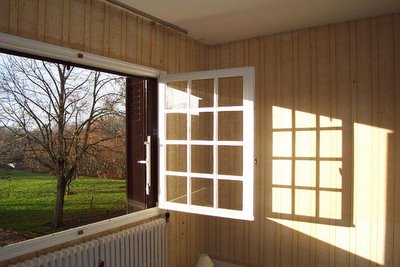
« Les fenêtres sont trop grandes pour les pièces »

The other really nice feature of the house is its big windows all around. In fact, Josette, the woman who owned it before us, told us she always thought the windows were too big for the rooms. What she meant, I think, is that French windows are hinged on the side and open into the room. In the two bedrooms, the windows are so big that when you opened them they swept over most of the room. That made it difficult to put furniture near them, and made it impossible to sleep with the windows open on hot summer nights. If you tried it and got up in the dark during the night, you were risking a serious accient. We solved that problem later by having double-glazed sliding windows put in to replace the old French ones.

The living room has a very large three-panel French window on the north side, and a huge four-panel French door across the east wall leading out onto the deck.

Anyway, this place wasn’t like any of the other houses we had seen. It was more open, with a big salle de séjour (living/dining room), a big deck, and a lot of light from all the big windows. The bathroom was huge, and that’s a luxury here, where all the bathrooms I have ever seen have been little closets, especially in Paris apartments. This bathroom was much bigger that the ones in our San Francisco house.
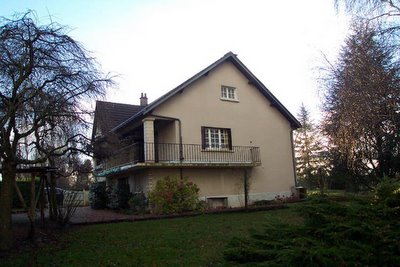

The house seen from the side yard— the north side

Walt and I exchanged a glance as soon as we started looking around the house. “This is the one,” it meant. The same thing had happened in San Francisco in 1995 when, after spending a couple of months going to open houses around the city when we were looking for a place to buy, we first saw the house we ended up buying and living in for the last eight years we were in California. We looked at each other and knew immediately we had found the place we were looking for. It was a good feeling, but we hadn’t expected it to happen so fast on this trip.

This house at la Renaudière also had a huge attic and room for a staircase to be put in for access. Bourdais said we could buy the house, have the attic space finished off and the staircase put in, and still not go over our budget.

That was because this house was listed at 33% less than we had said our top offer would be, and a good 20% less than any of the other five houses we had already seen. I asked Bourdais why the owner was asking so little for it. “She just wants to sell it now,” he said. Her husband had died a couple of years before, and she lived in an apartment in Saint-Aignan. She and her husband had used the house as a summer place. They were both on their second marriages, and the husband and his first wife had had the house built as a place for their retirement before she was killed in an automobile accident in Morroco in the late 1970s.

I don’t think the second wife felt any particular attachment to the place. We have become friends with her, and since we bought the house she has sold her apartment in Saint-Aignan, where she was bored and lonely, and bought an apartment in Tours in the same neighborhood where her daughter, son-in-law, and grand-daughter live. She was trying to liquidate her holdings in Saint-Aignan quickly, as it turned out, and we were the beneficiaries.

The entryway and stairs

We didn’t spend a lot of time in the house and yard that Tuesday afternoon. I did take pictures, however, and all this ones in this blog entry are ones I took that first afternoon and two days later. The house had been closed up and unoccupied for at least two years at that point, and probably longer, so it was musty-smelling and kind of a mess. But it was pretty much empty, and you could see how much space there was.

This was not really a dream house for us. We were looking for an affordable, pleasant place to live, in a nice location in France. We figured we could do painting and clean-up work to make the place our own. However, we didn’t really want to undertake major renovations.

Aftermath of a sudden shower at sundown, from a bedroom window

We were thinking in terms of escaping from the rat race and from the high cost of living in the San Francisco area. We liked living there, but I didn’t know if I could face the prospect of commuting again. We loved our San Francisco house. We didn’t know when we would actually move — our plan still was to see if we could afford to buy a place for our retirement, whenever that day might come. Meanwhile, we would use it as a vacation place, or I would move here and Walt would stay and work, or ... well, there were a thousand possibilities, we thought. Or I thought. You’d have to ask Walt what he thought.
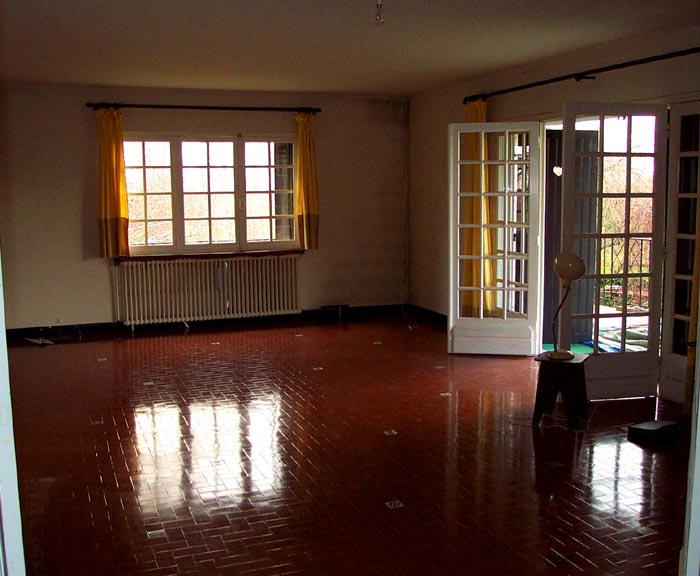
Besides, it had not really dawned on us yet that we might actually buy a house on this short exploratory trip. We still had a day or two of house tours ahead of us.