16 June 2006

Palluau-sur-Indre

I was really taken with the village of Palluau-sur-Indre on Wednesday. It's the perfect French village, in many ways. There's a big château at the top of town, and a pretty church near the château. According to the Guide Michelin, the population is under 1,000.

The elaborate decorations and flowers around the altar
makes it seem the church is the center of village life.


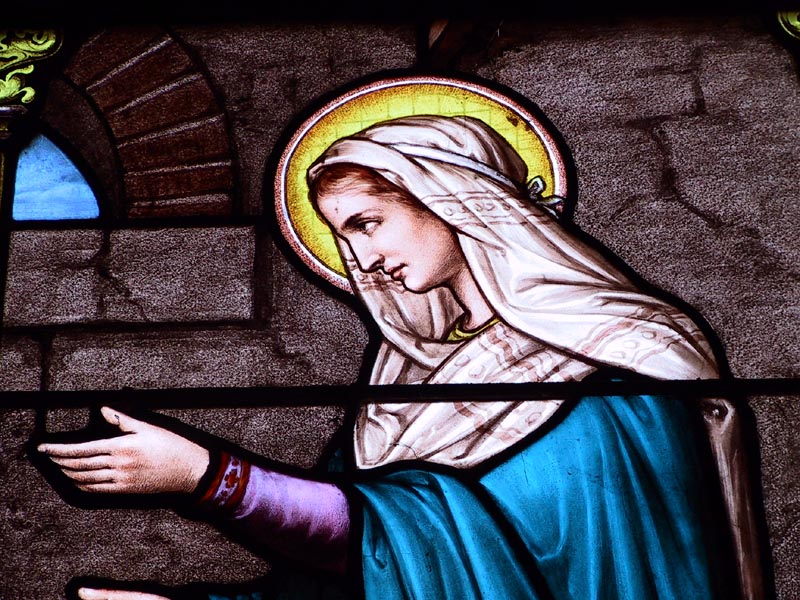
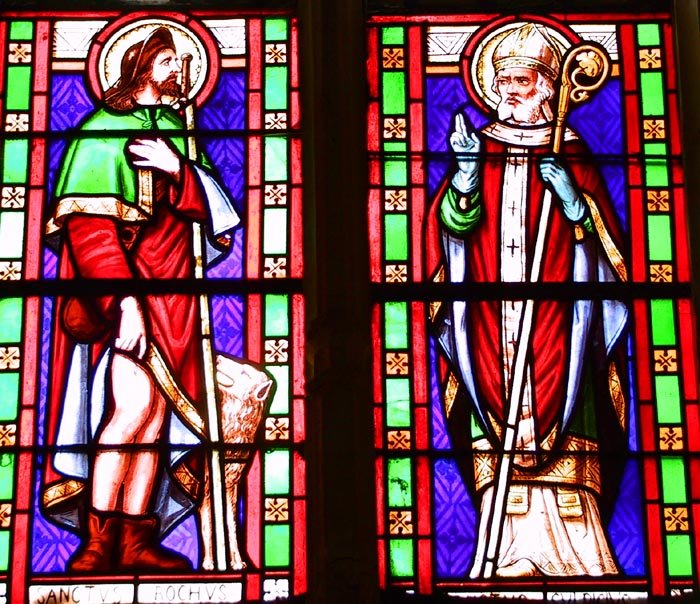
Five of the ten photos of stained-glass windows I posted yesterday were ones I took in the Palluau church. There was of course other artwork in the building, including polychrome stone statuary from the 15th and 16th centuries and numerous paintings.
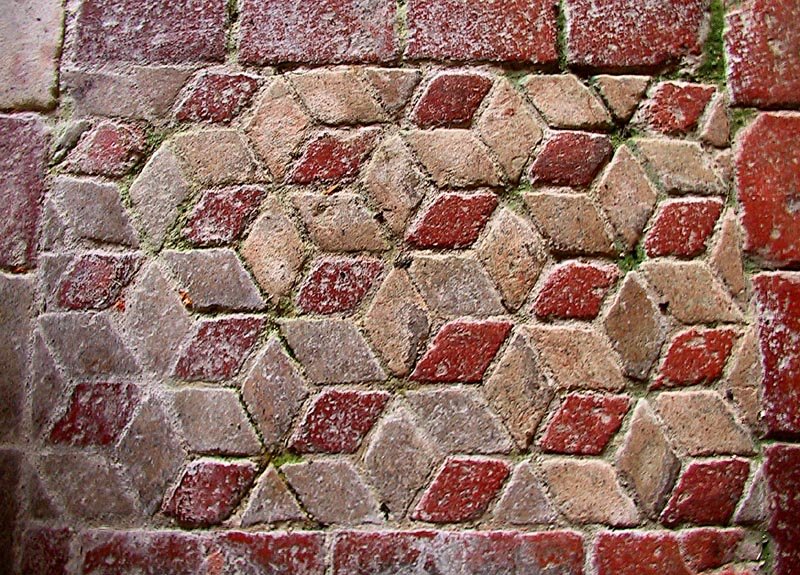
Seeing stars? Or cubes?

But as usual in these small French towns, you have to look up, down, and sideways to see the small details that a quick glance won't reveal. Here, for example, are two patterns I noticed in the 15th-century tilework on the floors in a side chapel of the church.

A shield? Or what?

The church is actually named for Saint-Sulpice and was originally built in the 12th century, replacing an older church named for Sainte-Menehould. Work on the Saint-Sulpice church continued off and on until the 16th century.

The château de Palluau, looming

When I said that the gothic-style château was just above us on a promotory, this is what I meant. It really dominates the upper town, including the church. It isn't open to the public now, but the people at the tourist office said it would probably be open for tours in July and August.

Massive defensive towers frame the gothic château

The massive towers of the château date from the 12th century and were part of the building's defenses. The newer parts, built in the 13th century, are residential.

An old garage door, in need of paint but beautiful just as it is

Another thing Palluau has that make it typical is an unexpected history. I mentioned it yesterday: the comte de Palluau was Louis de Frontenac, one of the governors of the province of Québec in the New World.

Palluau also has a monument we didn't get to see on Wednesday, because of the street paving work in progress. It's an old monastic building, a priory, that features romanesque frescoes showing religious scenes, including one of Mary wearing a crown and sitting on a throne with arms that are dragons' heads. We've got to return to see that.

See the woman in green with her bicycle?

Because it is on a promontory above a river valley, there are also great views from upper Palluau. That is also typical of so many little French towns.
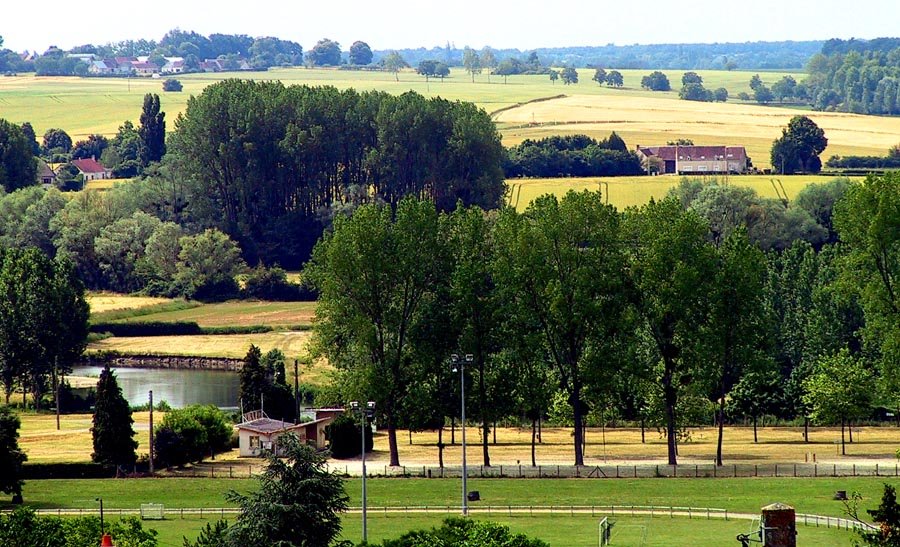
View over the Indre river valley from near the château in Palluau

The village is modernizing now. The 21st century is upon us, and villages all over our region are putting in new sewer systems, building road bypasses, and tearing up old streets and repaving them. Broad-band Internet access is widely available (I have it in the country outside Saint-Aignan).

A jug of flowers in a little park in Palluau

At the same time, Palluau is picturesque despite the modernization now taking place. A walk through the old streets reveals those typical old French windows and doors that often need a fresh coat of paint. Old buildings are for sale or have recently been sold, and are being freshened up. There are flowers everywhere right now. It's the season.

Soon I'll have a picture of every old shuttered window
in Touraine and Berry... or in France!


A typical tiled roof with gable

I'm glad I saw Palluau this week. The place is changing, and it will be interesting to see how it turns out. Of course, plus ça change, plus c'est la même chose, as we say in French. The village has existed for a thousand years, or maybe two thousand, so it's not likely to lose its identity and character in my lifetime. I'm looking forward to going back.

15 June 2006

An excursion in the Berry

Yesterday we took a drive down towards the (small) city of Châteauroux to do some shopping in the big-box stores there. Pour joindre l'agréable à l'utile — to make a nice day out of it — we decided to pack a picnic lunch and leave early so we could do some touring along the way. We'd never spent much time in little towns down there in the Berry. It's about 40 miles from Saint-Aignan to Châteauroux, towards the southeast.

Looking through the Michelin Green Guide for the Berry and Limousin provinces, I came across a page describing the village of Palluau-sur-Indre. If you know French, you can see that Palluau is an unusual name, and that alone intrigued me. The Green Guide says Palluau is a "charmante petite ville" with a château and church at the top of a hill and houses that step up the hill from the river valley. It sounded interesting to me, so we started there.


Well, in Palluau right now all the streets are torn up for repaving. We kept coming to ROUTE BARRÉE signs and having to sit and wait while heavy equipment blocked up the roads. Finally we found a way to drive around back of the village and arrived at the church. We parked in front of the tourist office. The château was on a steep hill — a cliff, really — just above us.

An interesting side note: Palluau was the home town of Louis de Buade de Frontenac, who was governor of New France (Quebec) in the late 1600s. The hotel called the Château Frontenac in Quebec City is named for him. Frontenac was the comte de Palluau.


The tourist office was closed, but an older couple inside noticed us and invited us to come on in anyway. They were very nice but told us we had come to Palluau on a bad day. The village is under contruction, and the château is closed until July 1, they said. Please come back in July. We ended up visiting the church and walking up and down the one street that was not being repaved. We took some pictures and moved on. As you can see, I took a lot of pictures of stained-glass windows in churches over the course of the day.


Just across the Indre river from Palluau is a little town called Saint-Genou. That means Saint Knee in English (I'm sure Genou was a fine name long before it came to mean knee). We drove over there. The entry to the town was a road at least half a mile long that was lined with big trees, in typical French fashion. It was beautiful.


Saint-Genou was the site of an ancient Benedictine abbey, of which just a small part of a church remains. The abbey was founded in 828, according to the Green Guide, and later was named in honor of the saint named Genou, who had been sent to Gaul by the pope to convert the natives to Christianity.


I like this sentence in the Green Guide, describing Saint-Genou: "Commencée en 994, la nouvelle église fut consacrée en 1066 ; son déclin s'amorça en 1516." Begun in 994, the new church was consacrated in 1066. 1066! And that was the new church. Its decline began in 1516. Well, it had about a five-century run, and that's not too shabby. It's a gorgeous old church.


After our quick, unplanned stop in Saint-Genou, we drove on through the bigger town of Buzançais (not mentioned in the Green Guide) and then to the town of Levroux, where there is a gothic church. The name Levroux derives from the same root as the word leprosy, and the town got that name because Saint Martin cured a local notable of the disease in the 400s. Levroux has existed as a settlement since prehistoric times, and archological digs have turned up significant Roman ruins there.


We couldn't find a good spot for our picnic in Levroux, but in the window of the tourist office there we saw an aerial photo of a great-looking château in the neaby village of Villegongis (don't you just love all these names?). We headed that way, thinking we would surely find a picnic table out in the country or on the grounds of the château. Unfortunately, the château grounds were closed to the public "exceptionnellement" because crews were cleaning up tree limbs that had fallen during recent windstorms. We didn't get to see the château or have our picnic there.


We drove on to another village called Chézelles and did find a picnic spot there, though sans table. We made our sandwiches on a little park bench near a playground behind the village hall, and sat on the ground to eat them.

After shopping successfully at Carrefour and Leroy-Merlin in Châteauroux, we drove back home through the towns/villages of Coings (un coin appelé Coings, pas mal !), Bretagne (there was a picnic table there -- next time), Bouges-le-Château, Veuil (another château), and Villentrois (yet another). It was yet another fine day.

13 June 2006

Astier's cheese platter

On June 2, we had dinner at the Restaurant Astier in Paris. Astier, in the trendy 11th arrondissement, is famous for its cheese platter. Here's what it looks like.

The cheese platter at the Restaurant Astier, Paris 11e.
Photograph courtesy of Sue Nelson.

How many cheeses can you name? Or have you tried? (Click the picture to see a larger version.)

12 June 2006

Three years and counting

We had arrived in France on June 3, 2003, and we had spent days cleaning up our new house and garden. It was June 12, and we decided we couldn't wait any longer. We had no furniture, and no kitchen appliances except a coffee maker and a microwave. We were staying in a place we had rented, a little gîte rural on the other side of the river. The rental ran through to Saturday, but on Thursday we told the owners that we were moving on.

The empty living room on June 12, 2003, after considerable cleaning.

The full living room this morning, June 12, 2006.

To prepare for the move-in, we had bought a set of patio furniture (vinyl table and chairs), two air mattresses and four pillows. We had sheets and towels that we had borrowed from friends. The weather was very hot, so we didn't need blankets. We bought a few knives, forks, plates, and microwave-safe dishes at the supermarket so that we could feed ourselves.

Delivery of a refrigerator, stove, and washing machine was scheduled for the following week. But what the heck. It would be like a camping trip, but with electricity, a TV, a private shower, and hot and cold running water. Compared to sleeping in a tent, it was very luxurious — our own roof over our own heads.

View of the yard from a bedroom window in June 2003.
Grass grows fast in the spring, we learned.


The same view this morning, June 12, 2006.

The closing (by proxy) on our house had taken place in late April, and the previous owner had of course let the gardener go. We were on the road in the U.S., homeless there, driving from California to the East Coast, staying with friends and family, waiting for our visas to come through. The visas came and we flew from Washington DC to Paris at the beginning of June.

On arrival in Saint-Aignan a few days later, we were surprised when we saw how much the grass had grown up. It was at least knee-high, and waist-high in areas. So our first major purchases were a weed-eater and lawn mower.

While Walt worked to get the yard under control, I scrubbed the kitchen and bathrooms. I mopped floors. I swept up dead insects and knocked down big spider webs. We started cleaning junk out of the house, garage, and garden shed. The place had been closed up tight for several years.

We were both suffering in the hot weather. It would turn out to be the summer of the great heat wave in France, and we had just arrived from chilly San Francisco. Our bodies were in shock.

Walt and Collette taking a break from yard work in June 2003.

The same view today, June 12, 2006. You can't see it well in this shot,
but the high weeds out back have given way to a big vegetable garden.


Our furniture and other belongings would finally arrive from California about a month later. But that first month in the house in 2003 was very exciting and very satisfying. We got to know our neighbors. We experienced the great canicule (dog days) of 2003. We started making the place ours, making an old house into a new home.