04 July 2010

The mushroom “caves” in Bourré

That word « cave » is a funny one. In French, a "cave" is not a cave at all, but what we would call a cellar. A wine cellar is a cave à vin, and a mushroom cellar is a cave champignonnière — champignons being mushrooms. What we call a "cave" in English is a caverne or a grotte in French. The caveman is « l'homme des cavernes ».

The hillsides along riverbanks — they are limestone cliffs in many places — of the area called the Loire Valley, have miles and miles of « caves » (pronounced [kahv]) carved into them. They aren't caves —they're tunnels. They are man-made and in French they are called « galeries », which is another word for tunnel, or underground passageways.

The tunnels of one old limestone quarry in Bourré
are used for cultivating mushrooms now.

The three or four miles of riverbank along the north side of the Cher River, a tributary of the Loire, between the town of Montrichard and the village of Bourré, are made up of limestone cliffs that have something like 400 km — 250 miles — of such tunnels carved into them. The tunnels earn the name "cellars" or « caves » when they are used for growing mushrooms or storing wines.

The work of carving out such an extensive network of tunnels began in Roman times. It was a quarrying operation. When the Romans arrived in the Loire Valley two thousand years ago, they needed stone to build their villas, baths, and temples. The local stone is soft limestone, and some of the best is found in and around the village now known as Bourré. It's fairly easy to quarry by hand.

To get to the quarry entrance, groups of
tourists have to cross the road in Bourré.


Before the Romans arrived, the local people — the Gauls, who were Celts — built their houses and other buildings out of wood. But the Romans wanted stone buildings. Digging tunnels into the cliffs along the river at Bourré and carving out blocks of limestone went on from Roman times until 1914. That was the year when the limestone ran out. Digging out any more blocks of limestone was threatening to make the whole structure collapse.

At Bourré, the section where the Caves des Roches mushroom cellars are located consists of 120 km, or 72 miles, of tunnels on seven levels in the limestone outcropping. It's a real labyrinth. In the Renaissance, 500 years ago, the stone that the good king Francis I — François 1er in French — ordered for the construction of his monumental château at Chambord, 20 miles northeast, came from Bourré. It was the finest, whitest limestone available.

When we took the quarry tour at Bourré a few days ago, the guide gave us her explanation for the origin of the name of the village. « Bourré » is a funny word in French. It's the past participle of a verb that means "to stuff" — as in to stuff a pillow or cushion. By extension, you say something is bourré when it is jam-packed with stuff, all crammed in — too much furniture in a room, for example, or too much money in a wallet, or too many mistakes in a composition.

Tourists on the mushroom tour at Bourré

By further extension, « bourré » is also a slang or informal French word used to describe somebody who has had too much to drink — who is sloshed, plastered, or falling-down drunk. Sometimes you hear it pronounced or see it spelled « beurré » — "buttered" would be the English term. By the way, why do we say "plastered" anyway?

So are all the inhabitants of the village called Bourré habitually plastered? Well, maybe, but probably not any more than the residents of a hundred other villages in the Loire Valley, where the wine is cheap and eminently drinkable. If that's the meaning of the village name, it is ironic that the tunnels at Bourré are given over to cultivating mushrooms rather than to cellaring wines.

Emerging from the chilly, dark quarry tunnels
into the hot late-June sunlight


The tour guide at Bourré had a different explanation. She said the name of the village goes back only to the Renaissance and the quarrying of the good white limestone blocks that Good King François used to build his Chambord "hunting lodge." You have to know that in old French, words like « roi » and
« François » were not pronounced [Rwah] and [frã-swah] the way they are today.

In the olden days, the word « roi », which means "king," was pronounced as [Rweh]. So the people called the local limestone that the king had chosen for his palace "the stone of the good king" — « la pierre du bon rwè » — and « bon rwè », with the flapped R of old French, soon evolved phonetically into the name Bourré.

Ah, the joys of language and etymologies. I'm not sure I believe the story. I bet Bourré was called that, or something similar, long before the Renaissance. Quarrying there had been going on for more than a thousand years by the time King François 1er got involved.

More about mushroom cultivation to come...

P.S. Have a look at Martine's blog post about our visit to Jean-Noël and Chantal Guerrier's winery in May. Our neighbors make excellent wine and always welcome visitors warmly and with great humor.

03 July 2010

Hot and muggy turns stormy

I woke up during a really strong thunderstorm this morning. There was sharp lightning, loud claps of thunder, strong wind, and heavy rain. Windows had to be closed. Rain beat in under the garage door and the sliding glass door on the little front porch, so there were puddles.

The artichokes like it.

It's still raining but the storm has moved off to the east or north. Cool air is flooding into the house because I've re-opened the windows. It's muggy, though. One tree blew over. Fortunately, it's a plum tree in a clay pot. I'll be able to set it upright again when the rain stops.

The daisies like it.

Yesterday was hot but the sun went behind clouds in the afternoon and there was a brief shower. The temperature got up to 90ºF early in the afternoon but then cooled down as the afternoon wore on. All this is good for the vegetable garden, which loves the hot, humid weather. And it's a good thing it does, because we are supposed to have more next week.

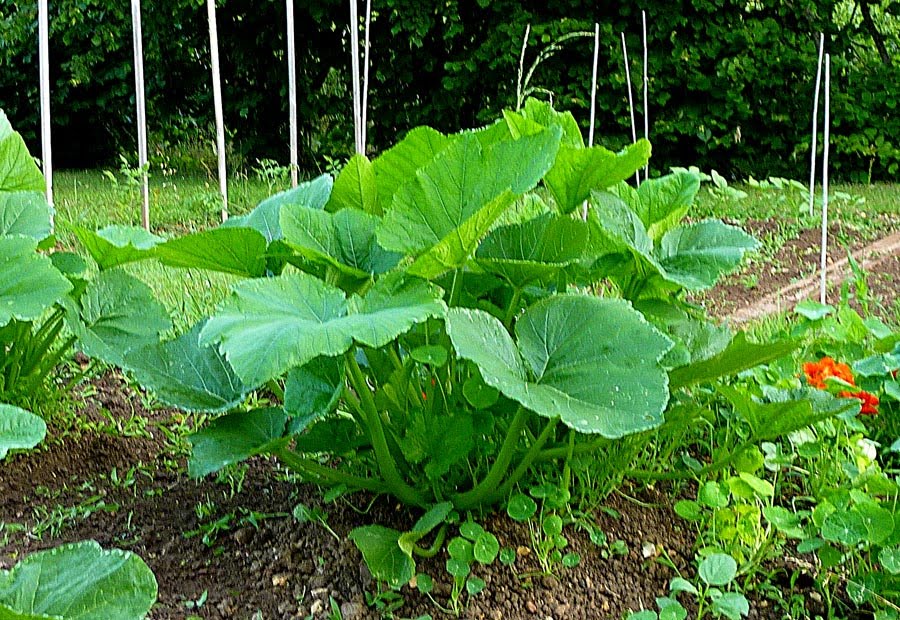
Add ImageThe courgette/zucchini plants love it.

Okay, so there's the weather report. Not much else going on. Wimbledon. Resting up from our busy week. I still want to post about the mushroom cellar and limestone quarry tours in Bourré.

The gardens at Chenonceau looked pretty happy.

And we toured the château de Chenonceau Wednesday afternoon. It had been several years since I'd been there.

Chenonceau floors under my feet

But for now, I think I'll just enjoy the last of the rain and have another cup of tea. Oh, I forgot to mention that a bat flew into the upstairs room in the middle of the night. Walt heard it flying. It was when he turned on the light that I woke up. W. was trying to chase it out a window...

P.S. Cheryl, welcome back!

02 July 2010

A new fan

An electric one. On Wednesday, Peter and Jill and I went shopping at SuperU. There, a whole section of the store was stocked with different kinds of electric fans. There were tabletop models, floor models, classic fans, and column fans.

That's the kind of weather we've been having. A TV report said yesterday that sales of portable air-conditioners are booming. All this happens every time we have a hot spell in June or July. French houses aren't air-conditioned, and they don't have forced-air heating with duct work and floor or wall registers that could be adapted to work for both heat and AC.

Old cast-iron radiators don't do much for you if you want AC. And French windows are not built to accommodate window-unit AC. They open into the room. They aren't "guillotine" windows like in much of the U.S.

So there we are. No AC. I bought a fan. I think it's a nice one — a column — and the price was surprisingly reasonable. It seems to work well. I could buy a portable, roll-about AC unit, but we wouldn't use it enough to justify the expense.

A picture just to give you some scale.
The fan's about three feet/one meter tall.

For the 10 or 12 nights out of the year when we feel the need to run a fan in the bedroom, we'll have it. We have another one, and now we'll put it in the guest bedroom. Let's hope this summer doesn't turn into a 2003-style heat wave. Last summer was just pleasantly warm all the way through, and we didn't even use the fan much.

The fan's controls include a sleep timer and an oscillation feature.

Most summers we won't use it very much. The high temperature reading on our outdoor thermometer yesterday was just over 90. That was 32.6ºC. This morning, it's 22ºC, or about 72ºF, at 8:00 a.m. That's warm. And there's not much wind at all. But we are supposed to get a break over the weekend.

01 July 2010

Dinner at the Lion d'Or in Romorantin

I wish I had taken a photo of the menu. That way, I'd be able to describe all the good things we ate last night over in Romorantin. Peter and Jill invited us to have dinner with them at the Lion d'Or, a hotel and Michelin-starred restaurant.

Here we are entering the hotel lobby for dinner.

Walt and I had been there once before, several years ago, in similar circumstances. But that was in winter, and we had to sit inside. Last night, we had a table outside in the hotel courtyard. The weather was balmy.

Tables in the courtyard at the Lion d'Or
in Romorantin-Lanthenay

Dinner started with a glass of champagne (of course). Well, that's how it works in a Michelin-recommended place. The champagne was Ruinart, either white or pink. It came with some little morsels called « amuse-bouche » — tidbits that "amuse" your mouth. One was a little glass of foie gras soup — yes, fattened goose liver served as a purée in liquid. Another was a purée of salt cod, and a third was the meat off a pig's foot diced and jellied in aspic. Each element was a tiny serving, just to whet the appetite.

Poached, boneless frog legs with some arugula leaves

Let me just list the courses that followed. The first was — what else? — frog legs. They had been poached and deboned, and they were served with a salad of arugula and a dollop of — what was it? Either crème fraîche or fromage blanc. Alongside there was a glass containing a creamy soup made with stinging nettles — « orties » in French. When cooked, the nettles don't sting your skin (or tongue) and are good to eat.

"Fresh" salt cod with Mediterranean vegetables

The second course was fish. In this case, it was billed as « morue frâiche », which is a kind of oxymoron in itself. You see, « morue » means "salt cod" — so how can salted cod be called "fresh" fish? Fresh cod is called « cabillaud » in French.

Anyway, no need to quibble, it was very good. On the main plate was a mound of delicate, moist, flavorful white cod fillet flesh, surrounded by little pieces of ratatouille vegetables cut into geometric shapes. There were little bits of eggplant, bell pepper, onion, olive, and even potato, in a light vinaigrette dressing.

Shredded cod belly as a kind of salad

Alongside the main fish dish, the restaurant also served a "salad" of poached and shredded salt cod belly, dressed with a spoonful of anchovy cream. It was a good contrast, being a little saltier and fishier than the fresh cod fillet.

Medium rare breast of squab, with cabbage
and other spring vegetables

The main course was squab. On one plate was half a pigeon breast, cooked medium rare (or « rosé » as they say in French). On the plate there was a wedge of bright green steamed cabbage, served slightly undercooked, and some peeled — yes, peeled — green garden peas with a tiny, cooked baby carrot and a similarly cooked, tiny spring onion, cut in half.

A pigeon thigh section in a foamy apricot sauce

The little side plate that went with the squab breast was a little pigeon leg & thigh section swimming in a foamy sauce made with dried apricot. As with the fish, the two different parts of the pigeon were treated and cooked entirely differently, so that they complemented each other.

« Mignardises » as a pre-dessert appetizer

Dessert was copious, to say the least. First the waiters brought to the table two plates of little sweet petit fours — what they call « mignardises », or "precious morsels." Then the main dessert arrived, and it alone consisted of three plates per person.

Just one of three desserts served at the end of the meal

They included: a peach soufflé on one plate; fresh strawberries floating on strawberry jam on another, with a crispy cone filled with some kind of sweetened cream; and finally, a little sugar-glazed cake sitting in a puddle of strawberry jam on the third.

I couldn't eat it all. Then we had coffee.

To accompany all that, and after the champagne, we had a bottle of a rare Touraine rosé wine made from Pineau d'Aunis grapes over near Tours in a tiny wine area called Noble Joué. To go with the squab and the dessert, we ordered a bottle of organic Gamay red wine made by a woman named Catherine Roussel just outside Saint-Aignan on her property, which is called Clos Roche Blanche.

The narrow streets of Romorantin in the Sologne

After dinner, we took a late-evening stroll around the town to try to burn off a few calories and get our circulation going again.

This was Peter's third dinner at the Lion d'Or in Romo. For the rest of us, it was our second. It was a very nice way to cap off their brief visit to Saint-Aignan. I hope we get to go there again sometime.