24 February 2006

Deciding to sell

To start reading this series of postings from the beginning,
click here and
then click Next at the end of each installment.

When we got back to San Francisco, I could take it easy — I was unemployed. It was December 15, and the only things I had to do were to help decide whether to cancel the house purchase contract in France and to think about looking for a new job. Walt was working as a consultant for a public transportation consulting group, so he had plenty to do. He liked his work and, especially, the people he worked with. His “office” was his computer room in the house and he did a lot of his work via e-mail. It was a nice situation.

How would you like to live at the bottom of this hill in San Francisco?
What if the brakes on one of these vehicles failed?

After three or four days of just letting the whole French house-hunting experience sink in, we came to the conlusion that we weren’t going to back out of the deal — we were going to put down a deposit on the house at La Renaudière. Even if I decided to go back to work in California (and there wasn’t much I could do about that immediately, since Christmas is a terrible time to look for work), we thought we could pull together the necessary funds to buy it. We could always go there on vacations, as often as possible, and fix the place up over time.

Late that week, I went to the bank and asked to have the deposit money wired to the real estate agency in Montrichard. Mr. Bourdais had given me his bank information for that purpose. I remember I was upset at how “bad” the exchange rate was at that point.

The back yard at our house in San Francisco

The previous spring, we had been able to buy euros for $0.87 when we were spending two weeks in Paris. That meant that a €30 meal in a restaurant only cost about $25. We got a big discount on everything, we felt, and our dollars went a long way. Paris prices seemed very reasonable by San Francisco standards.

The dollar and the euro reached parity in December 2002. That made it easy for us to evaluate French house prices, because the price in euros was the same as the price in dollars. However, the dollar continued slipping. It seems funny now, when a euro costs about $1.20, that I was upset because I had to pay the bank’s exchange rate of $1.06 per euro when I sent the deposit money. On $10,000, for example, that’s $600 extra. And then there was a $90 fee on top of that for processing the transfer.

I clenched my teeth and sent off the money. I told Walt that even if we ended up losing that money — if we canceled the deal and forfeited the deposit — it would have been worth it and, in the grand scheme of things, our lives would not be fundamentally altered. It was a risk we needed to take, in other words.

So it was done and we were that much farther along in the process.

A Sunday afternoon open house in our neighborhood in San Francisco

One of the things I used to enjoy doing every weekend in San Francisco was going to open houses in our neighborhood to see what houses were selling for and what you would get for your money. I don’t know how it works in other places, but in SF a lot of houses for sale are open for viewing by prospective buyers, not to mention neighbors and the simply curious, on Sunday afternoons. Some Sundays I would do a walking tour of the neighborhood to see houses, and on some Sundays I would get in the car and expand my viewing area some.

At an open house, a real estate agent is there to keep an eye on things and give out information. The people who live in the house are never there, or only very rarely. I don’t know if having open houses on weekends is standard practice in other parts of the U.S. Here in the Loire Valley, there are no open houses that I’m aware of. And often, when you go with an real estate agent to see a house for sale, the owners are at home. For me, that makes in harder to get a feel for the place. The owners are busy trying to show off the features they think are most attractive — “Look at this beautiful shag carpet — it’s like new!” — and the potential buyer has to be careful what he or she says, for fear of hurting somebody’s feelings.
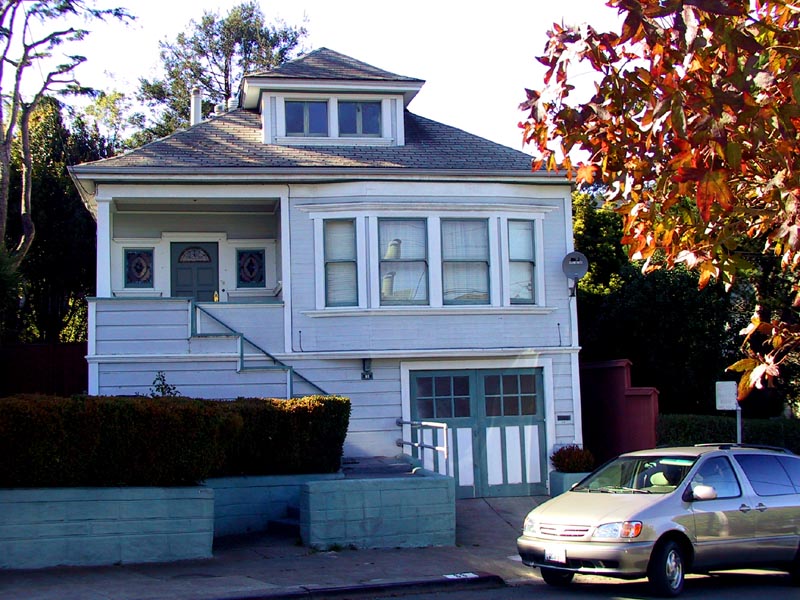
Another house in our San Francisco neighborhood

One Sunday, right after I had sent the deposit off to France to hold the house we thought we might buy, I went out to open houses one more time. Probably, in the back of my mind, I had the idea of comparing the houses I would see with the one we were living in, and figuring out what our house might sell for. I went to see a house on Diamond Heights Boulevard. It was located just a few hundred meters from the end of Congo Street, which we lived on, and just where Elm Street turns into Diamond Heights Boulevard.

It was a very nice house, quite spacious, and the asking price was pretty high, I thought. But real estate was booming in San Francisco in late 2002 and early 2003. What did I know? More importantly, I was the only visitor at the open house at that particular moment, and I had a chance to spend some time talking to the agent who was in charge. She was a Scottish woman and she was easy to talk to. I ended up telling her that I was thinking about selling my house and was wondering what price I should ask for it.
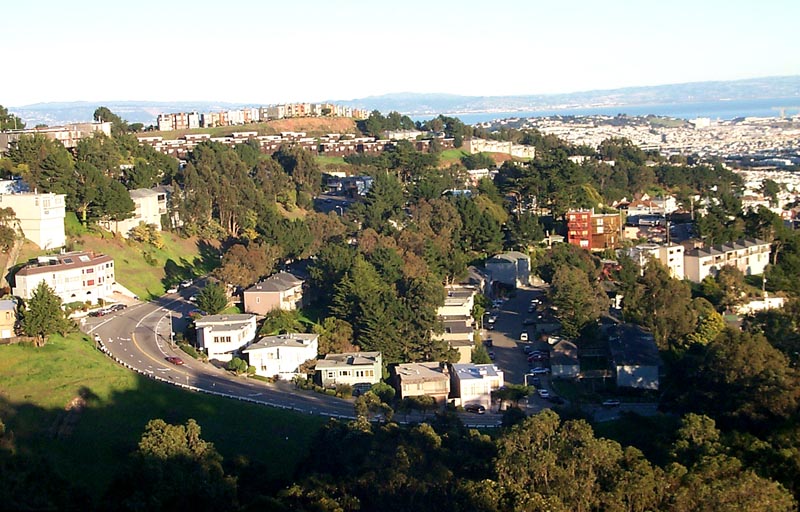
Lower Diamond Heights Boulevard in San Francisco

That was the beginning, I guess, of the end of living in San Francisco. The agent said she would be glad to come look at my house in Janurary and give me her opinion about an asking price.

The idea was taking shape in our minds. It still seemed like an audacious thing to do -- sell the house (or “cash out,” as Californians called it) and move away.

For Christmas, some of our best friends in California, people we had spent holidays with since 1986, came to our house for a gift exchange and a good dinner. It’s funny, I don't have any pictures from that particular Christmas. I don’t know why.

Meanwhile, Walt and I decided to have some work done in the house in January, figuring that having everything clean and spiffed up would make the place easier to sell if we decided to sell it. If we decided not to sell it, it would be nice to have everything clean and spiffed up anyway. We ended up having the master bedroom and bathroom painted, and we had a neglected area of the downstairs family room fixed up and painted too. We put in some new light fixtures and some new bathroom faucets. We started cleaning up and cleaning out in a serious way and decided to have a garage sale to get rid of a bunch of junk that we really didn’t need any more. Our friend Sue offered to help us with the garage sale.
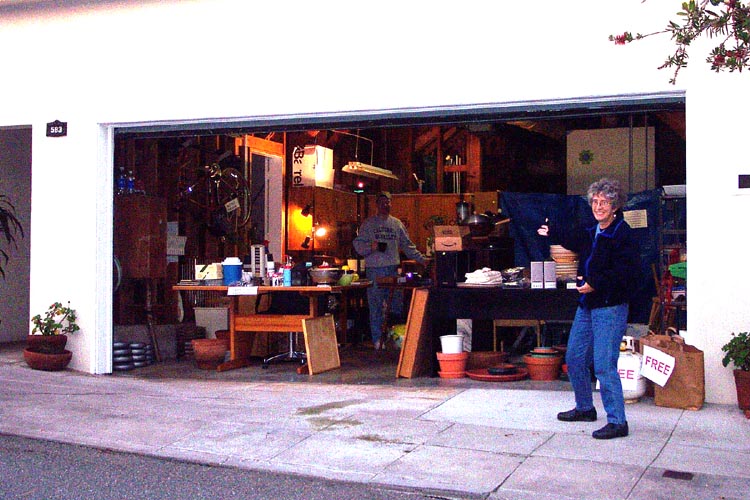
The garage sale with Walt and our friend Sue

In January, the Scottish real estate agent and a colleague of hers came to the house and gave us an evaluation. They were enthusiastic about the opportunity to sell the house. But we needed to get more opinions. I met another real estate agent at another open house around that time and asked her to come over and give us her opinion too. Then we decided to call the agent who had helped us buy the place in 1995 to get her professional opinion. We trusted her, but we weren't sure she would be enthusiastic about selling our 1960s-style house. We thought she was more interested in older houses.

Of the three agents, representing three different companies, we ended up choosing the agent who had helped us buy the house in the first place. She worked for a local real estate company, one that specialized in San Francisco houses. I liked the Scottish agent, but she was really focused on and experienced in the San Mateo area, 20 miles south of San Francsico. And the other agent we had talked to worked for a big national company — we didn't get the impression that she or that company had a good grasp of the realities of San Francisco houses and prices.

One of the things we had to do was prune the tree in front of our house

So we had decided to put our house on the market. We told the realty company what we thought it was worth, but they wanted us to ask less. They said finding the right price was the key to a successful sale. The price had to be realistic, and be low enough to inspire potential buyers to make an offer. The longer a house stayed on the market, they said, the lower the final price would be. It was important to sell it fast. In the market at that time, many houses were selling for prices above the asking price. If you could get buyers to start bidding on the house, you were likely to get the best offers.

Meanwhile, one of us needed to go back to France to sign some papers required for the purchase. Since I was unemployed, I volunteered.

23 February 2006

Back to California

I want to continue my postings about leaving California (click here to start at the beginning of the series) and moving to France. To recap, we had first decided to explore the possibilities by searching real estate ads on the Internet. Then after a month or two of Internet research, we made what was to be an exploratory trip to France in December 2002 to see what the realities were on the ground. We chose the Loire Valley because we had spent a couple of recent vacations in Vouvray and enjoyed the area. We thought the climate would be a good one for us.

Our exploratory trip ended up with us signing an agreement to buy a house near Saint-Aignan-sur-Cher. I for one had never imagined such a thing might happen so fast. But we liked the house, and especially its location and setting. And the price was right, by California standards.

Our last day in Amboise, where we had begun our house-hunting trip, was a December Friday. It was cold and drizzly in the morning, but the sun came out in the afternoon and I took some pictures in Montrichard. We checked in with the real estate agency, I remember, and with the bank where we had opened an account, to make sure everything was on track and that we had signed and gathered up all the necessary papers. We were scheduled to fly back to San Francisco on Sunday after a 24-hour stay in Paris.

We had a week to reflect on our decision to purchase a house. If we changed our minds, we would send a registered letter postmarked by December 20 to notify the real estate. French law mandates this grace period. If we decided to go ahead with the purchase, we would send the real estate agent a deposit. We really had nothing to lose at that point.

I asked the realtor, M. Bourdais, how long it would take to close the sale, if we decided to proceed. He said it was partly up to us. When would we like to schedule the closing? He suggested March 1. That seemed too fast. I suggested April 1.

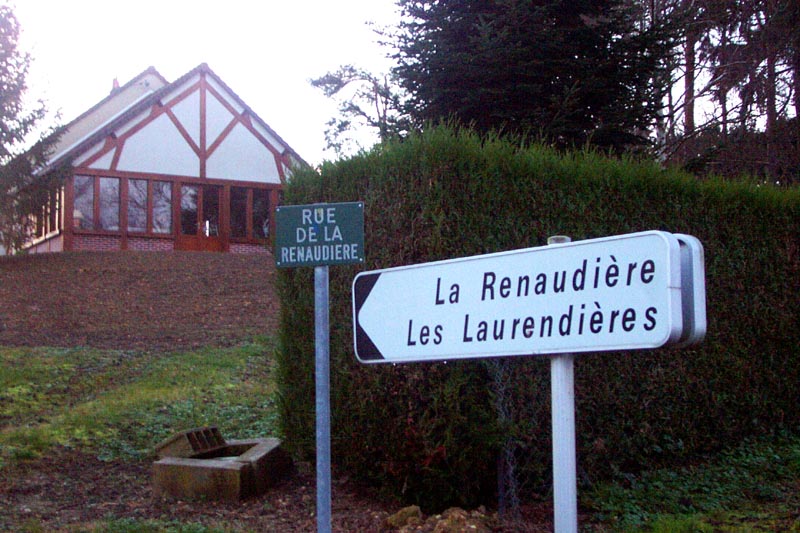
Signs marking the road that leads up to La Renaudière, our hamlet

“I don’t know if you are aware of it, but April 1 in France is a day on which people play jokes on each other,” he said, unaware that in the U.S. we also observe April Fool’s Day. He suggested that wouldn’t be an appropriate closing date. What about April 15? We agreed that would work. I didn’t want to appear to be delaying, but I wanted Walt and me to have time to figure out what we were actually going to do.

We had signed a paper saying that we did not plan to take out a mortgage in France to pay for the house. Not being able to qualify for a mortgage in France would release us from the contract and we would get our deposit back, but we still didn't want a French mortgage. It seemed like an unnecessary complication. That meant we would need to borrow the money in the U.S. to cover the cost. Or sell our house in San Francisco. We had not yet decided to take that drastic step. If we sent in a deposit and then decided to cancel the deal, we would forfeit the deposit.

The road that descends from La Renaudière back to the highway

I remember that we drove back over to Saint-Aignan to take one last look at the house late Friday afternoon. It was nearly dark (that is, about 5:30 p.m. at that time of year) when we got there. I took a few pictures. We went and saw the château and church in Saint-Aignan. There were banks of floodlights illuminating both buildings, and the sight was impressive. We again had good feelings about the location.

Adrienne and Jean, the owners of the gîte where we were staying, invited us over for dinner that Friday night. Jean made a Vietnamese rice dish, and we ate well and stayed late -- too late, considering that we had to drive to Paris first thing the next morning. We were still suffering from jet lag and the cold weather. Walt was still coughing. Our heads were still spinning.

The Paris of so many dreams -- luxury and fine food on the rue Cler

We had been very coy with Adrienne and Jean earlier in the week. They were curious to find out what châteaux and other sights we had been seeing, and whether we were having a good time. They assumed the purpose of our trip was tourism. I had put them off until Wednesday or Thursday, but then I finally told them we had been spending our time looking at houses with a real estate agent.

They were surprised, of course, but also fascinated to learn that Americans would actually want to come and live in France. We’ve had that reaction from a lot of people here. Until relatively recently, French people dreamed of going to America. And many still do -- don’t get me wrong. But I think there is less enthusiasm for America now than there used to be.

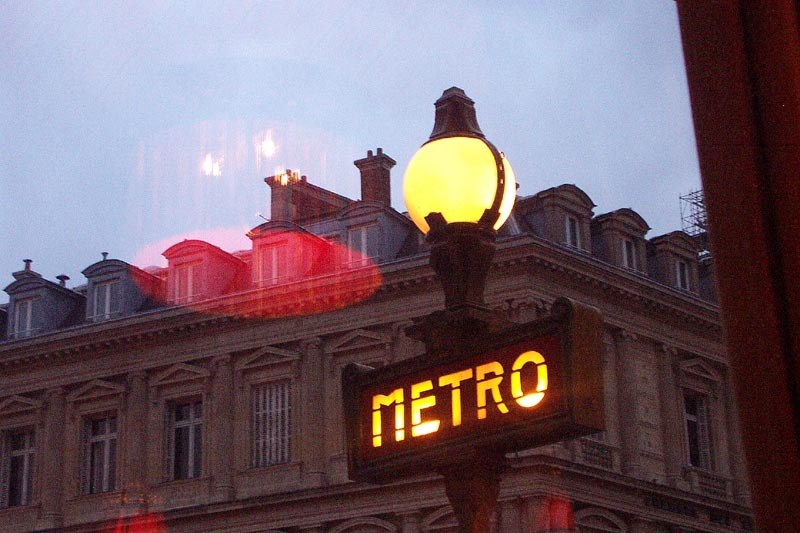
I must have taken this through the glass front of a café

Adrienne and Jean asked us to come have breakfast with them in the morning before we left for Paris. We did. We enjoyed their hospitality and their company. They were our first friends in the area, in fact.

We drove to Paris but I don’t remember the day very clearly. I have pictures, so I know we took a walk along the river from near the Eiffel Tower to the Louvre and on to Châtelet. It was still cold and gray. I usually have a pretty good memory for food and restaurants, but what and where we ate on that Saturday is a blur.

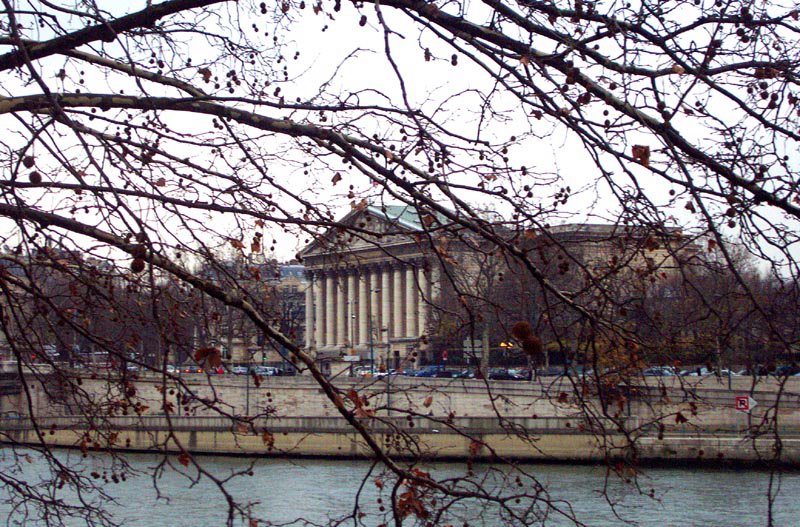
Walking along the Seine: the Assemblée Nationale

I just talked to Walt about it. He remembers going to a pharmacy near our hotel, Le Muguet in the 7th arrondissement, when we arrived in Paris that Saturday and finally getting some medecine for his sinus irritation. I don't know why we hadn't gone to a pharmacy earlier. He had been miserable all week and hadn’t slept much during the whole time we were in the Loire Valley. Maybe we just weren't thinking clearly.

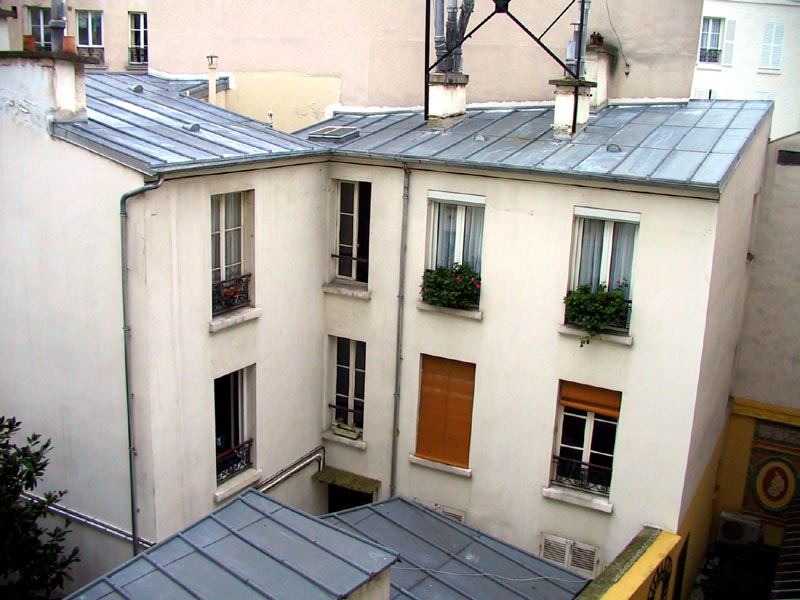
\View from the window of our room at the Hôtel du Muguet in the 7th

Talking it over, we now remember that we didn’t have dinner reservations anywhere for that Saturday night. We can’t remember if we ate lunch. But when dinnertime came, we were hungry, so we went to a big café at Ecole Militaire near the Hôtel du Muguet to get something. It’s called La Terrasse.

Graffitti in Paris: historical revisionism?

Walt says he had mussels for dinner. I think I had some oysters, but I don’t know what else. La Terrasse is a fine place but the food is not memorable, I guess. The next day we headed out to Charles de Gaulle airport and flew back to San Francisco to continue thinking it all over.

21 February 2006

21 February 2006

Météo France, the national weather service, predicted snow for this morning. I just looked outdoors — no snow yet. And the temperature on our outdoor thermometer is +2.6ºC. I don't think it's cold enough to snow. I suppose the temperature could drop this morning.

It's February, which mean that the cyclamens are blooming in the back yard. The next flowers we see will be primroses but we see no signs of them yet. Here are the cyclamens, which are wild ones with very small pink flowers.

Cyclamen leaves are pretty and almost outshine the flowers.

* * *

My hospitalized friend is scheduled to be released to a clinic tomorrow, Wednesday. She'll spend a month there. As far as I know, tests haven't found anything seriously wrong with her since the attack she had in my car on the way to Blois. My friend Chris P. told me there is such a thing as a stroke that goes away -- a "transient ischemic attack" or TIA. The symptoms listed here correspond to what I saw happen to my friend (thanks for the link, Chris):
  • Sudden numbness or weakness of the face, arm or leg, especially on one side of the body
  • Sudden confusion, trouble speaking or understanding
  • Sudden trouble seeing in one or both eyes
  • Sudden trouble walking, dizziness, loss of balance or coordination
  • Sudden, severe headache with no known cause
The only difference between a stroke and a TIA is that the symptoms of a TIA are temporary and leave no lasting damage, according to the site. But they need to be treated immediately. Luckily, we were not far from the hospital when it happened.

* * *

Yesterday it rained most of the day but Sunday afternoon was nice (after a rainy morning). And there were no hunters out back. Maybe hunting season is winding down. Collette and I went out for our usual walk in the vineyard. The poor old dog was not moving very fast. I think she might have another arthritis attack coming on. Last night, she fell off the foot of the bed in the dark. She didn't hurt herself. Her night vision is also not what it used to be.

The wall of the old vineyard-workers' shed on the gravel road out back.
It has grape vines trained up on its walls — table grapes, I believe.

One of the nicest aspects of living here is being on the edge of the vineyards and on a road with no traffic on it (because the pavement ends right behind our property). Collette never has to be on the leash any more, the way she had to be when we lived in Sunnyvale and then in San Francisco.

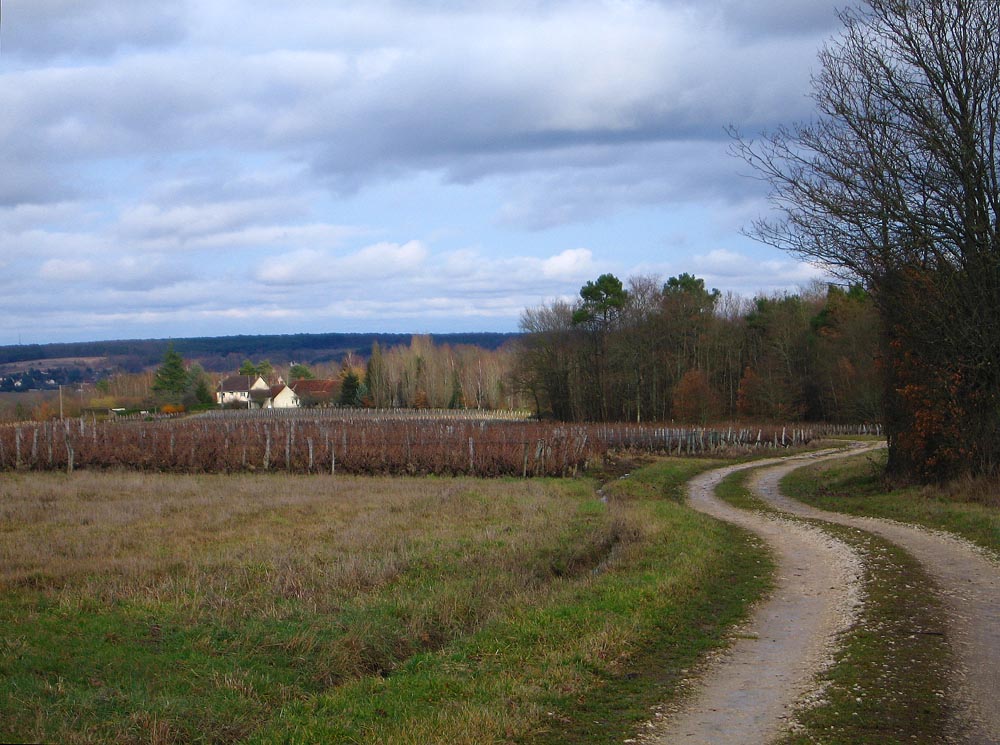
The gravel road through the vines with the house in the distance.

Sunday afternoon the temperature was close to 50ºF and the sun peeked out from behind the clouds for a few minutes. Something unusual happened: I crossed paths with a man I didn't know who was also taking a walk out there. Usually there's nobody on the road, unless workers are out pruning the vines.

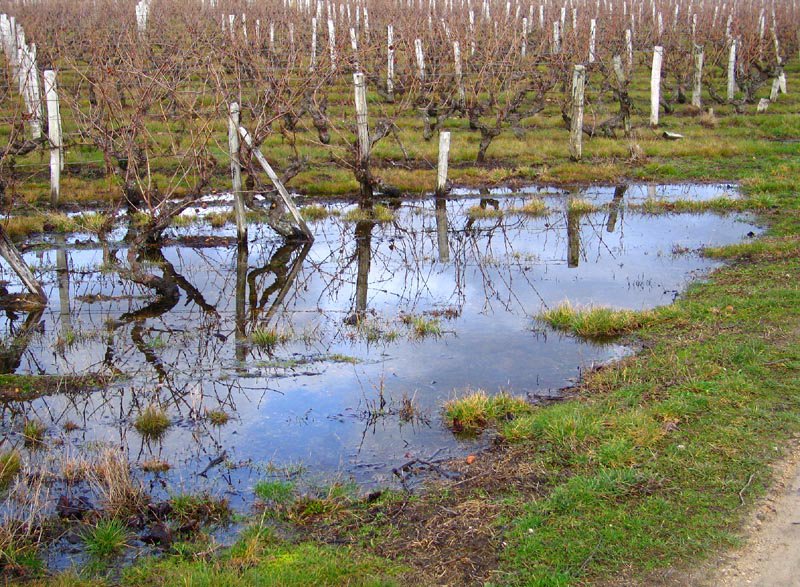
Farther from the house, puddles on the road and a cloudy sky.

The dog loves to walk down the rows between the grapevines. She seems to think it's fun to take a row parallel to the one I'm on and watch to see if we end up at about the same place at the end. We do.

La Renaudière in the distance, beyond the bare winter vines.

Some people reading this might think: "Can't this guy take pictures of something else?" But no, this is where I spend my time. I have to keep practicing with my new camera, don't I?

Evidence of recent rains.

We have finally had some rain, but still not enough. Most of France has been in drought conditions for at least a year now. Many départements (i.e. counties) had water restrictions last summer and fall. In our département, Loir-et-Cher, we weren't under restrictions, while neighboring departments were. I think it's because we don't have a big city in the département — the largest is Blois, with about 75,000 inhabitants. The more people there are, the more water gets used. Cities in neighboring départements — Tours, Bourges, Orléans — are two or three times as big as Blois.

* * *

As I type I'm listening to a program about genealogy on France Inter radio. One of the genealogists just said that 50% of the French people are thought to be descended from Charlemagne. Is that possible?

Charles I, who became known as Charlemagne, was king of the Franks from 768 to 814 A.D., and Emperor of the Western Empire for the last 15 of those years. His mother was Berthe au Grand Pied — Bertha with the Big Foot, an allusion to her having one foot bigger than the other, according to legend -- and his eldest son was Pépin, who was known as Le Bossu — The Humpback.

Maybe I'm descended from Charlemagne! My first name is Charles. Charlemagne's dynasty was called the Carolingians, and I'm from Carolina. Hmmm.

18 February 2006

A brush with death

There are subjects I don't feel very comfortable writing about on a blog. Mostly, they have to do with the people here around Saint-Aignan who have befriended or, in some ways, adopted us. Their privacy needs to be respected, but our interactions with them and the gradual unveiling of their lives before our very eyes make for some of the most interesting moments we spend here. Many of the people we have gotten to know best are 20 or more years older than I am.

But the fact is that all these things that happen to them become part of my life too, and I want to write about them. When we decided to leave California and the stressful commuting and long work days, we didn't know what life would be like out in the country in France. We are finding that out now. In California, we each belonged to a work community. And we had a small circle of friends in common. But they were nearly all people our age. Now it's different.

The past week has been almost too full of events. After a very quiet period since Christmas, through January and part of February, I feel as if I got sucked into a whirlwind. It all started Friday before last, when I was scheduled to drive a friend up to Blois for a routine medical test. The friend is in her mid-70s, and she hadn't been feeling quite right for a few months — hence the test. The morning I picked her up she had had a bad dizzy spell and some nausea, she said.

In the car on the way to Blois, she had a more serious malaise of some kind. It seemed pretty bad -- she couldn't see or talk or even move much, although she never lost consciousness. It was hard to understand her, and I didn't see any option but to keep driving toward the hospital. I ended up taking her directly to the emergency room, where nurses and orderlies came out with a gurney and took her away. That hadn't been the plan at all. After a couple of hours of waiting I was told by a young doctor that my friend was very seriously ill.

« C'est très grave, et je ne sais pas comment ça va se passer dans les heures à venir », he said. It's very serious and I don't know what the immediate outcome will be. I asked: "Do you mean she might die?" He said that was a distinct possibility — « ses jours sont en danger. » She was paralyzed and couldn't talk. She couldn't swallow or even breathe very well, the doctor said. That was what was worrying him most.

I was stunned. I had to call my friend's partner to tell him what had happened, because he knows her children and sister. I don't. He was at work. He said he would race to the hospital. Then I went back and stood in the hospital hallway outside my friend's room, in a daze. Suddenly I heard her cry out: « J'ai froid. J'ai très froid. » I'm cold. I'm freezing cold. I ran to her bedside, and she was definitely talking. And shivering.

I went and found a nurse, who went to get the doctor. When he arrived, he was amazed. "You can talk? And you are moving your hands!" He said he had never seen anything like it. She wasn't paralyzed after all. Her partner arrived a few minutes later, and the doctor confirmed to him what had happened. I thought the man might think I was crazy for having alarmed him with stories of her paralysis and imminent death when I called him on the telephone.

We made a trip to Blois on Monday to visit her and were encouraged when we found her sitting in a chair and talking. Her doctors wanted to do a series of tests — an MRI, an electroencephalogram — over the course of the week to try to determine what had happened.

She told me I had saved her life — but the doctors deserve the credit for that of course. She said it was when I had looked into her eyes that Friday afternoon, as she lay there paralyzed, and said « Ma pauvre amie, je ne sais pas ce qu'on va faire maintenant » — my poor friend, what are we going to do now? — that she realized she absolutely had to be able to talk. I had seen the look of panic in her eyes. She wasn't ready to die. Then she started feeling chilled through and through, and she was sure that was death coming on. So she managed to cry out « J'ai froid! »

She is still in the hospital today, but she is able to talk and walk. It was quite a scare for me, but even more for her. She will soon be released to spend a month in a clinic, where she will have on-site medical personnel to look after her. She is under doctor's orders to rest, though it won't be easy because she's a very energetic person when she feels good.

* * *

I hadn't really recovered from the stress of all that when it came time to drive to Paris on Wednesday. We had been looking forward to the trip, and we had an American friend visiting Paris that we wanted to see. We in fact had a good day shopping, going to see a film, and then going out to dinner. But we didn't leave Paris until midnight, and we drove through windy and rainy weather until 3:30 a.m. to get home that night. It was exhausting, I realize now.

Friday night we were invited over by some new British friends who live in Saint-Aignan. Others there for the evening included a young Frenchman who lived in England for six years and a woman who was born in Texas but has lived most of her life in France. Both of them speak French and English. However, one person who was there speaks French but no English, and one speaks English but no French. So we had a bilingual evening with some good food and drink. We got home late again. I'm still resting up.

* * *

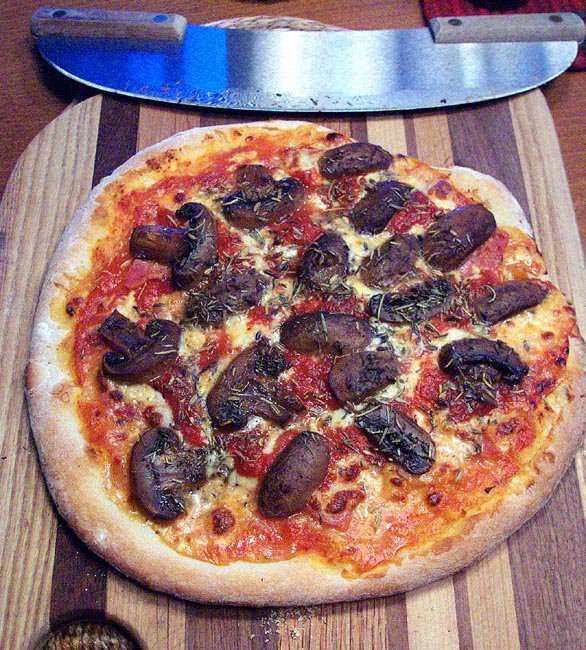
Ready for the oven...

Yesterday Walt and I made pizzas for lunch. We put ham, mozzarella and parmesan cheese, tomato sauce, and sauteed mushrooms on crust that Walt makes from scratch. They turned out really good. Walt has pretty much perfected his pizza crust now. It's light and bready, with just the right amount of crunch.

...and ready to cut and eat

I don't know about you, but I find good hot food to be of great comfort on dreary, gray winter days like these.