06 November 2005

Eating off-hours in Chinon

So while our friends were here in late October, we drove over to Chinon to see the town and taste the wines. Chinon is about 100 km/60 miles west of Saint-Aignan, on the other side of the city of Tours.

The town of Chinon and its château have played a significant role in French history. Here's a link to what Wikipedia says about it. The summary is that Henry Plantagenêt was the owner in the 12th century. His wife was Eleanor of Aquitaine, and one of his sons was Richard the Lion-Hearted. Henry and Richard both became kings of England. A couple of centuries later, Joan of Arc made the trip to Chinon and recognized the boy named Charles who was rightfully king of France. She convinced him to claim the throne. She ended up being burned at the stake by the English in Rouen in about 1430.

These days, the château is in ruins, but it's pretty very impressive.

Click on the image to see an enlargement.

We arrived in Chinon and we were hungry -- it was 3:00 in the afternoon and we hadn't had lunch. This doesn't seem like a big problem, I guess, unless you have ever wanted to eat something in France outside the regular meal hours of noon to 2:00 and 7:00 to 10:00 in the evening. It's not easy.

We headed for a restaurant where Walt and I had eaten a few years earlier. We remembered sitting outside at a table on the sidewalk in front of a little café. There was a customer with a fat beagle dog he called Gaston or Gaspard or something like that. The beagle had the run of the place.
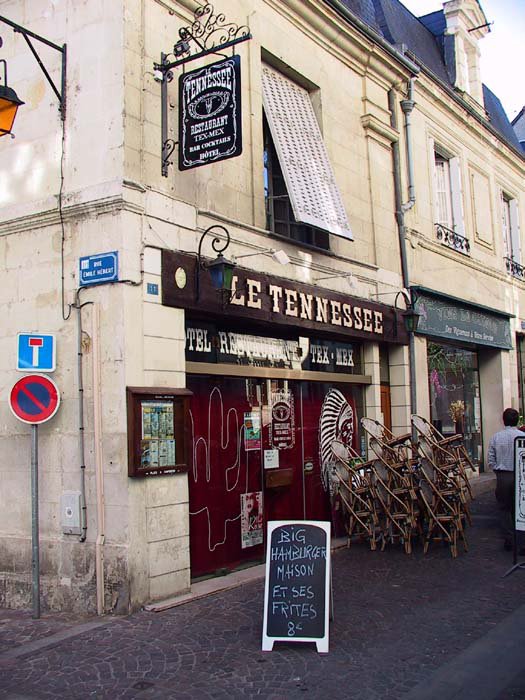
So we headed down the street the café was on. Turned out it had changed completely and become a 'burger joint, French-style. Besides, it was closed.

There was a crêperie just down the street. We had passed it and it looked good, but we weren't sure it was open. We went back and I asked if we could get something to eat. "Crêpes dessert seulement," the woman said. We didn't want dessert -- we wanted a sandwich or a quiche or a salad.

We looked at a couple of restaurants but we didn't want a multi-course meal. They probably wouldn't have served us anyway. Then we found a café-tabac that looked promising. No sandwiches, no food, the man behind the bar told me. But you can go get a sandwich to go at the boulangerie down the street. Finally, we thought. "Can we bring it back to eat it here and get something to drink?" I asked. "Certainement", he said with a smile.

The woman at the boulangerie was all smiles too, but she had no sandwiches. Sold out, she said. "J'ai tout vendu à midi." Could she make a sandwich with one of the dozens of bagettes she had standing up in the racks behind the counter? "Non, monsieur," she politely replied. The bread is fresh out of the oven and is too warm. If I put butter or cheese on it, it would just melt. I guess that doesn't sound good to a French person. Besides, I've always been told in France that warm bread is indigestible. You have to let it cool before it's good to eat.

Defeated, we headed for a café where people were sitting at tables outside. Nobody was eating anything. We went inside to ask about food, and found a table. But the place was spare and messy, and there was no food, and no waiter, in sight. We got up and left.

Walt had one more idea. There's a big café just down the street near the river. We walked over there, and there were a lot of people sitting at tables outside. I'm not sure anybody was eating anything though. We went in anyway. There was a young woman who obviously waited tables. Can we get something to eat? I asked. A sandwich? "Non, monsieur," we ran out of bread at noontime. We can't make sandwiches. The only thing I can suggest is a croque-monsieur.

Now in my book, a croque-monsieur is a sandwich. But it doesn't qualify as a sandwich in France, where the term is pretty much reserved, at least in cafés, for something that is half a baguette with some pâté, cheese, or ham on it. Nothing else. A fancy sandwich is a baguette that has a slice of ham and a slice of cheese on it. A croque-monsieur is what we would call a toasted ham and cheese sandwich in America. And it is, or can be, delicious. We ordered four of them, with four beers.
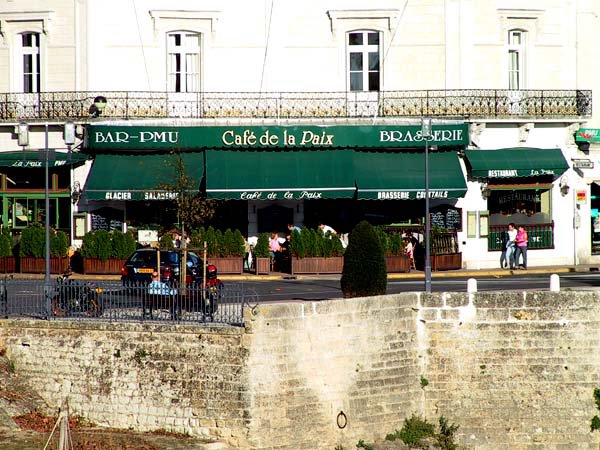
The restaurant tables hadn't yet been cleared of lunch dishes. We found the one that was ready and sat down. The croques came out pretty fast, along with the glasses of beer, and it was all delicious. Perfect. Our hunger was satisfied, and we were ready to go take some more pictures and taste some more wine. Here is a picture of the café that rescued us.

03 November 2005

Tasting Chinon wines

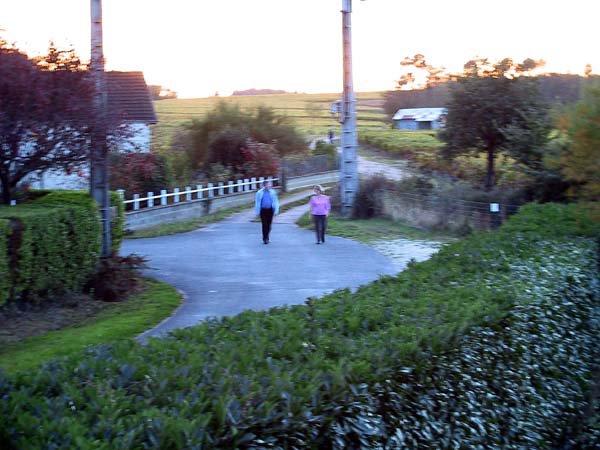
Wednesday evening, after the Clos Roche Blanche winery visit, John and Candy took a walk in the vineyard out behind our house. Here they are returning after the walk. After a Tuesday and Wednesday close to home, we decided to go to Chinon on Thursday. That's about a 90-minute drive from Saint-Aignan. The attraction: wine, of course — Chinon reds are the top of the top in the Loire Valley — along with beautiful countryside and an impressive château. We had an early lunch and set out at about 1:00.

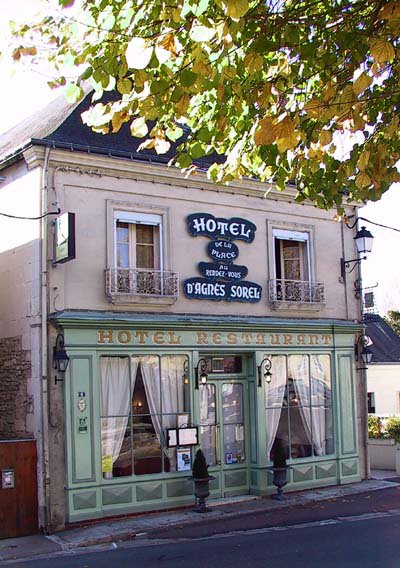
Our first stop was in the village called Genillé, about 15 minutes from Saint-Aignan. There's a restaurant there called the Agnès Sorel (the first woman to be more or less officially the king's mistress in France — she died in 1440 or so) and we planned to have dinner there Friday night. We stopped to make a reservation. Here's a picture of the restaurant, which turned out to be excellent.

Our first stop in the Chinon wine area was at the Domaine de Beauséjour winery. Walt and I had stopped here before, and we used to buy the Beauséjour wines in San Francisco. This time, the young woman who hosted the tasting remembered us. We tried three or four reds, including a couple with the label Angelot that are barrel aged. Most Loire wines don't spend any time on oak, and I thought the Angelots were good.

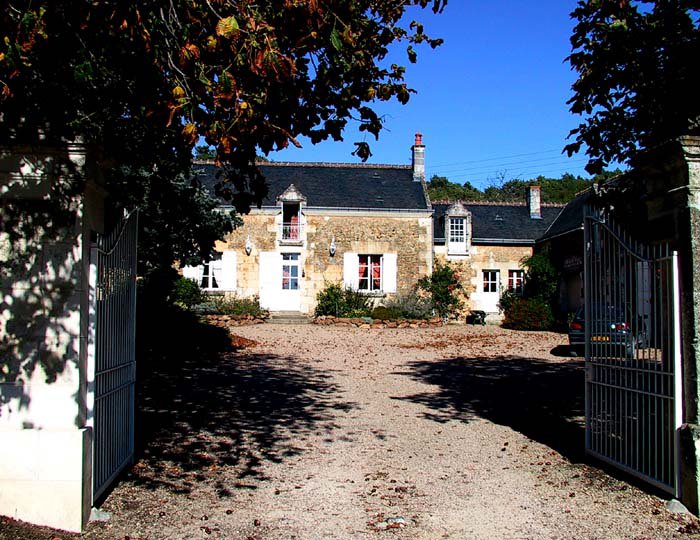
Beauséjour is an old, low, stone building that sits up on the heights overlooking the Vienne river valley. It has great views.

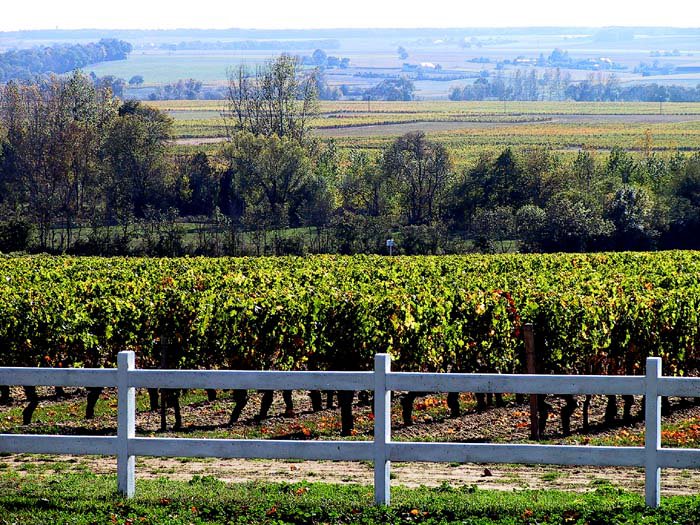
Here's the view from the front gate: a "front yard" of vines, then the river valley stretching out into the distance.
After Beauséjour, we drove the 5 or so miles into Chinon itself. About that, more later. One thing we did there was visit an old wine cave called Monplaisir, which is run by a group of three wine producers. We were underwhelmed by the wines. The only good one was the first one we tried, which was also the youngest (a 2004 for €5.30). It was almost comical, because the woman behind the tasting bar kept pouring us older and older Chinons and telling us how much better they would be. We tried a 2002, a 2001, and then a 1998. Each one was worse than the last. We were polite, and bought a bottle of the 2004. Obviously, Monplaisir is a tourist trap.

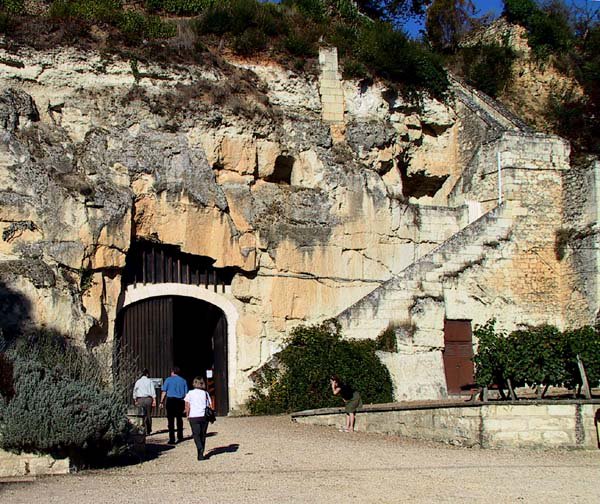
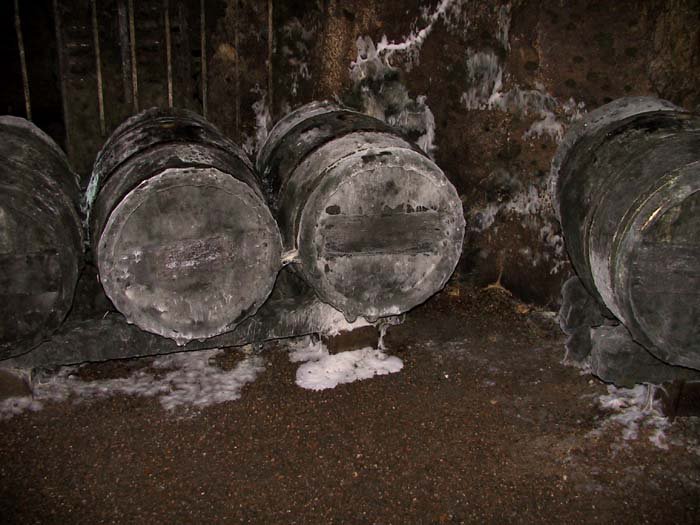
But it's a very interesting tourist trap. You can wander around in extensive caves and tunnels that have been dug into the side of a cliff face on the riverfront. There are hundreds of barrels and thousands of bottles of wine stored in there, all covered in thick mold. It's kind of creepy, but impressive.

Chinon wine, by the way, is a red made from Cabernet Franc grapes almost exclusively. Much Chinon wine is meant to be consumed young, and often the wine is served chilled. Other Chinons are "keepers" -- the bottles can be cellared for 5 to 10 years or even longer, and the wine gets better and better.


Foie gras and turkeys — cruelty to animals?

I read an article about turkeys in the latest food section of the San Francisco Chronicle that said:

« One hallmark of the heritage turkey is that it mates according to nature, unlike the American Thanksgiving classic, the Broad-Breasted White, which has been bred for white meat and is so top-heavy it can't walk or breed naturally. »
Now a lot of people in the U.S. have been saying that force-feeding ducks and geese to fatten their livers and produce the famous delicacy called foie gras is cruel to the birds. I ask you, which is crueler? Turkeys that can't even walk because they are so deformed by selective breeding? Or ducks and geese that are force-fed? I think it's a close call.

One story about force-feeding is that it mimics a natural process common in migratory birds, which gorge themselves to fatten their livers before they start their long flight south or north. The liver stores the energy they need for the journey.

02 November 2005

October: visitors, river walk, winery tour

This first week of November is also the week following the visit of two good friends from California, Candy & John. The activity level around here has dropped off considerably, and the weather has turned showery and cooler. Since September 1, life here has been very mouvementé as we say in French. Walt spent three weeks in America. We had four sets of company in September, including my mother for three weeks. We picked and processed a ton of vegetables from the garden for freezing and canning.

Our friends C & J were very lucky. They brought great weather with them. The whole week was warm and sunny, with record high temperatures (mid-70s F, 22-25ºC).

So what did we do? We took it pretty easy. C & J were visiting for the fourth time in two years, so they had already seen the main sights: the chateaus of Chenonceau, Chambord, and Valençay, as well as the towns of Loches — just 20 minutes from here ;^) — and Amboise. When they arrived from Paris this time, on a Monday afternoon, I had cooked a duck (see an earlier topic). We had dinner and stayed up late.

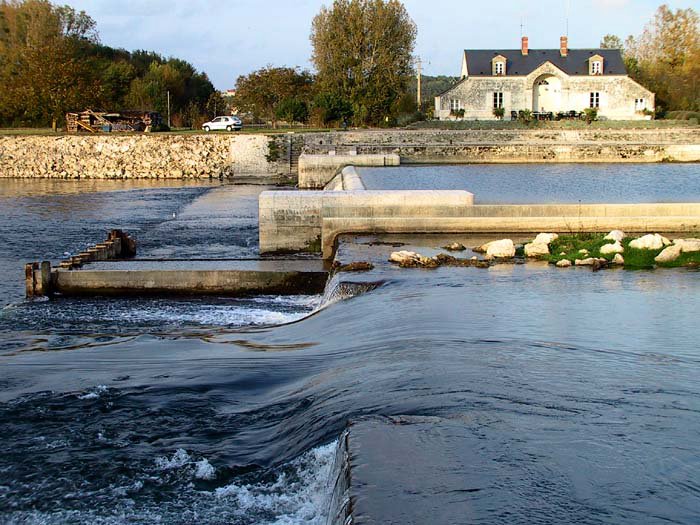
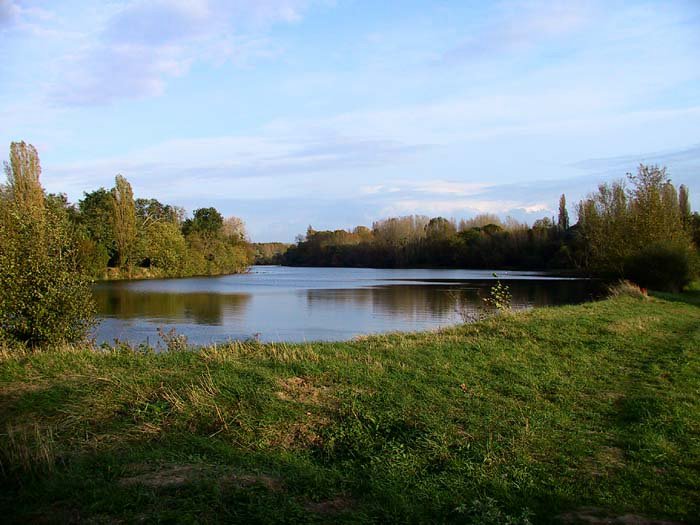
The picture above is the lock-keeper's house and the spillway on the Cher river near Mareuil-sur-Cher. You can see how beautiful the weather was. The pictures below show the Cher between Saint-Aignan and Mareuil.

On Tuesday, we spent most of the day in the house. Walt went up to the bakery in the vineyards, the one with wood-fired ovens, and got some good bread and croissants. At noontime, after a leisurely French-style breakfast, John and I drove up to the local SuperU supermarket and bought cheese for the afternoon meal. We got Saint-Agur blue cheese, Bleu de Bresse, Cantal, Mimolette, Camembert, and a local goat cheese called a Sainte-Maure. We had plenty of red wine (the day before, Walt had bought ten liters of gamay red from the Domaine du Chapitre, just up the road in Saint-Romain-sur-Cher). We spent the afternoon grazing and then drove down to the river and took a nice walk with the dog along its banks.

Tuesday night I heated up a couple of dishes of eggplant parmesan that I had made on Sunday using eggplants and tomatoes from our garden.

By the way, a great way to make eggplant parmesan is to steam whole eggplants until they are soft. Then cut them into slices and put a little bit of olive oil on them. That way, you can really control the amount of oil in the dish. You can use either fresh sliced tomatoes or tomato sauce along with mozzarella and parmesan cheese in layers to make the dish. Finish with a layer of mozzarella and brown it all in the oven until it bubbles up around the side of the dish.

On Wednesday, we got up and got ourselves ready before noon so that we could go have lunch in a restaurant in Saint-Aignan. Le Crêpiot is the name of the restaurant — it's a small but colorful place on the main street that serves steaks and fries, crêpes, and salads. It's popular so I made a reservation, and it's a good thing I did. The place was packed when we got there at 1:00 p.m. We had decided to have steaks and fries (steak-frites), which is pretty much the French national dish.

As I said, the restaurant was crowded. The last part of October is vacation-time for the schools — it's the Toussaint or All Saints Day holiday — and there were quite a few children in the restaurant, which is rare. They were well behaved, and it was a nice atmosphere. We ended up having the restaurant's daily special, which was pork tenderloin served with flageolet beans. We ordered frites on the side — the reason we wanted to go to the Crêpiot in the first place was to have frites. Everything was good. The wine was a local Gamay.

After lunch, we spent an hour walking around Saint-Aignan. Again, the weather was warm and sunny — it felt like spring — and there was a lot of activity around the town. We walked down on the quai by the Cher, and then up to the château for the view out over the river valley.

We had an appointment to visit the Clos Roche Blanche winery in Mareuil-sur-Cher, just about 5 miles downriver from Saint-Aignan, later in the afternoon. We took a little drive in the country and arrived at the winery at 5:00 p.m. C. & J. had read a blurb in a California wine importer's newsletter that recommended the Clos Roche Blanche's Cabernet Sauvignon white and Gamay red wines as excellent wines at good prices.

The Clos Roche Blanche grows its grapes organically and practices biodiversity in the vineyards. In other words, Catherine and Didier, the owners, let native plants (a.k.a. weeds) grow between the rows of grape vines. Insects don't become a problem because they have all those weeds to live and feed on — they leave the vines and grapes alone.

Catherine and Didier live in a big stone house high up on a bluff overlooking the Cher river valley. It's an impressive site, though Catherine said the house is not very discrète. In other words, you can see it for miles around. Her grandfather built it, and he also had a cave built by tunneling into the limestone cliff behind the house. It's pretty impressive -- it's dark and moldy but clean and well-kept, with wooden, stainless-steel, and even concrete vats and tanks in which the wines ferment and age.

The 2003 Clos Roche Blanche Sauvignon Blanc is amazingly rich and liquorous. It makes a good sipping wine for apéritifs. The 2004 is completely different, but also delicious. It's a good wine to drink with food -- dry and fruity at the same time. The 2004 Gamay red is also very fine. It's got more body than many Gamay red wines, and more tannin. It's dry and can stand up to red meats and spicy food. Walt and I had tried it before, in a local restaurant, and we knew already that Clos Roche Blanche made great wines. Here's a link to a web site about the winery.

We bought three bottles of the Gamay and two of the 2004 Sauvignon Blanc. When I told Catherine that I didn't have much cash, but that I wanted to buy a couple fo bottles, she said it was OK, I could just send her a check later. She had opened a bottle of the 2003 Sauvignon just for us to taste it, so she gave it to us to take home. "Have it as your apéritif this evening," she said. We did. Then we had a dinner of cheese, pâté, and salad — and Clos Roche Blanche Gamay red wine.

After the wine tasting, we drove up a gravel road to see the vineyards. We saw a beautiful pheasant down one row of vines.