Showing posts with label Loire Valley: Chinon/Saumur area. Show all posts

22 July 2006

Sightseeing, Lunching, and Wine-buying in Saumur

I started this topic a week ago but have been too busy to finish it. Now Walt has posted his Saumur entry. I apologize if this duplicates parts of his post. I just can’t keep up these days.

* * *

Last Tuesday we decided to drive over to Saumur to see the château there and some other sights. We also wanted to see the town itself and then drive west along the Loire about 7 miles to see the Romanesque church in the village of Cunault. On the way home late in the afternoon, we would go buy some wine in the Saumur-Champigny wine district.

Butcher shop in old Saumur

So that’s what we did. We left Saint-Aignan in our little Peugeot at about 9:00 a.m. and headed for Loches, Sainte-Maure-de-Touraine, and Chinon, on the way to Saumur. We thought it would be better to go around far south of the city of Tours rather than drive through it or its suburbs.

Château de Brétignolles

The weather this July has been very hot, though not as extreme as it was in 2003. The temperature has been 90 or above every day for about two weeks. The car is air-conditioned, while the house is not, so driving around the countryside is a good way to escape the heat.

We took the narrow back roads down to Orbigny and then on through Genillé to the bigger town of Loches (pop. 8,000 or so). From there it was a straight shot for about 20 miles. At the little town of Tavant, just past Sainte-Maure, we stopped to see if we could look around in the village church. Unfortunately, the doors were locked.

Next we drove past the château de Brétignolles and then took a little detour to see the château du Rivau. Both of these are near the village of Sazilly, not more than 10 miles southeast of Chinon (pop. 8,000 also).

Château du Rivau

We finally arrived in Saumur at about 11:30, just in time for lunch. We had looked at the Michelin green guide and found a restaurant recommendation there. La Petite Auberge, on the square just in front of the Eglise Saint-Pierre, looked like just the right place for a good noontime meal.
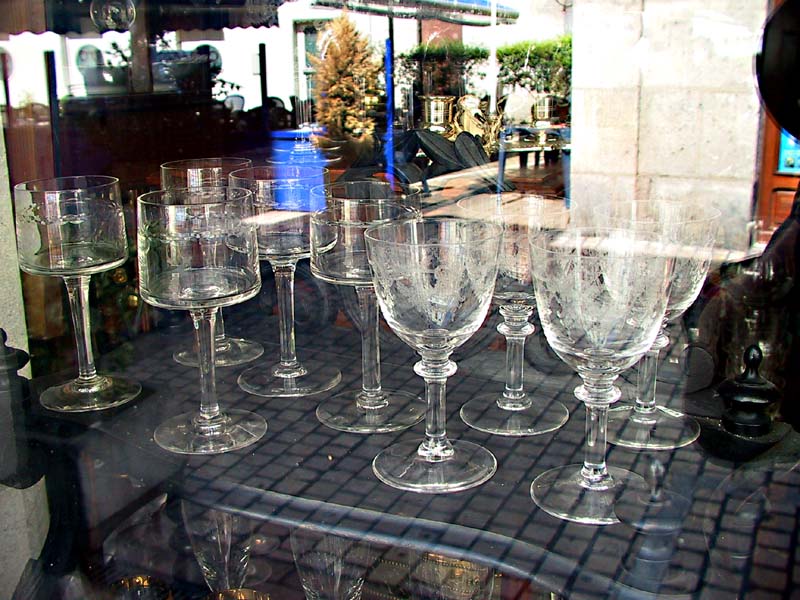
Antiques in a shop window in Saumur

For the sake of comparison, and because we had a little extra time, we examined the menus displayed outside several other restaurants and cafés on the Place St-Pierre. None measured up. La Petite Auberge had a nice outdoor seating area and the menu, featuring classic French specialities, was extensive. At 17.50 euros per person, it looked like a bargain too.

Staff lunch at La Petite Auberge in Saumur

The restaurant is on a corner and has entrances and tables on a side street as well as on the square in front of the church. On the side street patio we saw a group of young people dressed in black and white having their lunch. It was the restaurant staff, getting ready for the lunch service to come.

We asked the people at the staff lunch what time they started serving lunch, and they said noon. We wandered around the place for a few minutes more. At noon, we went and occupied a table on the larger patio area on the place.
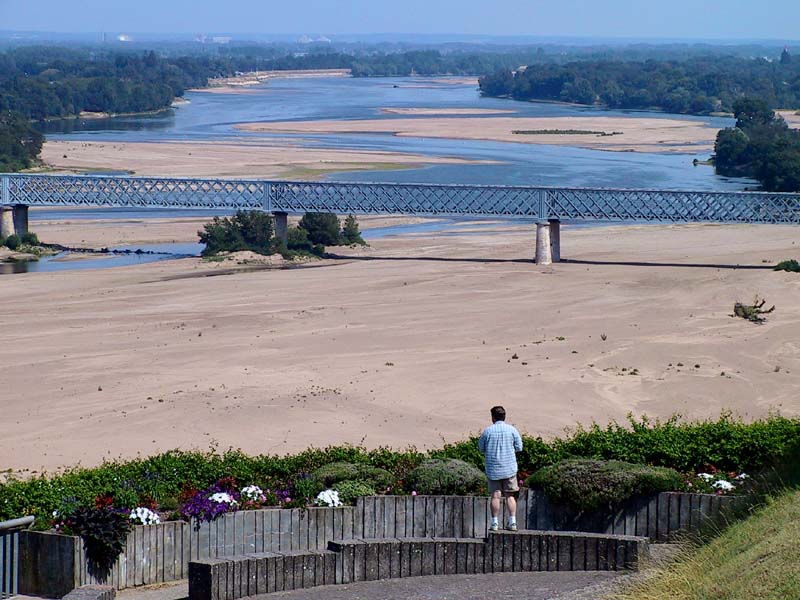
Walt couldn't have taken this picture of the sandy bed
of the Loire River, because he's in it.


Walt and our friend CHM ordered a salmon terrine as their entrée. They both said it was good. Despite the searing heat and the fact that July is an R-less month, I decided to have a half-dozen oysters as my appetizer. They were salty and fresh, served with a mignonette (vinegar, shallots, and pepper) and fresh butter with slices of rye bread. I enjoyed them and had no regrets (even 36 hours later, if you know what I mean).
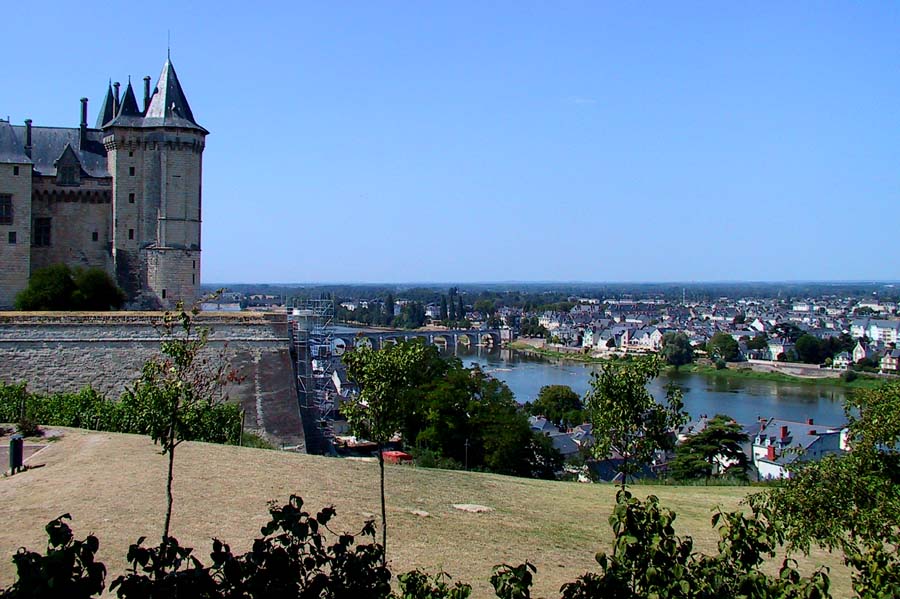
Château de Saumur

We had a half bottle of local Saumur white wine (chenin blanc) with the appetizers, and it was fruity and fresh and not too dry. It went well with the saltiness of the oysters.

Walt had grilled rouget barbet (redfish?) filets for his lunch, served with a pile of sauerkraut. He said it was excellent. CHM had bœuf bourguignon. I decided to be daring and try the tête de veau with sauce gribiche. That’s meat cut from the calf’s head. I like fromage de tête (head cheese), which is made from the meat picked off the pig’s head, so I thought it would be good. A French woman I had had lunch with a few days earlier in a different restaurant had ordered it, and it looked good on her plate.
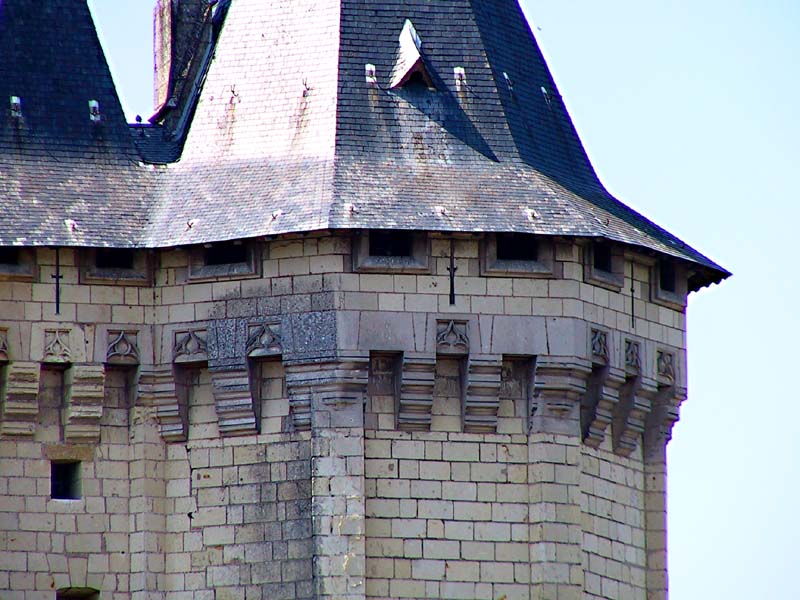
Saumur château detail

Well, I think it was a mistake for me to choose it. It was too fatty and gelatinous for me and in the hot weather it was a little écœurant (too rich). It was very different from what I had seen at the other restaurant a few days before. I ate the leaner pieces of meat but ended up leaving a lot of the portion on the plate. I left so much, in fact, that the waiter who came to clear the table asked me if it had not been good. I just made an excuse about the hot weather, my lack of appetite, and the copious portion I had been served.

With lunch we had a bottle of Saumur-Champigny red wine that was just excellent. That was a good omen for the wine-buying excursion we had planned for later in the day.

Saumur, the old bridge

After lunch we stopped in the Maison du Vin at the tourist office to ask where we might buy some Saumur-Champigny wine in bulk, the way we buy it around Saint-Aignan. We had our four 10-liter jugs in the trunk of the Peugeot. The man at the wine center gave us the names and addresses of a wine producer called Domaine des Champs Fleuris in the village called Turquant and of a cooperative in the village of Saint-Cyr-en-Bourg. He said not too many wineries would still have 2005 wine to sell in bulk — most would have bottled it all by now — but those two would.

After a quick visit to the church at Cunault (more about that in another post, maybe), we went to Turquant and bought 20 liters of red (2005 cabernet franc). We had to drive past the main entrance of the winery, turn right on a side road, and find the owner in his wine-making facility. I opened a door and there he was running the bottling machine.

Dressed in shorts, a t-shirt, and sandals, he greeted us with a smile and said buying wine was no problem. We went back down the road to the main entrance, us driving and him walking. He took us into a cave where barrels lined the walls as far back as we could see. The temperature in the cave must have been 30 degrees F cooler than outside. The thick, fruity Saumur-Champigny cabernet franc was 3.30 euros a liter (less than $3.00 a bottle).

We drove on to Saint-Cyr, following signs to the Cave Cooperative des Vignerons de Saumur. Champs Fleuris didn’t sell white wine in bulk, and I wanted some. As we drove into Saint-Cyr, I had a blue gendarme vehicle right on my back bumper, so I was trying to be careful not to speed or break any rules. Of course that made me nervous and I took a wrong turn.
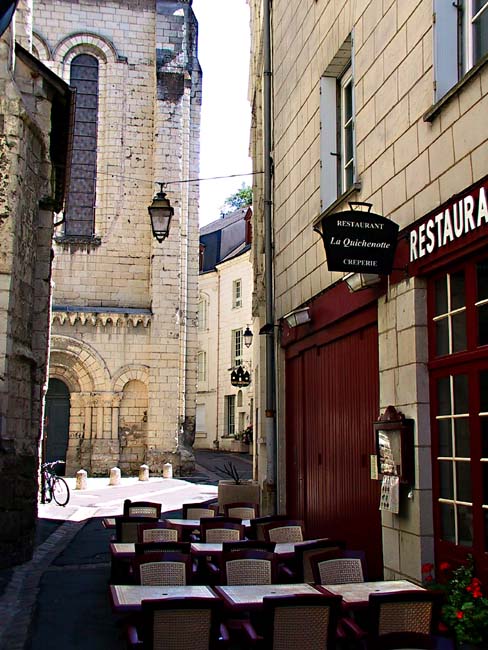
Old Saumur, cafés near the Eglise St-Pierre

The wrong turn got the gendarme off my tail and we didn’t have too much trouble finding the wine coop anyway. There again the people were all smiles. A young woman who said she had lived all over France — Metz, Bordeaux, Toulouse, Normandy, Paris, and on and on (I told her she must be about 80 years old to have done all that but didn’t look it) — gave us two white wines to taste. One was a vin de pays at 1.70€ a liter, and the other an AOC at 2.20€. Both were chenin blanc, and both were (are) delicious. I bought 10 liters of each.

Stained glass in the Eglise St-Pierre in Saumur

After getting the wine, we drove on back toward Saint-Aignan, making short stops in the towns of Montreuil-Bellay and Richelieu to see the sights.

As we were driving back, Walt was sleeping in the back seat. I was talking to Charles, enumerating all we had done and seen over the course of the day. Tavant, Brétignolles, Le Rivau, Saumur, Cunault, etc. Walt suddenly came to life and said “Yeah, it’s amazing how much you can pack into just 11 hours, isn’t it?” Sarcastic as always, he was ready to get back home.


08 May 2006

Interdit

I took this picture of a metal sign and chains at a Loire Valley château in October 2000, nearly six years ago. If we hadn't decided at the last minute to come spend a week of our vacation that year in the Loire Valley, we wouldn't be living here now.

13 November 2005

Two more Chinon wineries

Finishing up my account of our trip to Chinon in late October, I want to mention two more wineries that we think make very good red wines. One is a place we have been to three or four times now, the Château de Ligré in the village of Ligré on the south side of the Indre river 5 or so miles southeast of Chinon itself. Here's a site in French.

Ligré has a modern tasting room run by a very vivacious and talkative woman that we like. We have bought some bottles there before, but normally we buy the wine in bulk. We have our own little plastic barrels that they fill up for us. The 2004 red is very good -- fruity but with good body and fairly dry. The woman who runs the tasting room always calls on an employee to take us down into the cellar, where she fills our 10-litre jugs using what looks a little like the hose and spout you use to fill your car with gas at the service station.

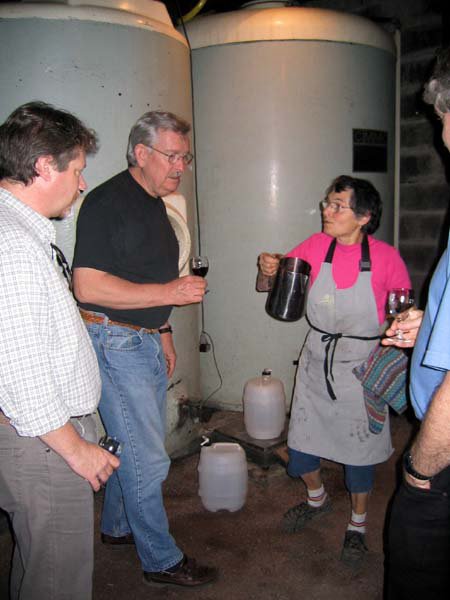
The employee is a wiry little woman in her 50s, I imagine. She is also very friendly and talkative. We chat about the weather and the grapes, and once she told us that she has been an employee and resident at the château since she was young girl. I got the impression she was raised by the older woman who still lives part-time in the château, and who she called la grand-mère, the grandmother. Thanks to Candy and John, here's a picture of her and us tasting the wine.

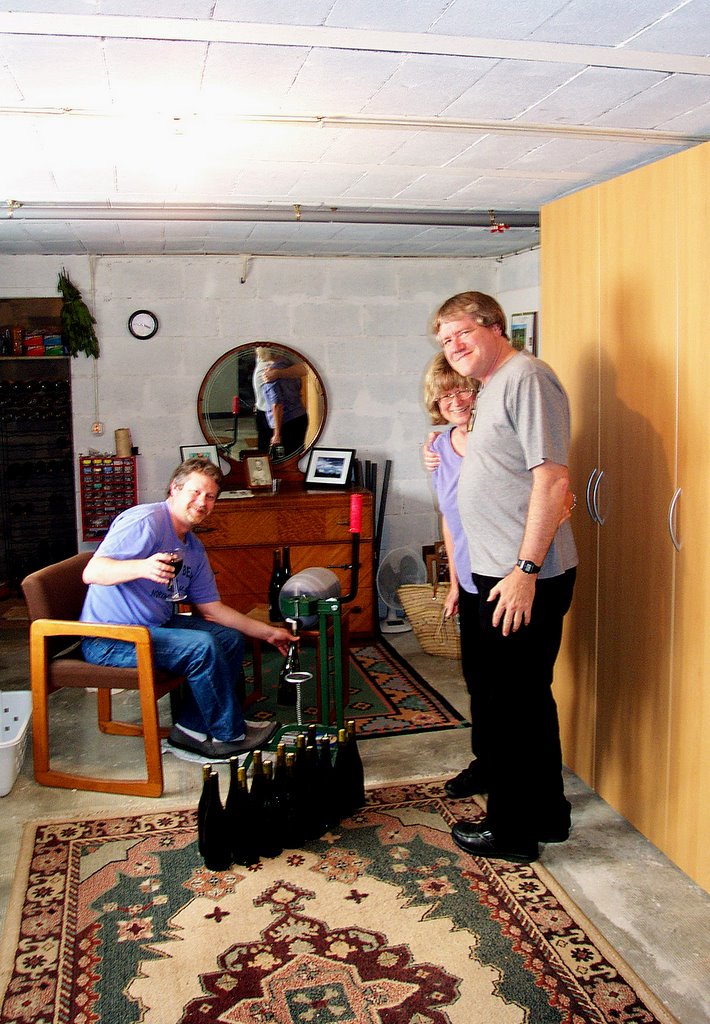
You can see our white plastic jugs, not yet filled. When we buy 20 litres, we have the equivalent of 26 bottles of good red Chinon for about three euros a bottle. We bottle it ouselves, at home. Here's a picture of Walt bottling this batch a day or two later, down in our "cellar".


Our last wine stop of the day was at a place that we hadn't visited before but that came highly recommended. It's Charles Joguet in the village of Sazilly, just a few miles from Ligré. We were lucky to have one of the winery's owners, Alain Delaunay, host a tasting for us. Mr. Delaunay speaks English and has traveled to California -- Kermit Lynch of Berkeley is his importer -- so we were able to ask him a lot of questions about the language of wine and the process of wine-making. It was a very nice session, and the wines were fabulous. We tasted the 2003s, at least 6 of them. We saved the 2004s for a future visit. The 2003s are especially good, I think, because the weather that year was so hot and dry. The 2003 Chinons resemble California wines, I think -- they are much fruitier and more alcoholic than Chinon reds normally are.

On the way back home that night, we stopped in a SuperU supermarket in the town called L'Ile-Bouchard. We bought chicken thighs and fresh vegetables, and a baguette, and we drove the hour or so back to Saint-Aignan. We cooked dinner and had a nice meal with good Charles Joguet 2003 Chinon red and some cheese. Here's a picture of some of the cheeses we had that week, including Epoisses, Neufchâtel, chèvre, tomme de Savoie, Sainte-Maure, bleu de Bresse, mimolette, and of course camembert.

06 November 2005

Eating off-hours in Chinon

So while our friends were here in late October, we drove over to Chinon to see the town and taste the wines. Chinon is about 100 km/60 miles west of Saint-Aignan, on the other side of the city of Tours.

The town of Chinon and its château have played a significant role in French history. Here's a link to what Wikipedia says about it. The summary is that Henry Plantagenêt was the owner in the 12th century. His wife was Eleanor of Aquitaine, and one of his sons was Richard the Lion-Hearted. Henry and Richard both became kings of England. A couple of centuries later, Joan of Arc made the trip to Chinon and recognized the boy named Charles who was rightfully king of France. She convinced him to claim the throne. She ended up being burned at the stake by the English in Rouen in about 1430.

These days, the château is in ruins, but it's pretty very impressive.

Click on the image to see an enlargement.

We arrived in Chinon and we were hungry -- it was 3:00 in the afternoon and we hadn't had lunch. This doesn't seem like a big problem, I guess, unless you have ever wanted to eat something in France outside the regular meal hours of noon to 2:00 and 7:00 to 10:00 in the evening. It's not easy.

We headed for a restaurant where Walt and I had eaten a few years earlier. We remembered sitting outside at a table on the sidewalk in front of a little café. There was a customer with a fat beagle dog he called Gaston or Gaspard or something like that. The beagle had the run of the place.

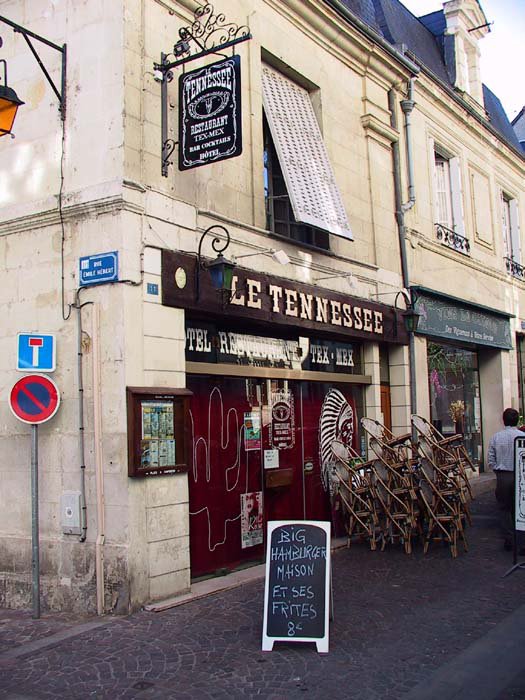
So we headed down the street the café was on. Turned out it had changed completely and become a 'burger joint, French-style. Besides, it was closed.

There was a crêperie just down the street. We had passed it and it looked good, but we weren't sure it was open. We went back and I asked if we could get something to eat. "Crêpes dessert seulement," the woman said. We didn't want dessert -- we wanted a sandwich or a quiche or a salad.

We looked at a couple of restaurants but we didn't want a multi-course meal. They probably wouldn't have served us anyway. Then we found a café-tabac that looked promising. No sandwiches, no food, the man behind the bar told me. But you can go get a sandwich to go at the boulangerie down the street. Finally, we thought. "Can we bring it back to eat it here and get something to drink?" I asked. "Certainement", he said with a smile.

The woman at the boulangerie was all smiles too, but she had no sandwiches. Sold out, she said. "J'ai tout vendu à midi." Could she make a sandwich with one of the dozens of bagettes she had standing up in the racks behind the counter? "Non, monsieur," she politely replied. The bread is fresh out of the oven and is too warm. If I put butter or cheese on it, it would just melt. I guess that doesn't sound good to a French person. Besides, I've always been told in France that warm bread is indigestible. You have to let it cool before it's good to eat.

Defeated, we headed for a café where people were sitting at tables outside. Nobody was eating anything. We went inside to ask about food, and found a table. But the place was spare and messy, and there was no food, and no waiter, in sight. We got up and left.

Walt had one more idea. There's a big café just down the street near the river. We walked over there, and there were a lot of people sitting at tables outside. I'm not sure anybody was eating anything though. We went in anyway. There was a young woman who obviously waited tables. Can we get something to eat? I asked. A sandwich? "Non, monsieur," we ran out of bread at noontime. We can't make sandwiches. The only thing I can suggest is a croque-monsieur.

Now in my book, a croque-monsieur is a sandwich. But it doesn't qualify as a sandwich in France, where the term is pretty much reserved, at least in cafés, for something that is half a baguette with some pâté, cheese, or ham on it. Nothing else. A fancy sandwich is a baguette that has a slice of ham and a slice of cheese on it. A croque-monsieur is what we would call a toasted ham and cheese sandwich in America. And it is, or can be, delicious. We ordered four of them, with four beers.

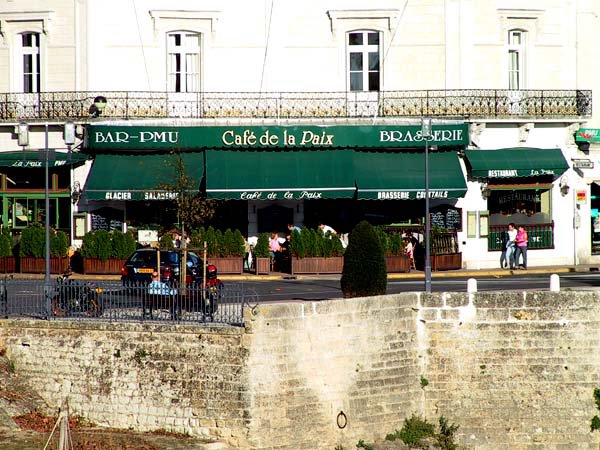
The restaurant tables hadn't yet been cleared of lunch dishes. We found the one that was ready and sat down. The croques came out pretty fast, along with the glasses of beer, and it was all delicious. Perfect. Our hunger was satisfied, and we were ready to go take some more pictures and taste some more wine. Here is a picture of the café that rescued us.

03 November 2005

Tasting Chinon wines

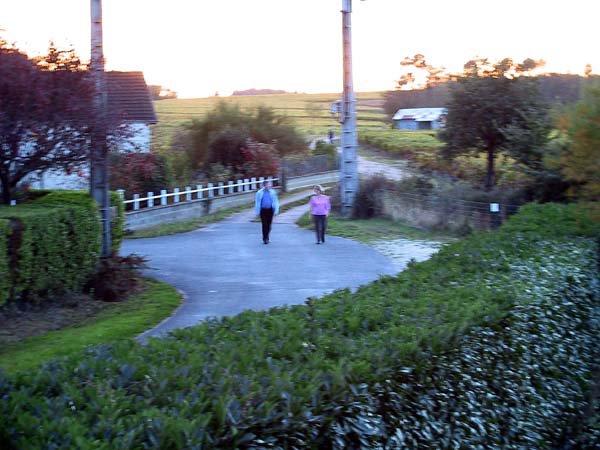
Wednesday evening, after the Clos Roche Blanche winery visit, John and Candy took a walk in the vineyard out behind our house. Here they are returning after the walk. After a Tuesday and Wednesday close to home, we decided to go to Chinon on Thursday. That's about a 90-minute drive from Saint-Aignan. The attraction: wine, of course — Chinon reds are the top of the top in the Loire Valley — along with beautiful countryside and an impressive château. We had an early lunch and set out at about 1:00.

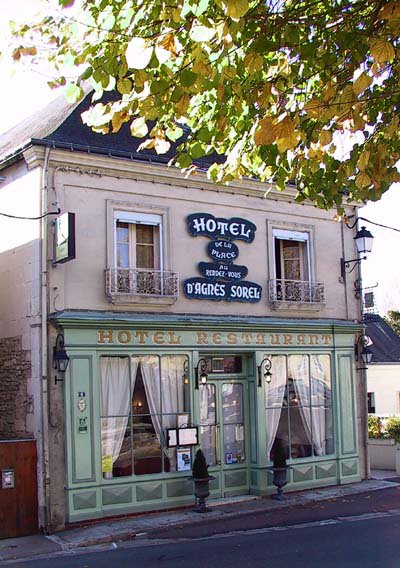
Our first stop was in the village called Genillé, about 15 minutes from Saint-Aignan. There's a restaurant there called the Agnès Sorel (the first woman to be more or less officially the king's mistress in France — she died in 1440 or so) and we planned to have dinner there Friday night. We stopped to make a reservation. Here's a picture of the restaurant, which turned out to be excellent.

Our first stop in the Chinon wine area was at the Domaine de Beauséjour winery. Walt and I had stopped here before, and we used to buy the Beauséjour wines in San Francisco. This time, the young woman who hosted the tasting remembered us. We tried three or four reds, including a couple with the label Angelot that are barrel aged. Most Loire wines don't spend any time on oak, and I thought the Angelots were good.

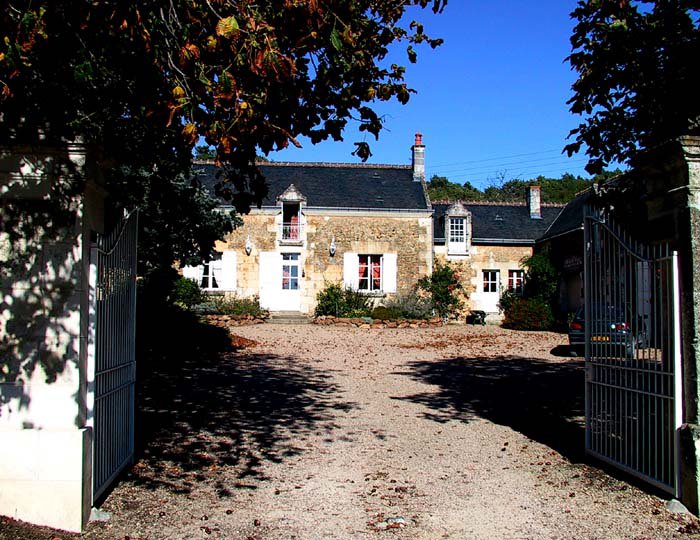
Beauséjour is an old, low, stone building that sits up on the heights overlooking the Vienne river valley. It has great views.

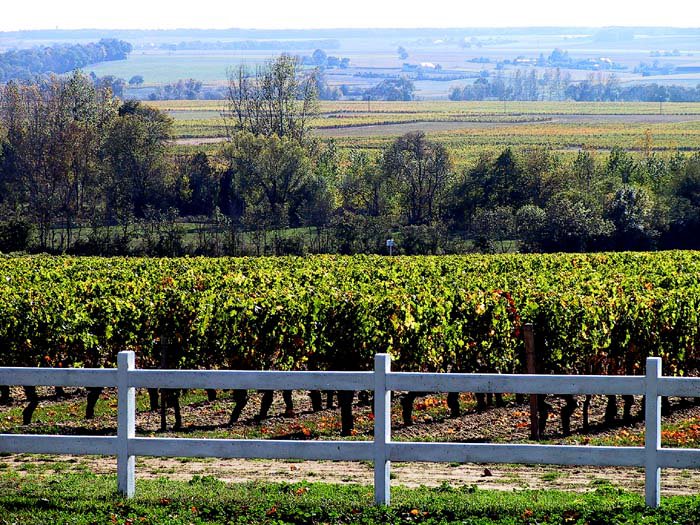
Here's the view from the front gate: a "front yard" of vines, then the river valley stretching out into the distance.
After Beauséjour, we drove the 5 or so miles into Chinon itself. About that, more later. One thing we did there was visit an old wine cave called Monplaisir, which is run by a group of three wine producers. We were underwhelmed by the wines. The only good one was the first one we tried, which was also the youngest (a 2004 for €5.30). It was almost comical, because the woman behind the tasting bar kept pouring us older and older Chinons and telling us how much better they would be. We tried a 2002, a 2001, and then a 1998. Each one was worse than the last. We were polite, and bought a bottle of the 2004. Obviously, Monplaisir is a tourist trap.

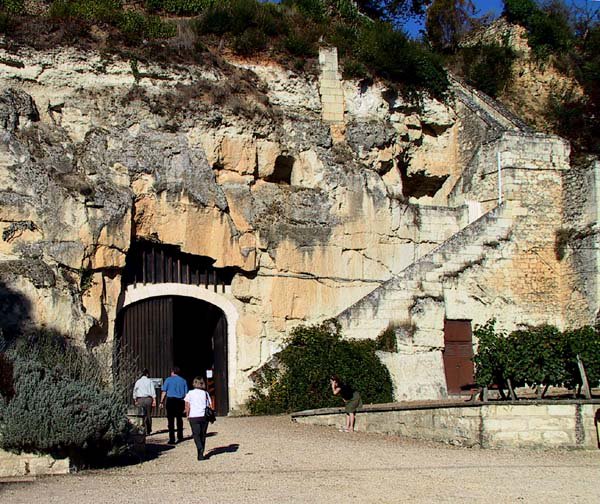
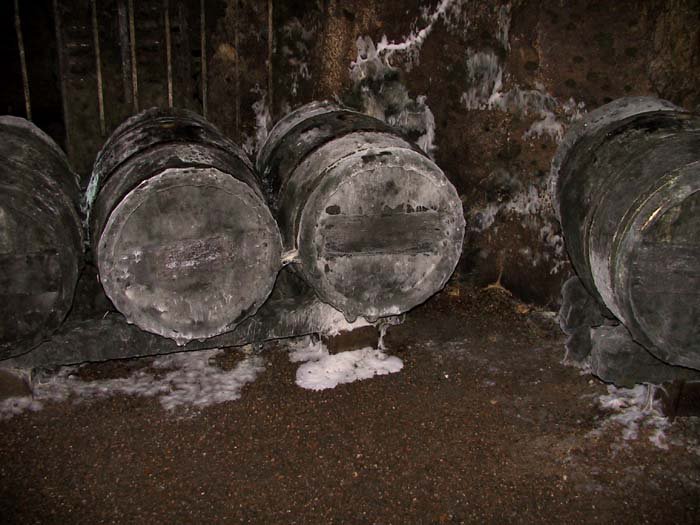
But it's a very interesting tourist trap. You can wander around in extensive caves and tunnels that have been dug into the side of a cliff face on the riverfront. There are hundreds of barrels and thousands of bottles of wine stored in there, all covered in thick mold. It's kind of creepy, but impressive.

Chinon wine, by the way, is a red made from Cabernet Franc grapes almost exclusively. Much Chinon wine is meant to be consumed young, and often the wine is served chilled. Other Chinons are "keepers" -- the bottles can be cellared for 5 to 10 years or even longer, and the wine gets better and better.