19 January 2024

La salamandre, symbole du roi François 1er

King François 1er, the dominant figure in France at the time of the Renaissance, saw the amphibian called la salamandre as the symbol of his role as a monarch. The salamandre was seen as a magical and legendary creature. It lives in water. It lives on land. And it was thought to feed on fire and escape easily from it without getting burned. Below my photo is an explanation in French that I found here.


Au Moyen Âge, la salamandre investit le bestiaire des animaux magiques et légendaires. En plus de pouvoir vivre aussi bien sur terre que dans l'eau, on lui donnait également la faculté de résister aux flammes. La salamandre maîtrisait donc tous les éléments et prenait un caractère mythique.

Cette croyance surnaturelle a pourtant une explication bien rationnelle.

La salamandre hiberne souvent dans des souches d’arbres. Lorsque ceux-ci étaient débités pour servir de bois de chauffage ou de cuisine, la salamandre réveillée par la chaleur jaillissait du feu. Protégée quelques instants par la couche humide de sa peau, elle ne s’enflammait pas.

Ainsi sont nés les pouvoirs magiques de la salamandre !

17 January 2024

Azay-le-Rideau: a curtain of trees

It's snowing north and east of us, but our temperature this morning in the Saint-Aignan area is above freezing (+3.3 degrees Celsius on our thermometer) and a light rain is falling. The danger is freezing rain on the streets, roads, and highways up toward Paris. However, some snow is predicted for tomorrow morning here. That means I have to get out and do some shopping this morning, including a trip to the pharmacy. Colder weather is supposed to return over the coming weekend. I'm trying to ward off cabin fever by staying busy indoors.

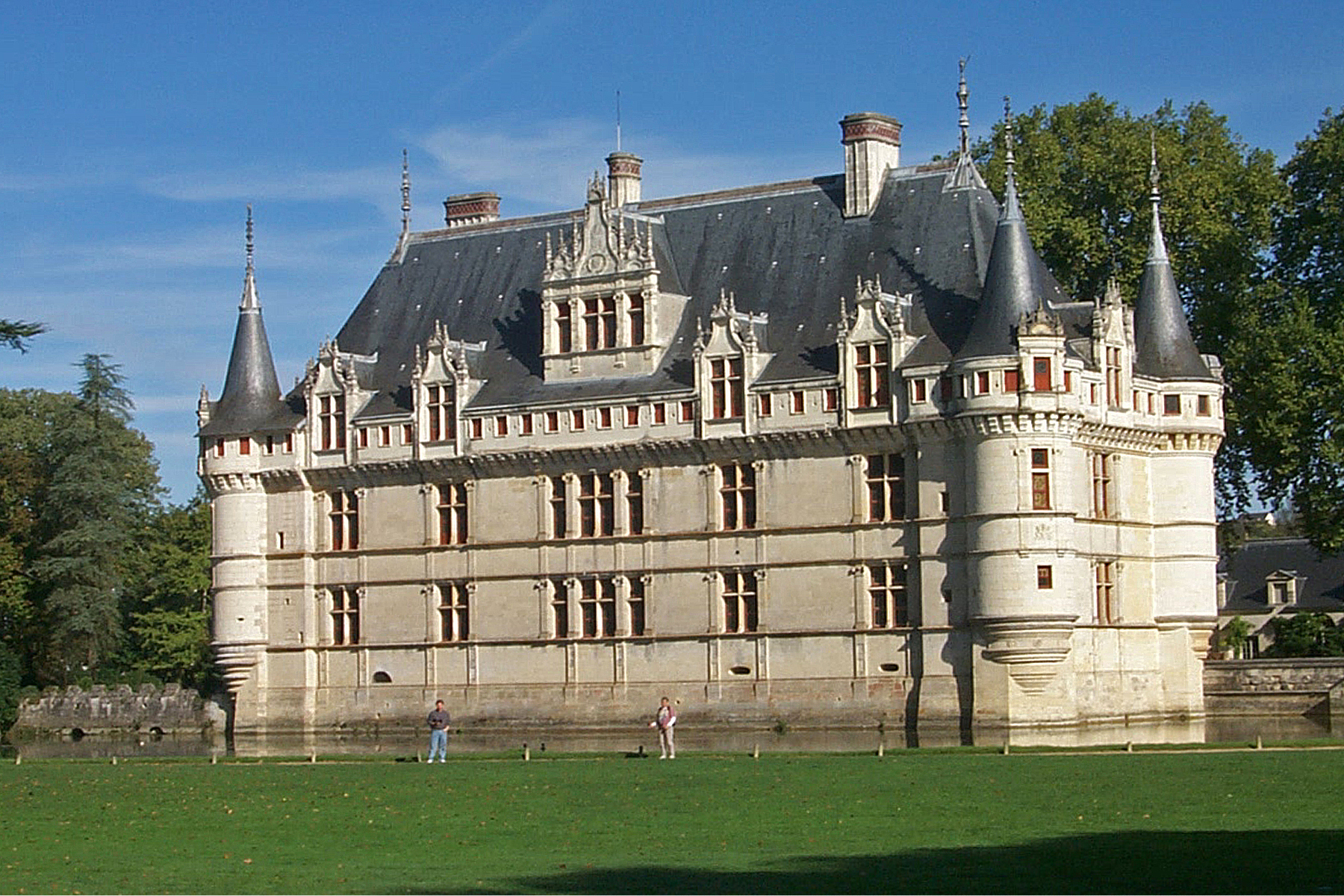
My photo, taken in Oct. 2000

The photo above shows the side of the Château d'Azay-le-Rideau that faces the village of the same name. The Cadogan Loire guidebook describes a "curtain" (un rideau in French) of trees that separates the château from the village (pop. approx. 3,000), even though the Rideau in the name actually derives from a the name of medieval notable named Ridel. In May 2017, Walt and I took a walk around the village and had lunch there when we were on the way to Chinon to pick up 10-week-old Tasha and bring her home. We didn't go to the château in Azay because it was covered with scaffolding and tarps because restoration work was under way.

16 January 2024

A stop in Azay-le-Rideau

Like the Château de Chenonceau to the east, the Château d'Azay-le-Rideau is built on a river. It's just 14 miles southwest of the center of the big city of Tours. Chenonceau is on the Cher river about 20 miles east of Tours, and Azay-le-Rideau is on the Indre river. Both are tributaries of the Loire river to the north. The 19th century novelist Honoré de Balzac called Azay-le-Rideau "a diamond with its multiple facets set in the Indre" — at least that's what the Cadogan Loire guidebook says. The Michelin green guide gives it three stars.


The Château d'Azay-le-Rideau was built starting in 1518, about the same time as another grand Loire Valley monument, the Château de Chambord. An earlier building on the site had been burned down in 1418 by the forces of the French king Charles VII. You can see how massive the Renaissance-era building actually is if you notice that Walt and our friend Sue are standing in front of it in the photo above. Enlarge it and examine it carefully. Walt and Sue look really tiny.